The consumption of textile products continues to rise, putting significant pressure on resources and the environment. In 2022, each EU citizen purchased an average of 19 kg of clothing, footwear and household textiles, up from 17 kg in 2019, according to the European Environment Agency (EEA). This was a record high, equivalent to a large suitcase full of new textile products per person every year. In 2022, EU Member States also generated around 6.94 million tonnes of textile waste, or 16 kg per person. Of this, 11.1 kg per person was not collected separately, more than twice the 4.6 kg captured through separate collection.

The EU introduces EPR for textiles
Extended producer responsibility (EPR) is essential to moving the sector towards greater circularity. Under this principle, anyone placing a product on the market is also responsible, including financially, for managing it at the end of its life. The model is already well established across numerous European supply chains, from batteries and WEEE to tyres and end-of-life vehicles.
With the revision of the Waste Framework Directive (EU) 2025/1892, the EU has required all member states to introduce EPR schemes for textiles within 30 months of the directive's entry into force, which took place in late 2025. Producers will therefore have to fund the collection, sorting, reuse and recycling of clothing, footwear and other textile products at the end of their life, promoting reuse and material recovery while reducing the amount of waste sent to landfill or incineration.
- You may also be interested in: Six news stories for six perspectives on the circular economy
Textile EPR: in Italy, it is no longer just a possibility
Some countries have moved ahead of the curve, including Italy, which began laying the groundwork some time ago. The country generates around 1.5 million tonnes of textile waste each year. It first made separate textile waste collection mandatory in 2022, a year ahead of the EU deadline, and is now preparing to bring its extended producer responsibility scheme into operation soon, once again taking a leading role in Europe.
After the application was put on hold pending the interministerial implementing decree, the Unified Conference approved the draft regulation introducing the EPR scheme for textiles on 24 July 2026.
The new regulation sets progressive collection and recycling targets, giving producers a central role in organising and financing end-of-life management. The measure is currently before the Council of State and is undergoing the final formal steps. Once it is published, as expected in the coming weeks, producers will have 60 days to register with a collective compliance scheme or establish an individual one.
- You may also be interested in: Spain’s circular economy: from recycling waste to building new industries
Cobat Tessile has already taken action
Drawing on the extensive experience of Consorzi Cobat, a consortium-based system already operating in other sectors (batteries and accumulators, WEEE, tyres and end-of-life vehicles), Cobat Tessile has acted ahead of the curve rather than waiting for the legal requirement to take effect. Since 2021, it has been working alongside producers and importers, encouraging knowledge-sharing across the supply chain, engaging in dialogue with institutions and participating in the ministry's consultation on the decree.
Over time, it has developed services and opportunities designed to support businesses from regulatory compliance through to the practical management of products’ end-of-life, from collection and reuse right through to recycling, providing members with a consortium model capable of turning an obligation into a competitive advantage and ensuring that the Italian textile supply chain is ready to tackle the new regime.
A meeting point for the entire supply chain
A role that reflects the complexity of the textile sector itself, bringing together manufacturers and distributors of varying sizes, activities and materials, for whom no single solution to end-of-life management can be applied.
Cobat Tessile therefore aims to serve as a meeting point for the entire supply chain, rather than a consortium focused on a single segment, making its cross-sector approach a defining feature. Its membership comprises more than 80 companies operating in sportswear, luxury goods, footwear and large-scale retail.
The consortium also includes leading industry associations such as CNA, Confartigianato, Casartigiani, CLAI and Union Tessile.
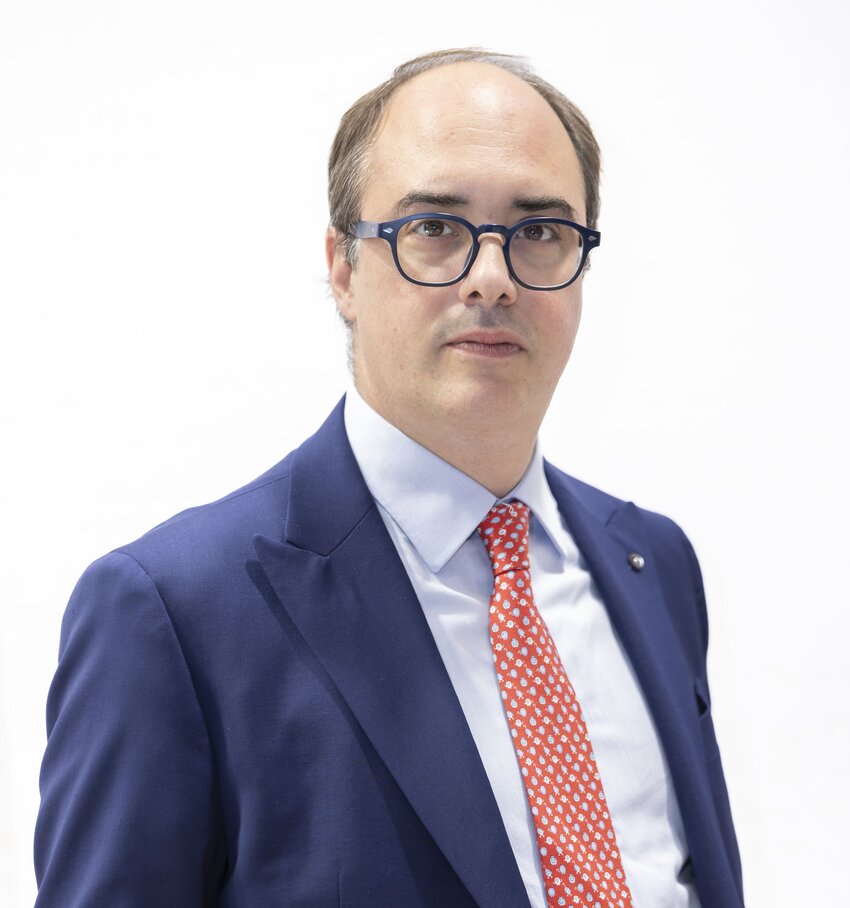
<<The transition to a circular economy must not be seen as another administrative obligation or an additional cost. For Italy, textile EPR must become an industrial policy, particularly because this sector, made up largely of small and medium-sized enterprises, already has a natural focus on resource recovery and quality>> says managing director Michele Priori.
<<This culture can now evolve into a genuine competitive advantage, provided the new system is supported by measures that encourage eco-design and innovation, as well as the development of domestic recycling facilities and supply chains. Cobat Tessile is ready to support businesses with the expertise, services and consortium-based model needed to turn regulatory obligations into opportunities for growth and to revitalise Made in Italy.>>
Cobat Tessile at Ecomondo 2026
Cobat Tessile offers its members a range of tools, starting with an easy-to-use IT system where they can register and track the journey of end-of-life products, and a comprehensive network of treatment facilities spread across the whole country, capable of optimising logistics and management.
In addition, the consortium offers a training and consultancy platform covering the circular economy, environmental sustainability, health and safety. This provides tailored training on specific topics and is complemented by a wide range of other activities organised at corporate communications level (visibility, campaigns and positioning), project development and research (technical working groups, research and development on sector-specific issues) and bespoke design (services for members tailored to their specific needs).
Ecomondo 2026 will provide an opportunity to explore the full range of tools and options available from Cobat Tessile. The consortium will welcome visitors at the Rimini Exhibition Centre at the Consorzi Cobat stand [Hall B3 – Stand 109–208].
Article written by Maria Carla Rota
This blog is a joint project by Ecomondo and Renewable Matter
Credits
Photo by Cobat Tessile
PUBBLICAZIONE
12/10/2026
Altre news correlate

06/07/2023
5 Start-up circolari da non perdere

03/04/2025
5 under 30 che hanno rivoluzionato l'economia circolare

23/04/2025
7 giovani under 30, leader della green and circular economy
05/12/2024
7 trend nell'economia green che definiranno il 2025

15/12/2024
AI, big data e tecnologie predittive per la Blue Economy

30/05/2023
Acqua in Europa: come affrontare il cambiamento climatico

17/12/2025
Africa, frontiera della prossima economia verde

29/04/2025
Agricoltura di precisione: quali vantaggi offre e come può sostenere i paesi del Nordafrica?

10/05/2024
Alluvione in Emilia-Romagna, un anno dopo

26/11/2025
Aziende: come comunicare la transizione nell’era del greenlash?

24/04/2025
Batterie al sodio: la tecnologia che può rendere l'UE più indipendente dai materiali critici

29/01/2026
Benessere e felicità: quando la scienza incontra impresa, società e natura

23/06/2026
Bioeconomy in North Africa: Between Resource Abundance and Structural Constraints in Tunisia, Morocco, and Egypt

07/04/2026
Bioenergy and industrial ecosystems: models and research projects in Europe