
The bioeconomy has moved beyond technical jargon and policy abstraction to become central in global debates on sustainable growth within planetary limits. In North Africa, the debate is no longer about the relevance of the bioeconomy, but about its real capacity to scale. The region already operates under severe ecological constraints, where water stress is a constant condition. Agriculture alone consumes 75-80% of freshwater in Tunisia, Morocco, and Egypt. Despite abundant untapped resources such as agricultural residues, organic waste, and biomass, the systems needed to collect, process, and finance them remain underdeveloped.
- You may also be interested in: Africa, a frontier for the next Green Economy
National Pathways: Potential and Structural Barriers
On the ground, these dynamics turn into everyday constraints in fragmented systems of resource use and management.
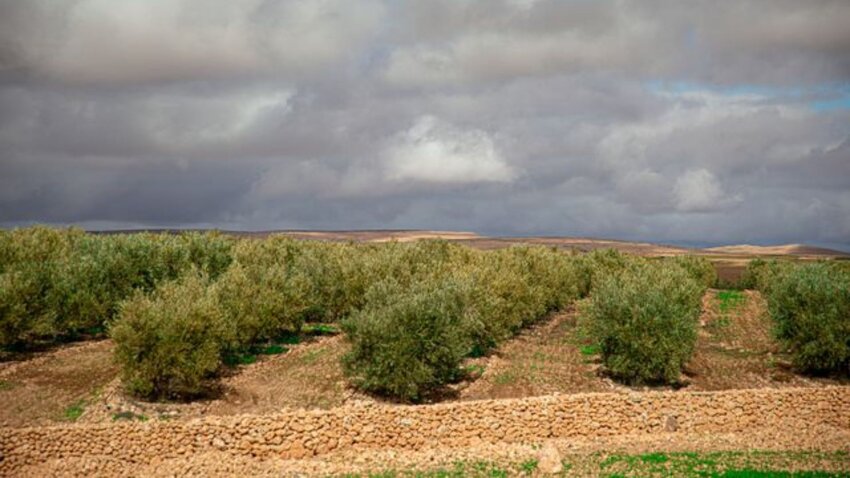
Tunisia is the world’s second-largest olive oil exporter, producing between 200,000 and 300,000 tonnes in high-yield years, according to the International Olive Council. Behind this figure lies a significant but still underused resource base for the bioeconomy, including olive mill residues, date palm waste, and cereal biomass. This potential is constrained by unstable supply, as droughts and olive production cycles cause frequent fluctuations that hinder industrial scaling. While olive residues are suitable for biogas production, their use remains limited due to weak collection systems and poor transport infrastructure.
Mehdi Abdelli, an expert in circular economy and public policy in Tunisia, notes that the main barrier to developing a functional bioeconomy in North Africa is not the availability of biological resources, but rather the absence of an integrated system capable of transforming them into economic value. He explains that fragmented governance structures, limited financing mechanisms, and weak infrastructure continue to restrict most initiatives to small-scale or pilot projects, preventing their expansion at the national or regional level.
Experimental studies in southern Tunisia confirm the technical feasibility of co-digestion processes, but these remain largely confined to laboratory conditions and early-stage pilots with limited capacity to scale or attract financing.
Morocco ranked 9th in the 2024 Climate Change Performance Index. National strategies point toward a gradual shift in renewable energy integration and market liberalisation. But implementation on the ground tells a more uneven story.
Financing remains a key constraint, alongside limited grid access for smaller independent producers. Although Morocco has reformed parts of its renewable energy framework and allowed private participation in electricity generation, regulatory delays and rigid market structures continue to weaken the viability of independent bioenergy projects. As a result, many circular economy initiatives remain localised, with limited spillover at the national level.
Egypt, by contrast, reflects a more fragmented transition. As the region’s most populous country with over 114 million people in 2024, it generates large volumes of agricultural and municipal waste, particularly from rice straw, livestock, and urban systems. Yet expansion remains constrained by water stress, soil salinisation, and governance fragmentation across agricultural, energy, and environmental institutions, limiting coordination and execution. In the Delta Nile region, these pressures are particularly acute, where environmental stress and institutional fragmentation reinforce each other. Waste-to-energy projects exist but remain limited in scale.
Despite their different political, economic, and environmental contexts, Tunisia, Morocco, and Egypt face a remarkably similar challenge. None suffers from a shortage of biomass resources. Instead, the main constraint lies in the systems required to transform those resources into economic value. Across the region, financing gaps, fragmented governance, and weak infrastructure continue to limit the transition from resource availability to industrial-scale bioeconomy development.
- You may also be interested in: From Mission 300 to the Mattei Plan: institutions and businesses together for a sustainable African transition
Why the Bioeconomy Matters for North Africa
From an economic perspective, the bioeconomy offers potential for green job creation, especially in rural areas, through activities like biomass collection, transport, and processing, providing alternative incomes and reducing migration pressures. It could also reduce dependence on imported energy and chemical inputs by expanding local production of biogas and organic fertilisers. More broadly, bio-based value chains may support industrial diversification, including sectors such as bioplastics and bio-based chemicals, though these remain at an early stage in the region.
Environmentally, the bioeconomy can reduce pressure on waste systems and lower emissions from organic waste. In Egypt, seasonal rice straw burning still causes severe air pollution, while in Tunisia and Morocco, olive mill wastewater remains poorly treated. Better management of organic waste could cut methane emissions, support climate targets under the Paris Agreement, and improve soil quality through recycling.
That said, most of these outcomes remain conditional on infrastructure, governance capacity, and investment flows, which are still uneven across the region.
For European partners, the stakes are concrete. The Green Deal and the Carbon Border Adjustment Mechanism may create demand for low-carbon inputs, but scaling the bioeconomy will still depend on structural reforms in financing, governance, and infrastructure. Without such changes, the bioeconomy risks remaining fragmented as a series of isolated pilot projects with limited structural impact.
Article written by Rim Ben Khalifa
References
Food and Agriculture Organization (FAO). AQUASTAT Water Resources Database.
Food and Agriculture Organization (FAO. Egypt Country Profile.
World Resources Institute (WRI). Water Stress Index.
International Olive Council (IOC). Olive Oil Production Statistics.
Mouftahi, M. et al. (2020). Biomethane Potential Assessment of Agricultural Residues in Tunisia. Processes, 9(1), 48.
Bousselmi, L. et al. (2020). Sustainable Organic Waste Handling in Tunisia. Sustainability.
Hafidi, M. et al. (2025). From waste to biofuels: Valorising olive mill wastewater into biomethane and biohydrogen for environmental integration and sustainability in the Fès-Meknès region, Morocco.
OECD (2024). Circular Economy and Structural Transition in Morocco.
World Bank. Egypt: Population and Macroeconomic Indicators.
Carnegie Endowment for International Peace (2025). Morocco’s Climate Strategy.
Water (2024). Study on Water Resources and Environmental Pressures in Egypt. MDPI, 16(1), 157.
Rajhi, A. et al. (2018). Peer-reviewed research on biomass and olive-waste valorisation in North Africa.
This blog is a joint project by Ecomondo and Renewable Matter
Credits
Photo by Tony Zohari
PUBBLICAZIONE
23/06/2026
Altre news correlate
08/09/2022
Inquinamento da plastica in mare: cause, conseguenze e soluzioni

21/03/2024
Ma dai, è solo un mozzicone
24/07/2023
RAEE: una miniera di materie prime critiche
20/09/2023
La plastica: da problema a risorsa
30/05/2023
Acqua in Europa: come affrontare il cambiamento climatico
03/04/2025
5 under 30 che hanno rivoluzionato l'economia circolare
21/04/2023
La giornata mondiale della terra, vista dal mare
19/05/2023
Ecomondo Mexico ed economia circolare in America Latina

31/07/2023
Economia circolare in Cina. Ieri, oggi e domani
14/05/2023
Sulla strada della sostenibilità: elettrificare il trasporto merci

06/11/2023
Lifegate presenta Water Defenders Alliance, una grande alleanza per difendere le nostre acque
20/10/2023
Legno-arredo, la filiera che ha messo la sostenibilità al centro

07/06/2023
Le maree stanno cambiando

03/08/2023
La filiera del riciclo della carta: eccellenza italiana con margini di miglioramento
10/10/2023
Responsabilità estesa ed ecoinnovazione, la sfida del tessile sostenibile non può attendere
13/05/2023
Europa: arriva il nuovo piano industriale per l’era net-zero