
When we talk about the circular economy today, we’re referring to a much broader field than just recycling. This transformation affects not only the way we produce and consume, but also how we design objects, build cities, use natural resources, and manage materials at the end of their life cycle.
From this perspective, the six vertical sectors that make up Ecomondo offer six possible vantage points. Different sectors, each with distinct challenges and varying levels of maturity, yet all grappling with the same question: how can we transition from an economy that is still largely linear to a system in which resources remain in circulation for as long as possible?
The answer is not obvious. We are still far from true circularity, in part because we continue to overlook the value of many negative externalities linked to extraction, production, and waste, leaving the economic system to inexorably favor virgin materials – fossil, mineral, and organic – over regenerated ones.
- You may also be interested in: Ecomondo 2026, Mexico as guest country: new opportunities for the circular economy
The next step for Europe will be the Circular Economy Act, expected by the end of the year: the goal is to double the rate of circular use of materials, from 12.2% in 2024 to 24% by 2030, with a focus on critical raw materials.
Among the key issues to be addressed are the harmonisation and digitisation of EPR schemes, a possible revision of the WEEE Directive, and, more generally, changes in design, business models, and behavior. Within this framework, we can examine six different sectors, looking for signs of the ongoing transformations in each one.
“Blue economy”: the sea begins on land
<<The sea does not begin at the coast: we need a source-to-sea approach>>. Elisa Conti, Project Manager at CNR DSSTTA, sums up one of the key issues of the blue economy: around 80% of the waste and plastic found in the oceans comes from the mainland, carried by rivers, rain, wind and urban runoff. Protecting marine ecosystems therefore means taking action upstream, as well as focusing on coastal regeneration, fisheries and aquaculture, marine biotechnology, sustainable tourism, ports and coastal activities.
According to the Teha Group’s Blue Book, in 2024 in Italy the sector – which employs over one million workers – generated €78.9 billion in added value and €224.8 billion in total value, equivalent to 11.4% of GDP. Among the emerging challenges are desalination, brine management and technologies for monitoring ecosystems and reducing pollution.
- You may also be interested in: Global water crisis: the solution lies in efficiency, reuse and investment
“Circular & Healthy City”: circularity takes shape in the city
In Europe, over 75% of the population lives in urban areas, which account for around 70% of climate-changing emissions. Creating circular cities means rethinking materials, energy, water, land and infrastructure, from building design to the management of resource flows through digital technologies. This happens in part because circularity and health are intertwined: less traffic and less pollution, more efficient use of water and waste, and greater availability of green spaces are all factors that affect quality of life.
In spring 2026, the Italian Network of Circular Cities was established, sponsored by the City of Genoa in partnership with Italia Circolare, to bring together regional capitals committed to circular, sustainable, resilient and inclusive urban models.
At the European level, the Circular Cities and Regions Initiative (CCRI) operates, allowing cities and regions to share experiences and trial solutions tailored to their different local contexts.
“Paper”: from recycling to design
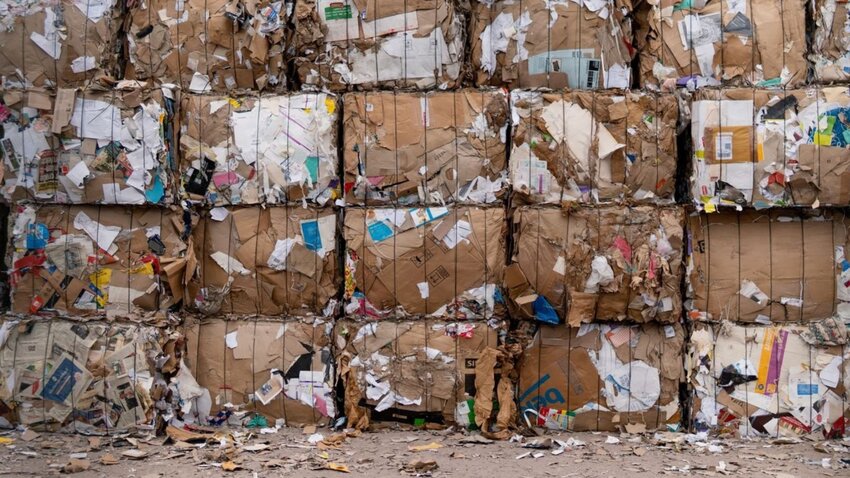
Italy is one of the best-performing countries in Europe: in 2025, 92.6% of paper and cardboard packaging – amounting to 4,612,000 tonnes – was given a new lease of life, according to Conai. This result reflects a well-established recycling supply chain, but the bar is now being raised: what happens before that packaging becomes waste?
With this in mind, the Packaging and Packaging Waste Regulation (PPWR), becoming legally binding in August 2026, does not merely focus on recycling. The new European framework also addresses waste prevention, reuse and packaging design, with the aim of making the system as a whole more efficient. Circularity thus moves from the bin to the drawing board, through eco-design, new materials and a rethinking of supply chains.
“Textile”: closing the fibre loop
All eyes in Italy and across Europe are on the textile sector, grappling with the introduction of extended producer responsibility schemes. Italy is taking the lead: the regulation is expected by December 2026 or January 2027, as suggested by Minister Gilberto Pichetto Fratin at the inauguration of the new plant in San Pietro Mosezzo, built by Haiki+ and Igers. The hub, a new integrated and automated textile recycling platform featuring proprietary patented technology, has an authorised capacity of 19,000 tonnes per year and demonstrates how a recovery rate of over 96% can be achieved.
The sector presents particular challenges. According to ISPRA’s 2025 Rapporto Rifiuti Urbani (Urban Waste Report), 180,313 tonnes of textile waste were collected in Italy in 2024 via separate collection, compared with 171,539 tonnes in 2023 (+5.1%). However, the system captures only one-fifth of the waste: it is estimated that as much as 725,000 tonnes end up in unsorted waste, bringing the total production to almost 905,000 tonnes.
Recovering these resources means reducing the use of virgin materials and reintroducing fibres and materials into new production cycles. Among the systemic issues is the problem of non-compliant labels: 37% do not correspond to the actual composition of the fabric, as revealed by a recent inspection coordinated by the European Commission. This is a challenge that can, however, be overcome thanks to technology: hyperspectral systems, lasers and other solutions are able to identify and classify materials with an accuracy approaching 100%.
“Trenchless District”: building without digging
Technological innovation is also revolutionising the underground infrastructure sector: trenchless, or no-dig, technologies make it possible to reduce open-cut excavation, with benefits in terms of time, energy consumption, accidents, and social and environmental impacts. Applications include electricity, gas and energy networks, water mains and sewers, telecommunications, as well as slope stabilisation and the remediation of contaminated sites.
For local authorities, this means minimising the disruption and impact caused by excavation, materials, debris and site restoration. In this regard, UNI (the Italian Standardisation Body) and IATT (the Italian Association for Trenchless Technology) announced in spring 2026 the publication of the first national technical standards dedicated to trenchless (no-dig) technologies. This marks a historic milestone for the sector: the new UNI 11990-1, 11990-2 and 11990-3 standards provide a clear framework for the installation and maintenance of water, gas, energy and telecommunications networks, drastically reducing environmental impact and disruption to the public.
“Innovation District”: where technologies and expertise unite
Finally, a look at the labour market, struggling to keep pace with the rapidly developing green economy, as highlighted in the new book by Tessa Gelisio and Marco Gisotti, GREEN JOBS. Come transizione ecologica e intelligenza artificiale stanno cambiando il lavoro (How the ecological transition and artificial intelligence are changing the job market; Edizioni Ambiente, 2026).
Over the coming years, the total demand for workers in Italy is estimated to be between 3.3 and 3.7 million: a growing proportion of these opportunities will relate to existing professions, which will, however, require new technical, digital and environmental skills. <<The real emergency today is understanding which jobs are already changing, while we continue to imagine them as they were ten years ago,>> the authors observe.
The work of the future will not be solely digital: it will consist of hybrid, technical and environmental skills, as well as the ability to adapt. Even today, four-fifths of all roles sought after in the labour market require green and digital skills. The risk is that we continue to discuss work by looking in the rear-view mirror, while the market has already changed direction.
Article written by Emanuele Bompan
This blog is a joint project by Ecomondo and Renewable Matter
Credits
Photo by Willians Huerta
PUBBLICAZIONE
25/09/2026
Altre news correlate

06/07/2023
5 Start-up circolari da non perdere
03/04/2025
5 under 30 che hanno rivoluzionato l'economia circolare

23/04/2025
7 giovani under 30, leader della green and circular economy
05/12/2024
7 trend nell'economia green che definiranno il 2025

15/12/2024
AI, big data e tecnologie predittive per la Blue Economy

30/05/2023
Acqua in Europa: come affrontare il cambiamento climatico

17/12/2025
Africa, frontiera della prossima economia verde

29/04/2025
Agricoltura di precisione: quali vantaggi offre e come può sostenere i paesi del Nordafrica?

10/05/2024
Alluvione in Emilia-Romagna, un anno dopo

26/11/2025
Aziende: come comunicare la transizione nell’era del greenlash?
24/04/2025
Batterie al sodio: la tecnologia che può rendere l'UE più indipendente dai materiali critici

29/01/2026
Benessere e felicità: quando la scienza incontra impresa, società e natura

23/06/2026
Bioeconomy in North Africa: Between Resource Abundance and Structural Constraints in Tunisia, Morocco, and Egypt
07/04/2026
Bioenergy and industrial ecosystems: models and research projects in Europe