
When a sudden rumble shakes the Konya Closed Basin in central Turkey’s semi-arid agricultural heartland, residents no longer wonder what is happening: they already know it signals the formation of a sinkhole.
The sharp rise in sinkholes across the basin over the past decade has been driven by a rapid and severe decline in groundwater levels. “The main cause is the widespread drilling of illegal and unregulated wells,” explains Irem Daloglu Cetinkaya, assistant professor at the Bogazici University’s Institute of Environmental Sciences.
In Konya, the General Directorate of State Hydraulic Works (DSI) no longer issues licenses for new wells, pushing many farmers toward illegal drilling. Official data show that around 78% of agricultural irrigation in the Konya Closed Basin relies on groundwater, and roughly 60% of this use comes from unauthorised wells. As groundwater is depleted at high speed, the region’s karstic structures lose support, giving way to scenes that resemble something out of a science fiction film.
In Turkey, 79% of water is used for agriculture. Outdated and inefficient irrigation techniques in agriculture lead to excessive water use and significant losses, while also contributing to soil degradation and salinisation in arid regions. However, Dr Cetinkaya emphasises that infrastructure investment alone is not enough; she calls instead for a more holistic approach shaped by stronger agricultural policies. “The technology is there, but it is either not implemented, not applied correctly or not sustained over time. Crop pattern planning is also crucial,” she says.
A water-stressed country
Turkey is already considered a water-stressed country, with population growth and climate pressure likely to drive it toward water scarcity in the coming decades. The DSI is carrying out work to modernise and improve irrigation infrastructure, convert open-channel systems to closed-pipe systems, renew ageing infrastructure and develop automation systems.
According to the newly adopted National Water Plan (2026-2035), there is a need to increase the capacity of monitoring systems, develop water and wastewater infrastructure and promote sustainable practices in the use of water across different sectors in the country. “One of Turkey’s key priorities in the field of water management is securing the necessary investment and funding to develop this infrastructure and promote these practices,” the plan states.
The same plan also provides for an increase in sustainable and green infrastructure investments to expand renewable energy infrastructure, promote water recovery and the efficient use of other natural resources, and prioritise water-related infrastructure investments in catchment areas at risk of drought and flooding.
- You may also be interested in: Mediterranean Sea: restoring the world beneath the waves
New water infrastructure projects
Last month, Turkish President Tayyip Erdogan unveiled 563 new water infrastructure projects, aimed at boosting water storage, expanding irrigation and strengthening flood protection. However, Dr Akgun Ilhan, a water management expert at Istanbul Policy Center, says that strengthening infrastructure alone is not sufficient to ensure water security, stressing that decisive action on climate change is essential.
According to a 2025 assessment by the World Bank, infrastructure in many cities across Turkey is ageing and inefficient. Drawing attention to its lack of climate resilience, Dr Ilhan says, “The issue is not just laying new pipes, but making infrastructure resilient to climate impacts and disasters.” She believes that key investment opportunities lie in reducing water losses and leakage, rehabilitating existing networks, implementing smart monitoring and pressure management systems, reusing treated wastewater, recovering energy and resources from sludge and modernising irrigation systems.
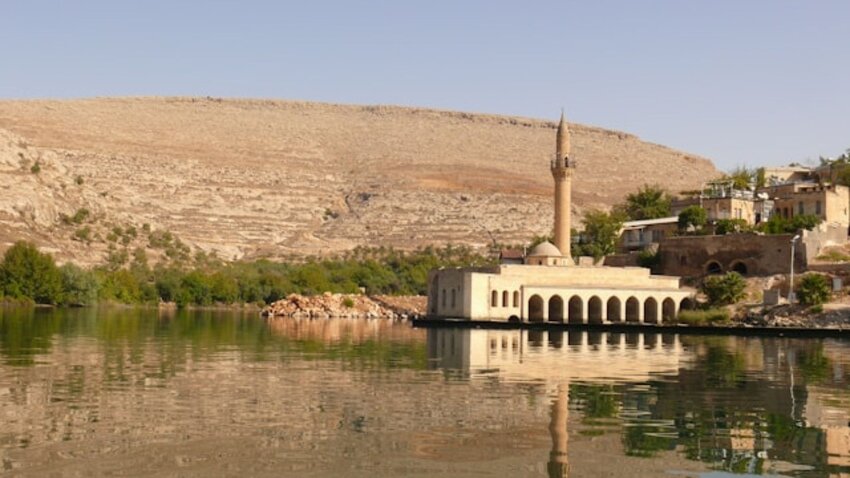
A positive example: Istanbul
Meanwhile, one of the more positive examples of water infrastructure in Turkey can be found in Istanbul. In the 1990s, due to rapid population growth, the long queues once seen at public fountains faded as infrastructure improvements took effect.
Professor Dr Seval Sozen, board member of Istanbul Water and Sewerage Administration (ISKI), notes that water availability in Istanbul, home to over 15 million people, does not match its population size, which is why the city draws water from other basins. “The water distribution system and sewerage infrastructure are quite strong,” Sozen, also a faculty member in Environmental Engineering at Istanbul Technical University, says.
The rate of water loss and leakage in Istanbul, which stood at 22% five years ago, fell to 18% by the end of 2024. This is due to improvements made by ISKI. Improvement works are also being carried out across Turkey, but progress is slow as they require significant investment.
Istanbul’s infrastructure operates on a combined sewer system, meaning storm-water and wastewater are collected in the same network. Prof. Sozen explains that separating rainwater from wastewater is increasingly becoming a necessity: “This requirement is pushing us toward a bottleneck, because treatment plants are no longer able to handle the load.”
She adds that sudden, intense rainfall events driven by climate change also place significant stress on wastewater infrastructure, with direct impacts on treatment facilities. Istanbul currently has 91 wastewater treatment plants, but experts say more facilities are needed and that the wastewater infrastructure requires further upgrading.
Article written by Burcu Karakaş
This blog is a joint project by Ecomondo and Renewable Matter
Credits
Photo by ZEKERIYA SEN
PUBBLICAZIONE
26/05/2026
Altre news correlate
08/09/2022
Inquinamento da plastica in mare: cause, conseguenze e soluzioni

21/03/2024
Ma dai, è solo un mozzicone
24/07/2023
RAEE: una miniera di materie prime critiche
20/09/2023
La plastica: da problema a risorsa
30/05/2023
Acqua in Europa: come affrontare il cambiamento climatico
03/04/2025
5 under 30 che hanno rivoluzionato l'economia circolare
21/04/2023
La giornata mondiale della terra, vista dal mare
19/05/2023
Ecomondo Mexico ed economia circolare in America Latina

31/07/2023
Economia circolare in Cina. Ieri, oggi e domani
14/05/2023
Sulla strada della sostenibilità: elettrificare il trasporto merci
06/11/2023
Lifegate presenta Water Defenders Alliance, una grande alleanza per difendere le nostre acque

20/10/2023
Legno-arredo, la filiera che ha messo la sostenibilità al centro

07/06/2023
Le maree stanno cambiando

03/08/2023
La filiera del riciclo della carta: eccellenza italiana con margini di miglioramento

10/10/2023
Responsabilità estesa ed ecoinnovazione, la sfida del tessile sostenibile non può attendere

13/05/2023
Europa: arriva il nuovo piano industriale per l’era net-zero