
From Posidonia meadows to gorgonian forests, marine restoration is bringing life and complexity back to Mediterranean ecosystems.
The Mediterranean is one of the richest ecosystems on the planet. Although it covers less than 1% of the world’s ocean surface, it is home to around 10% of all known marine species, concentrating an extraordinary density of biodiversity within a relatively small area. Yet this delicate balance has long been under strain from human activity: pollution, overfishing (including illegal fishing), the spread of invasive species, and the heavy maritime traffic that cuts across its waters. Added to these pressures is the climate crisis. According to the European State of the Climate 2025 report, the entire Mare Nostrum experienced at least strong marine heatwave conditions over the past three years. In 2025, 51% of the basin experienced events classified as severe or extreme — the third-highest figure ever recorded, following 65% in 2024 and 53% in 2023. This phenomenon is reshaping marine ecosystems and threatening endemic species such as Posidonia oceanica, whose populations have declined by 34% over the past fifty years.
Against this backdrop, restoring marine ecosystems and rehabilitating degraded habitats has become an urgent priority, essential to rebuilding resilience in a sea increasingly exposed to the effects of climate change and human pressures. We spoke about this with Roberto Danovaro, ecologist, university lecturer and author of the book Restaurare la natura (Edizioni Ambiente, 2025). A member of the European Academy of Sciences, he chairs the Scientific Council of WWF Italia and has served as president of several research institutions and scientific societies, including the Stazione Zoologica Anton Dohrn.
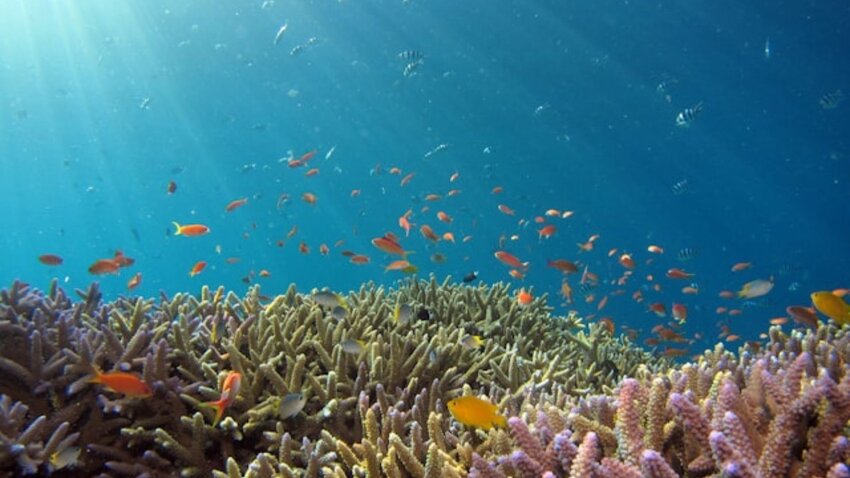
What are the main economic benefits associated with restoring marine ecosystems? Is it possible to develop a fully-fledged economic sector based on the restoration of nature?
The sea is an immense reservoir of life and a generator of wealth worth some three trillion euros, driven by tourism, transport, energy and food production. It is also the planet’s most important form of “natural capital”, providing essential services for human wellbeing. When seagrass meadows, algal forests, and rocky or sandy seabeds are degraded or scarred by bottom trawling, we lose those services and the economic returns they generate. In some habitats, such as oyster beds, the degradation levels now exceed 80%. Restoring them means reviving the sea’s vital functions and laying the foundations for a regenerative economy.
It is also potentially a highly profitable investment. Every euro invested in ecological restoration can generate returns up to twenty times greater over the long term. The recovery of macroalgal forests can yield between 55,000 and 190,000 euros per hectare each year, while seagrass meadows deliver economic returns of around 20,000 euros per hectare annually. What is now emerging is a genuine “blue economy” linked to ecological restoration. Regenerating an oyster bed, for instance, costs less than constructing rock or concrete barriers to prevent coastal erosion. And it is self-sustaining, requiring no maintenance. The benefits are remarkable, particularly given that the “restoration industry” is also creating jobs for biologists, divers, drone technicians, environmental engineers and marine plant nursery specialists, professions that are currently in high demand in Europe.
This is also a scientific challenge. European projects such as MER, led by ISPRA, and REDRESS at the Università Politecnica delle Marche are testing innovative solutions: Posidonia sods cultivated in nurseries, marine sensors capable of monitoring habitat health and robotic systems able to transplant gorgonians without damaging the seabed. These innovations are expected to be deployed on a large scale by companies specialising in the sector. Thanks to such technologies, restoring nature is becoming a new driver of development for coastal communities and businesses alike. By sequestering carbon, for example, a seagrass meadow helps mitigate climate change, thereby providing a “service” that markets are now beginning to recognise.
At the European level, the European Union’s Nature Restoration Law has made ecological restoration a strategic objective for the future economy, setting a target to restore at least 20% of degraded habitats by 2030. This is already fuelling a growing market, with more than 350 European companies developing technologies and services linked to “blue restoration”.
- You may also be interested in: Stoyan Tchoukanov, “Bioeconomy is still largely linear; we need to make it circular”
Could you give us some examples of marine restoration projects in the Mediterranean that have delivered important results?
One emblematic example comes from Gökova Bay in Turkey. Here, a form of passive restoration was implemented. The establishment of no-fishing zones, combined with monitoring by marine rangers, enabled heavily damaged habitats to recover. Within a decade, fish biomass increased tenfold, while fishermen’s incomes rose by 400%. Apex predators, such as sharks and groupers, returned to the area, and the project has created jobs for former fishermen, now working as rangers, scuba instructors, and tour guides. This shows that conservation, restoration, and development can coexist.
A second example is that of Posidonia oceanica in Andalusia, in Spain, where the regional government, together with Red Eléctrica de España, launched a project to protect and restore around 6,700 hectares of seagrass meadows. After two years, plant survival rates had reached 90%. These meadows shield coastlines from erosion, filter seawater and support tourism. The project’s success was largely due to the active involvement of local communities.
In Italy, numerous restoration initiatives are currently underway, targeting gorgonian forests, deep-water corals and algal forests from the Ligurian Sea to Sicily, and from the Adriatic Sea to Sardinia. Following the wreck of the Costa Concordia, the gorgonian forests that populated the coralligenous reefs were severely damaged. A group of scientists, working alongside local fishermen, decided to transplant gorgonians recovered from abandoned fishing nets lost at sea. Within a few years, more than 80% of the transplants had survived. The initiative succeeded because it involved the local community. It stands as a model worth highlighting, demonstrating how a coastal community can become the driving force behind the recovery of its own sea, generating benefits for everyone. Artisanal fishermen, in particular, became the first guardians of the restored habitats. These results are very encouraging and show that taking action is possible and necessary if we want to continue calling Italy the Bel Paese (meaning Beautiful Country, editor’s note).
What are the main obstacles to restoring marine ecosystems, and which do you believe are the most difficult to overcome?
I see two principal obstacles of a social and political nature standing in the way of the objectives set by the European Union. The first is an ideological stance that is prejudicially hostile towards the environment, as has been — and in some cases still is — evident when it comes to parks and marine protected areas.
The second obstacle is cultural. Many people continue to see restoration as a cost rather than as an investment in a new form of economy. There is still too little awareness of the value of ecosystem services. To overcome this obstacle, it is important to inform people about the economic and social benefits of a healthy ocean and to engage the public and businesses. Restoring the marine environment is, moreover, more complex and costly than planting trees to regenerate a forest. And in a European and global climate increasingly focused on rearmament, securing the financial resources needed for restoration becomes even more challenging. Not only humanity, but nature too, needs peace.
On top of these issues, two others are worth mentioning. The first is that bottom trawling continues to devastate seabeds, often operating illegally even within marine protected areas. Industrial overfishing also deprives small-scale fisheries of resources, fuelling social tensions. Added to this are pollution, coastal cementification and the spread of invasive species accelerated by rising sea temperatures.
To what extent is climate change likely to complicate marine restoration efforts, and how are intervention strategies adapting to increasingly unpredictable scenarios?
The Mediterranean is becoming warmer and less oxygenated. The marine heatwaves recorded in recent years have reached unprecedented temperatures, causing widespread mortality among gorgonians, corals, algae, sea urchins and many other organisms. At the same time, tropical and invasive species are settling in the Mare Nostrum. The sea is becoming an increasingly unpredictable — and, under extreme conditions, even hostile — environment. For this reason, the development of restoration strategies must take “climate change” into account in order to achieve the desired results.
- You may also be interested in: Sustainability, what will 2026 look like? 10 trends and events to look forward to
Some projects focus on populations that are more heat-tolerant, species with greater genetic diversity or local variants that have already proven capable of surviving extreme conditions. Others choose to restore habitats that could serve as climate refuges, areas less exposed to warming, to guarantee better conditions for the regeneration of the restored habitats.
Adapting to a changing climate is essential, but this cannot come at the expense of tackling the root causes of these transformations. For example, by combining restoration with climate mitigation. Underwater meadows, kelp forests, and gorgonian and coral reefs are extraordinary blue carbon sinks that help mitigate climate change. Restoring them means protecting biodiversity and sequestering atmospheric CO₂. Marine restoration can thus become a pillar of the ecological transition and the fight against climate change.
Article written by Lucrezia Lenardon
This blog is a joint project by Ecomondo and Renewable Matter
Credits
Photo by Hiroko Yoshii
PUBBLICAZIONE
26/05/2026
Altre news correlate
08/09/2022
Inquinamento da plastica in mare: cause, conseguenze e soluzioni
21/03/2024
Ma dai, è solo un mozzicone
24/07/2023
RAEE: una miniera di materie prime critiche
20/09/2023
La plastica: da problema a risorsa
30/05/2023
Acqua in Europa: come affrontare il cambiamento climatico
03/04/2025
5 under 30 che hanno rivoluzionato l'economia circolare
21/04/2023
La giornata mondiale della terra, vista dal mare
19/05/2023
Ecomondo Mexico ed economia circolare in America Latina
31/07/2023
Economia circolare in Cina. Ieri, oggi e domani
14/05/2023
Sulla strada della sostenibilità: elettrificare il trasporto merci
06/11/2023
Lifegate presenta Water Defenders Alliance, una grande alleanza per difendere le nostre acque
20/10/2023
Legno-arredo, la filiera che ha messo la sostenibilità al centro
07/06/2023
Le maree stanno cambiando

03/08/2023
La filiera del riciclo della carta: eccellenza italiana con margini di miglioramento
10/10/2023
Responsabilità estesa ed ecoinnovazione, la sfida del tessile sostenibile non può attendere
13/05/2023
Europa: arriva il nuovo piano industriale per l’era net-zero