
2026 will be an important year for sustainability and the green economy: while the European Union takes new steps towards greater circularity, with the Circular Economy Act and other measures to come, at a global level trends will mature, bound to influence the course of the transition. According to analysts, 2026 will be shaped by a growing gap between economic fundamentals and climate policies. Many governments, formerly at the forefront on climate and environment, are shifting priorities to other aspects, such as national security, trade and technological leadership, in an increasingly fragmented geopolitical environment. Investment in green technologies is increasing, but driven more by commercial strength than policy support: markets reward transition solutions that are already working, while remaining more cautious towards less mature technologies, such as CO₂ capture or advanced biofuels.
- You may also be interested in: Circular Economy in the EU: 7 news for 2026
10 trends and events to look forward to in order to understand how sustainability will evolve in 2026
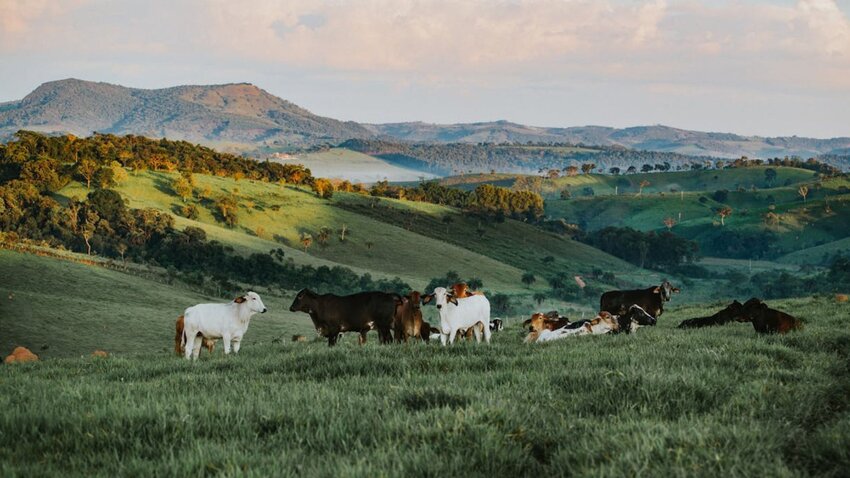
1. Sustainable grazing and pastoralism
2026 will be the International Year of Rangelands and Pastoralists, declared in 2022 by the United Nations upon the proposal from Mongolia and supported by 60 countries around the world. It aims to raise awareness about the crucial role of pasturelands in environmental sustainability, food security and the resilience and livelihoods of rural communities. Coordinated by FAO, the year will be devoted to promoting sustainable land practices, livestock health, restoring pastoral ecosystems, establishing a level playing field for market access and investing in responsible livestock systems.
2. Water and Oceans
On 17 January 2026, the High Seas Treaty will enter into force, following ratification in September 2024. This historic agreement will extend marine protected areas, establish reserves for protection, and regulate the sustainable use of ocean resources beyond national jurisdictions. An essential step to protect biodiversity, mitigate the impacts of the climate crisis and secure food resources for coastal populations that depend on the sea.
3. Fossil Fuels
On 28-29 April 2026, Colombia will host the first international conference Just Transition Away from Fossil Fuels, in cooperation with the Netherlands and with the support of more than 80 states, signatories of the roadmap for fossil fuel phase-out and the definition of shared strategies on energy transition. An important but not decisive step: a roadmap approved in Belém, at the COP, with common goals for 196 countries, could have given a clearer signal to finance and the oil and gas sector.
4. Biodiversity
From 19 to 30 October 2026, the COP17 on Biodiversity, the main UN event dedicated to the protection of ecosystems, will be held in Yerevan, Armenia. The conference will serve as a test case for assessing progress in implementing the Kunming-Montreal Global Biodiversity Framework and to align national commitments with new restoration and conservation needs.
5. Climate change
A few weeks later, from 9 to 20 November 2026, it will be the turn of COP31: the climate summit will take place in Turkey, in Antalya, with the Australian co-chair representing the Pacific Island countries. Following the tensions and unfulfilled expectations of COP30 in Brazil, a return to transitional negotiations will be expected, in a more logistically accessible location than the Amazon. If COP30 relived the negotiating chaos and disastrous failure of the 2009 Copenhagen summit, COP31 has the cards to start laying the foundations for a renewal of the process, just as happened in 2010 in Cancun, at COP16, where the foundations for the Paris Agreement were laid.
6. Carbon market
From 1 January 2026, the CBAM system, currently in a transitional phase, will come fully into force. Introduced by Regulation (EU) 2023/956, it is the European tool designed to align the carbon price paid by non-EU producers with that paid by European companies under the Emission Trading System (EU ETS). Importers will have to buy certificates for CO2 emissions incorporated in specific goods (steel, aluminium, cement, fertilisers, hydrogen, electricity), thus paying a price linked to the EU ETS. The main objectives are avoiding carbon leakage and stimulating the adoption of higher environmental standards globally.
7. Critical Raw Materials
The supply of critical materials will be the focus of global attention. To this end, through the RESourceEU Action Plan, in support of the Critical Raw Materials Act regulation, the European Commission will put €3 billion in funds on the line with the aim of reducing dependence on China and protecting European industry from critical raw material price volatility and geopolitical tensions. Among the initiatives, early 2026 will include the establishment of the European Critical Raw Materials Centre, a hub dedicated to market monitoring, project financing and public-private coordination on strategic supply chains.
8. Africa
With a population of 1.5 billion, an extraordinary wealth of biodiversity and one of the highest renewable energy potentials in the world, Africa is now emerging as one of the key players in the green transition. A continent to keep an eye on, therefore, all the more so in a decidedly unstable geopolitical landscape. Among the events to watch is Africa's Green Economy Summit, 24-27 February 2026 in Cape Town, which will connect global capitals and African green economy projects.
9. Climate risk
Physical climate risk is increasingly weighing on private assets, especially infrastructure, ports, logistics networks and real estate. Those potentially exposed to greater than 20% losses could increase fivefold by 2050, according to MSCI analysis (Morgan Stanley Capital International). The greatest damage, however, does not come from physical destruction, but from business interruption and the resulting impacts on cash flow. Insurance premiums against physical risks are also set to rise by up to 50% by 2030. Consequently, central banks decided to strengthen the supervision of credit institutions: appropriate climate risk management practices, stress tests and sufficient capital requirements to cope with possible climate shocks are increasingly part of prudential systems.
10. Product-as-a-Service
The Product-as-a-Service (PaaS) model, that is, essentially utilising a good without owning it, is rapidly gaining ground as a strategic lever of the circular economy. From mobility to healthcare, from electronics to industrial machinery, value is moving from the object to the service, with economic and environmental benefits. There are five possible options: pay-per-use, leasing, rental, performance agreement and change of use. PaaS, for which the sharing economy was a forerunner, makes it possible to reduce waste, optimise resources and align costs and benefits throughout the entire life cycle.
- You may also be interested in: Green economy, what to keep an eye on: the situation in Italy and what's happening around the world
Lastly, an appointment not to be missed for 2026: the 29th edition of Ecomondo, to be held from 3 to 6 November at the Rimini Exhibition Centre.
Article written by Emanuele Bompan and Maria Carla Rota
This blog is a joint project by Ecomondo and Renewable Matter
Credits:
Foto di Helena Lopes
PUBLICATION
18/12/2025
Other related news
08/09/2022
21/03/2024
Come on, it's just a cigarette stub
24/07/2023
WEEE: a mine of critical raw materials
20/09/2023
30/05/2023
03/04/2025
5 under 30 who have revolutionized the circular economy
21/04/2023
19/05/2023
Ecomondo Mexico and the circular economy in Latin America

31/07/2023
Circular economy in China – past, present, future
14/05/2023
06/11/2023
20/10/2023

07/06/2023
Tides are changing

03/08/2023
10/10/2023
13/05/2023
A new EU industrial plan for the net-zero age