In the industrial recycling sector, simply being a machinery and technology manufacturer is no longer enough. The ability to transform a facility into a complex production system – capable of adapting to increasingly diverse and difficult-to-process material flows – is what makes the difference. FOR REC, an Italian company specialising in the design and construction of plants for the treatment of solid and industrial waste, is at the forefront of this evolution. Founded in 2007 by a group of professionals with over twenty years’ experience, FOR REC is based in Santa Giustina in Colle, in the province of Padova.
It employs over one hundred staff in Italy and more than 70 at its production site in Serbia, with a constantly evolving fleet of machinery comprising more than 60 models and a client base spanning several continents. Exports account for 80% of the company’s turnover, with installations across Europe, the Middle East, Asia, and North and South America. The company operates in four main areas: design and construction of shredders and grinders; construction of complete plants; high-efficiency support and maintenance services; and the development of eco-friendly technologies.
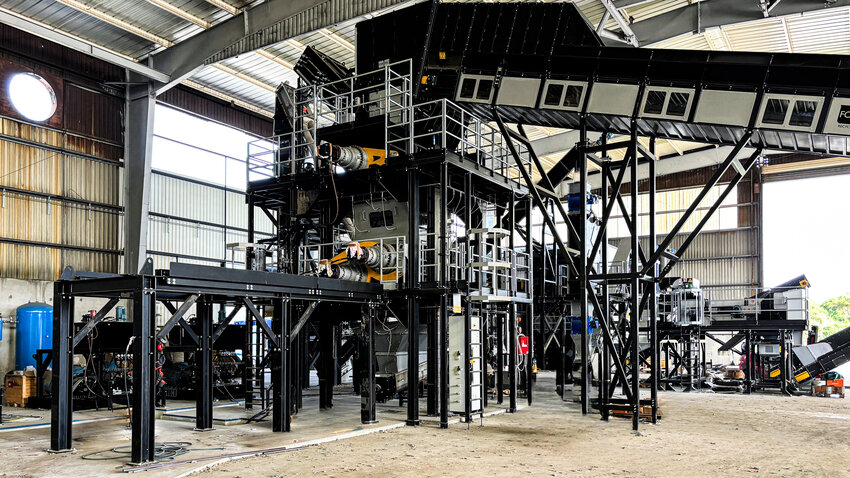
<<Today, supplying machinery alone – as was the case in the traditional industrial model – is no longer enough; we must work alongside our clients to identify the most efficient solution for every material stream and every operational context,>> explains CEO Marco Zoccarato, summing up a key aspect of the company’s strategy. The design process begins with an analysis of the waste and extends to the optimisation of the entire treatment cycle. <<Every plant is the result of direct consultation with our partners. While international competitors often offer standardised solutions, we have instead built our identity on the ability to adapt each plant to specific requirements.>> A shared journey with the client, leading to the creation of unique facilities in a wide range of sectors, including municipal solid waste, plastics, wood and WEEE, as well as electric motors, cables and special industrial waste.
The new complexity of industrial waste
<<The key challenge lies in finding the right balance between economic sustainability, the quality of the recovered material and limiting environmental impact, taking into account one of the factors most responsible for transforming the sector: the growing complexity of waste streams,>> continues the CEO.
<<New-generation WEEE, photovoltaic panels and composite materials require increasingly precise separation technologies, able to guarantee high quality in the output fractions. It is not simply a matter of shredding and separating metals and plastics but of handling multi-layered materials, difficult to recover using traditional processes,>> explains Marco Zoccarato. In this regard, a significant proportion of resources in recent years has been devoted to designing systems for the recovery of photovoltaic panels, currently one of the sector’s main challenges. <<The aim is to recover high-value materials such as glass, aluminium and precious metals through increasingly efficient processes. This path has led us to the construction of the first dedicated plant in Sardinia: our lines are designed to process up to 4 tonnes per hour, adapting to any type of panel – intact or damaged, flat or curved – with a material recovery rate exceeding 90%.>>
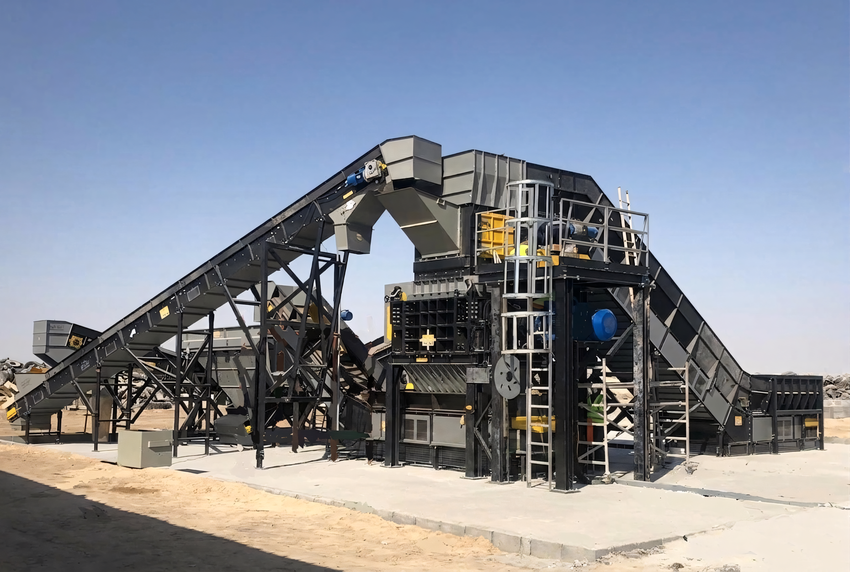
The most advanced applications developed by FOR REC for WEEE recycling, particularly for shredding, material preparation and subsequent separation stages, include systems dedicated to the treatment of refrigerators and boilers: complex processes that require the controlled management of potentially harmful gases. <<In France, we have installed the world’s first plant for the treatment and recycling of end-of-life boilers: it has a capacity of 20,000 tonnes per year and operates continuously 24/7. This is a practical example of the circular economy applied to a complex waste stream that, until now, has been under-utilised.>>
Efficiency as a competitive factor
While in the past the concept of sustainability was primarily linked to environmental impact, the recycling sector is now increasingly measured against industrial parameters as well: energy efficiency, operational continuity and reduced operating costs.
<<We view this evolution as a pivotal element of our design philosophy: efficiency means reliable performance, optimised consumption and stable processes capable of generating long-term value,>> continues Marco Zoccarato. <<In a sector where plant downtime can have significant economic repercussions, ensuring operational continuity becomes a decisive competitive advantage.>>
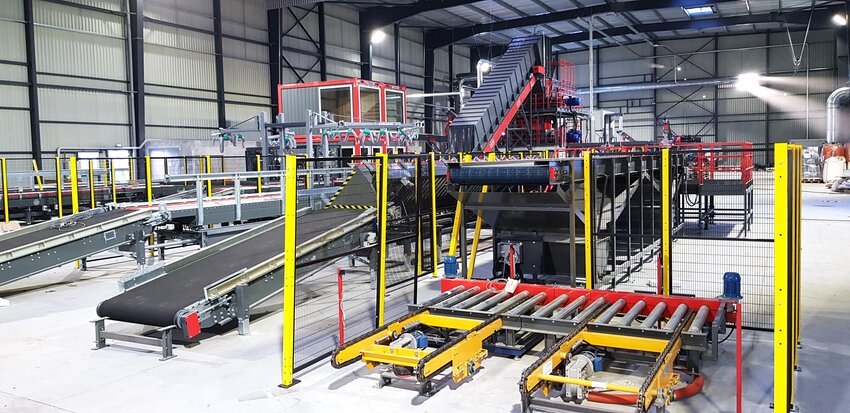
With this in mind, FOR REC offers technologies designed for continuous operation, modular configurations and a structured service organisation, covering scheduled maintenance, rapid response, remote support and the prompt availability of spare parts. This vision also encompasses a focus on the revamping of existing plants, enabling facilities built many years ago to be upgraded by integrating new electronic, IT and management solutions.
- You may also be interested in: Circular factories in Europe: the automotive industry is redesigning the life cycle of vehicles
Towards new frontiers
Over the next few years, the Padova-based company plans to consolidate its growth in various directions. On the international front, the aim is to strengthen its presence in regions with the highest demand for advanced waste treatment technologies, with a particular focus on Northern Europe, the Middle East, Asia and North America.
In terms of applications, the focus is on emerging materials that offer the greatest potential for recovery: photovoltaic panels, new-generation WEEE and complex industrial waste, for which the quality of the separated fractions and the economic viability of recovery remain the key design priorities.
<<The real challenge today, and even more so in the years to come, is to achieve levels of purity that make recycling truly sustainable from an economic and industrial perspective. This applies in particular to glass, which accounts for the largest proportion by weight of a photovoltaic panel and which will require alternative application markets beyond the traditional glass industry so that it can be fully absorbed and reused. This will necessitate new outlets: ceramics, cement production, asphalt and other energy-intensive sectors represent viable solutions today, but they will not be sufficient to absorb the volumes on the horizon. It is clear that the sector will have to continue investing in technology, research and new end markets. Only through this will it be possible to achieve a true balance between environmental and economic sustainability, transforming the wave of end-of-life panels into an industrial opportunity, rather than a waste management problem.>>
- You may also be interested in: Circularity, autonomy and security: Europe can no longer wait
Power and reliability: the single shaft grinder MR takes centre stage at Ecomondo 2026
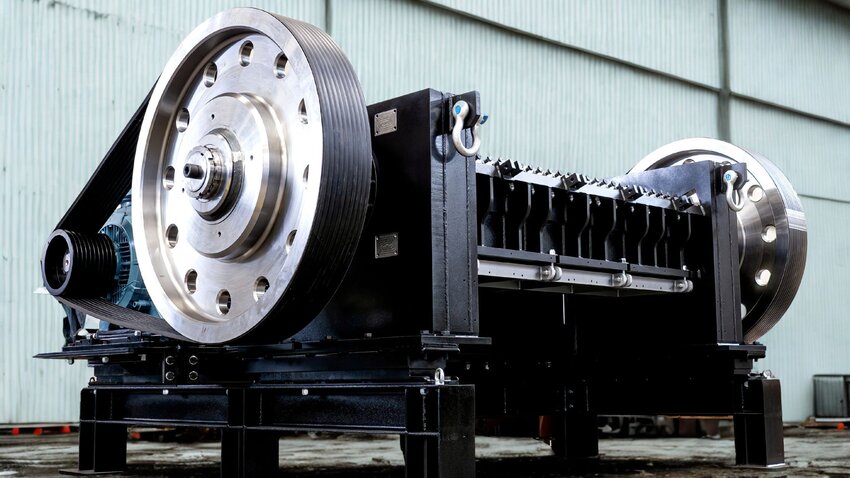
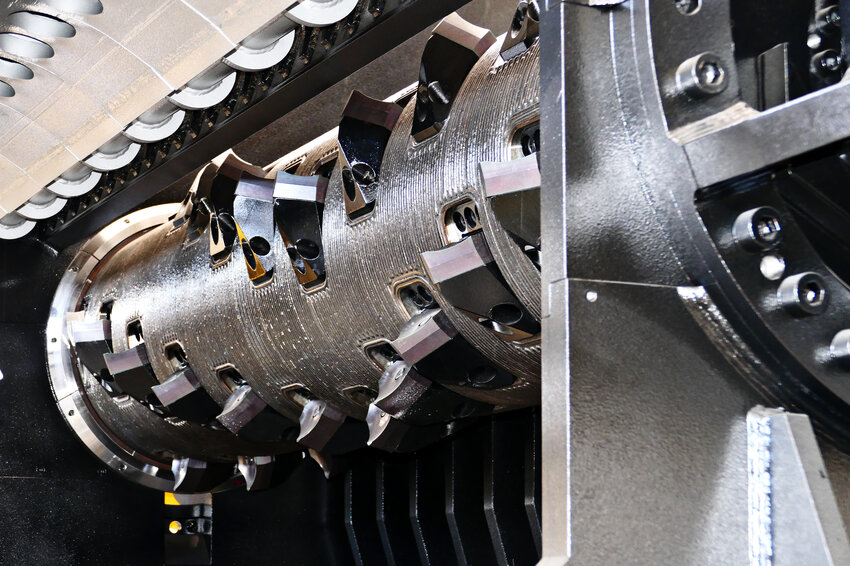
Visitors to Ecomondo 2026 will be able to explore the world of FOR REC at Stand 201 in Hall A1: a 150-square-metre space offering an immersive and hands-on experience, where they will be able to see the company’s most advanced machinery and latest innovations up close. Particularly noteworthy among the highlights at the stand will be the single shaft grinder MR, designed to deliver high performance when processing end-of-life tyres, cables, electric motors and other highly abrasive materials. With a robust 24-tonne frame, a 1920 mm rotor and a dual motor system rated at 2x132 kW, the MR2000 ensures operational continuity, reduced maintenance costs and maximum long-term reliability. Featuring solutions such as automatic lubrication, replaceable cutting plates, an interchangeable screen and remote technical support, it provides an effective response to the needs of modern facilities.
Article written by Maria Carla Rota
This blog is a joint project by Ecomondo and Renewable Matter
PUBBLICAZIONE
06/07/2026
Altre news correlate

06/07/2023
5 Start-up circolari da non perdere

03/04/2025
5 under 30 che hanno rivoluzionato l'economia circolare

23/04/2025
7 giovani under 30, leader della green and circular economy
05/12/2024
7 trend nell'economia green che definiranno il 2025

15/12/2024
AI, big data e tecnologie predittive per la Blue Economy
30/05/2023
Acqua in Europa: come affrontare il cambiamento climatico

17/12/2025
Africa, frontiera della prossima economia verde

29/04/2025
Agricoltura di precisione: quali vantaggi offre e come può sostenere i paesi del Nordafrica?

10/05/2024
Alluvione in Emilia-Romagna, un anno dopo

26/11/2025
Aziende: come comunicare la transizione nell’era del greenlash?
24/04/2025
Batterie al sodio: la tecnologia che può rendere l'UE più indipendente dai materiali critici

29/01/2026
Benessere e felicità: quando la scienza incontra impresa, società e natura

23/06/2026
Bioeconomy in North Africa: Between Resource Abundance and Structural Constraints in Tunisia, Morocco, and Egypt
07/04/2026
Bioenergy and industrial ecosystems: models and research projects in Europe