
Various industrial models are emerging in the field of the circular economy in Europe, all based on innovation, collaboration and the optimisation of resources. In the biogas and biomethane sector, for instance, the focus is no longer on isolated plants, but rather on local ecosystems in which different players collaborate and energy and material flows are integrated.
In contrast, within the automotive and heavy goods vehicle sector, so-called “circular factories” are becoming increasingly widespread: advanced industrial facilities where parts and materials from end-of-life vehicles or post-use streams are recycled, reused and remanufactured. This is a remanufacturing process, specifically designed by companies in this sector, to preserve the value of resources over time, reducing waste and dependence on raw materials.
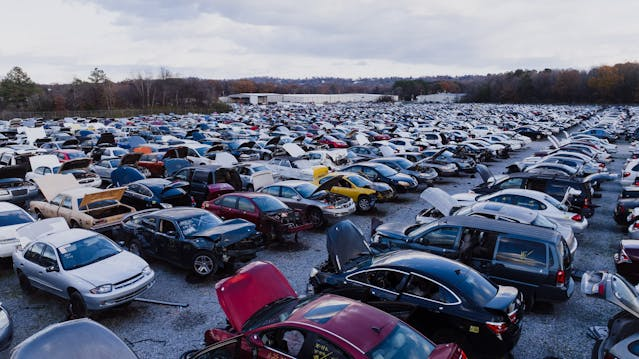
How do circular factories work
For over a century, car manufacturing has followed the traditional linear model of “take, make, dispose”, whereby materials arrive at the factory and vehicles are built, only to be sent for disposal once they have been used. Circular factories are redefining this model by adopting a circular approach. One of the most recent examples in Europe is Toyota Motor Manufacturing UK’s Burnaston plant in Derbyshire, home to the first Toyota Circular Factory (TCF) in Europe: a pilot project that will establish methods and standards for a future network of facilities across Europe (the opening of a second TCF in Poland is scheduled for 2026).
Its principles include designing vehicles to facilitate dismantling, reuse and repair; extending vehicle lifecycles through safe and standardised reconditioning techniques; and the efficient recovery of materials from end-of-life
vehicles for reuse in production processes.
- You may also be interested in: Circularity, autonomy and security: Europe can no longer wait
Recycling everything from the wheel to the engine
At the Toyota Circular Factory in Burnaston, the aluminium recycling process is now up and running, with aluminium being recovered from alloy wheels: once processed and prepared for reuse, it is sent to the Toyota plant in Deeside, which uses it to make components for new engines.
These components then return to Burnaston to be fitted to the new Toyota Corollas manufactured there, thus closing the virtuous cycle of recycling, from the wheel to the engine. The first vehicle to benefit from this circular process left the production line in March 2026, marking a significant step towards the increasingly widespread use of recovered, recycled and reused materials.
Step-by-step process
The process developed by Toyota, also involving vehicles from other car manufacturers, comprises several stages: following the controlled deployment of the airbags and the removal of all fluids and gases, the vehicles are dismantled in a standardised manner by specialist technicians, who follow the assembly process in reverse. The recovered materials are sorted and classified, separating metals, plastics and mixed items.
Burnaston has also introduced car reconditioning to safely and consistently extend the vehicles’ lifecycle: each reconditioned vehicle is assessed and validated according to company standards.
- You may also be interested in: Bioenergy and industrial ecosystems: models and research projects in Europe
Circular factory models in Europe
Stellantis kicked off its circular economy project, SUSTAINera, in 2024 with the opening of its first dismantling hub in Turin, within the Mirafiori complex, followed by a second dismantling centre in São Paulo, Brazil, in 2025, with a third opening planned for 2026 in a new geographical area. The strategy inspiring the project is the 4R approach: Reman (remanufacturing), Repair, Reuse and Recycle.
With these goals in mind, a closed-loop aluminium cycle has long been in operation at Mirafiori: end-of-life engines are sent to Soremo, an innovative partner specialising in the recycling of this type of waste, where they are transformed into aluminium ingots for use in the production of new engines.
The latest development is the launch of new online shops on eBay for the sale of used original spare parts, complementing the B-Parts digital platform.
The total offering in Europe amounts to 12 million parts, sourced from Mirafiori: the stock includes parts for Fiat, Alfa Romeo and Jeep vehicles, with availability extended to other brands as well.
Refactory, meanwhile, is the Renault Group’s first facility devoted to the circular economy, opened in 2020 in Flins, in the Île-de-France region. Here, 45,000 vehicles are refurbished and repaired each year, irrespective of their brand, and over 6 million components are produced annually.
Other Refactory sites are located in Bursa, Warsaw, Duisburg, Seville and Valladolid. The recycling of materials is handled by the specialist company GAIA: it recovers polypropylene, copper (a standard vehicle contains between 10 and 20 kg), precious metals and other materials, all of which are reused in a closed-loop process for the production of new vehicles.
Finally, Caterpillar has been involved in manufacturing since the 1970s through its Cat Reman regeneration and reconstruction programmes, which restore products at the end of their life cycle to like-new condition.
In addition to offering customers immediate cost savings, Caterpillar reduces waste, lowers greenhouse gas emissions and minimises the demand for raw materials.
Article written by Maria Carla Rota
This blog is a joint project by Ecomondo and Renewable Matter
Credits
Photo by K
PUBLICATION
30/04/2026
Other related news

08/09/2022

21/03/2024
Come on, it's just a cigarette stub
24/07/2023
WEEE: a mine of critical raw materials
20/09/2023

30/05/2023

03/04/2025
5 under 30 who have revolutionized the circular economy

21/04/2023

19/05/2023
Ecomondo Mexico and the circular economy in Latin America

31/07/2023
Circular economy in China – past, present, future
14/05/2023
06/11/2023

20/10/2023

07/06/2023
Tides are changing

03/08/2023

10/10/2023

13/05/2023
A new EU industrial plan for the net-zero age