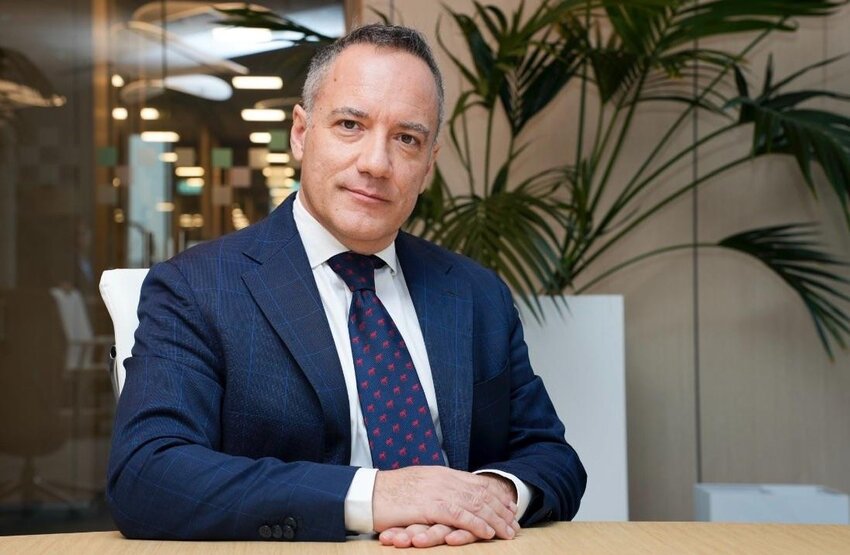
<<Technology is now a structural driver in building a more integrated, circular and resilient model. The aim is not simply to make individual processes more efficient, but to create the conditions for the integrated management of water, energy and waste by connecting data, infrastructure and material flows, and moving beyond the traditional silo-based approach>>. This is the direction in which Gruppo CAP is evolving, as Michele Falcone, General Director of the company that manages the Integrated Water Service for the Metropolitan City of Milan, explains.
- You may also be interested in: Gruppo CAP, un modello di green utility per le sfide dell’igiene urbana
Director Falcone, what does this ability to connect different value chains mean in practice?
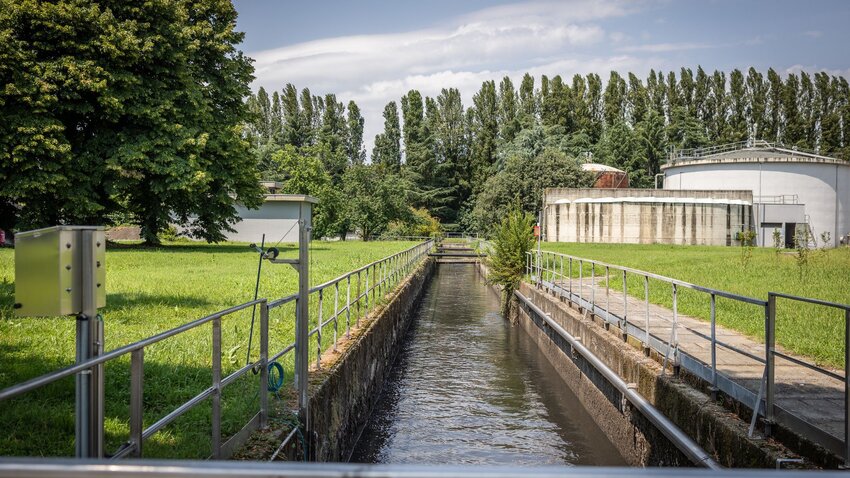
First and foremost, wastewater treatment plants are becoming fully fledged environmental hubs, capable of recovering materials and generating energy. Anaerobic digestion of sewage sludge produces biogas and biomethane, while the BioPlatform in Sesto San Giovanni combines the treatment of the organic fraction of municipal solid waste (OFMSW) with energy generation. In 2025, the plant processed 23,231 tonnes of OFMSW and produced 1,880,751 Smc of biomethane, which was fed into the local distribution network. Compared with 2021, energy purchased from the grid has fallen by 10.2%. In 2025, total renewable energy production reached 48,650 MWh, up 29% on 2024, and since 2024 Gruppo CAP has been a net producer of methane.
Alongside the transformation of the facilities is the digital transformation.
We are investing in advanced technologies, AI, data platforms and digital management systems, also through BaobHub, Gruppo CAP’s new digital solutions hub, that aims to develop and give more value to digital solutions and services in the water and environmental sectors, including for the wider market.
The goal is to connect information from different networks and plants, optimise processes and strengthen the ability to anticipate critical issues, maintenance requirements and consumption.
What role do innovation and digital technologies play in making better use of water resources?
In a context of growing pressure, these measures are essential for making better use of available water, reducing losses, protecting it and increasing the proportion that can be recovered and brought back into the cycle. Gruppo CAP treats over 360 million cubic metres of wastewater each year at its 40 treatment plants: around 35% of the treated water (equivalent to 128 million cubic metres) is reusable.
Technology plays an enabling role throughout the entire reuse chain. How does this work?
For reuse to develop structurally, we need to monitor the characteristics of the resource, ensure its safety, measure volumes and develop models that guarantee economic viability.
One example is the Bresso–Parco Nord Milano project, where a dedicated pipeline more than 3 kilometres long makes up to 500,000 cubic metres of treated water available each year. Alongside this infrastructure, we have introduced Water Credits, an innovative mechanism that assigns a certified, traceable value to recovered and reused water.
In Peschiera Borromeo, meanwhile, the European Digital Water City project has demonstrated how sensors, continuous monitoring systems, algorithms and early-warning tools can work together to monitor effluent quality in real time, detect anomalies promptly and increase the reliability of water intended for new uses.
- You may also be interested in: The crucial battle for water is playing out in Brussels
The same approach applies to water distribution networks.
Gruppo CAP uses advanced monitoring systems, district metering and decision-support tools to detect leaks across its service area. Water losses stand at around 18%, compared with the national average of 42% reported by ISTAT. In 2025 alone, we surveyed more than 2,100 km of network, identifying 304 hidden leaks, while the Decision Support System (DSS) helped us select 21 km of pipelines for replacement. Currently, 79% of meters are already smart, with the aim of reaching 100% by 2029.
The Industrial Plan includes 74 million euros in investment to reduce water losses over the period 2026–2030. Technology does not create new water, but it does increase the proportion of this resource that we can recover, monitor and safely return to circulation.
Technological innovation is also crucial to transforming wastewater treatment plants into hubs that generate new resources. How?
They need to be progressively integrated into local energy systems, with the crucial support of technological innovation. Anaerobic digestion converts sewage sludge and organic feedstocks into biogas, while cogeneration turns biogas into electricity and heat. Heat-exchange systems, regulation and control make it possible to connect treatment plants to district heating networks and coordinate energy production, the plant’s own requirements and exchanges with the grid in real time. The treatment plant thus becomes an active node in an energy network rather than an isolated piece of infrastructure.
The projects in Rozzano and Peschiera are good examples of this strategy.
In Rozzano, there is a genuine energy symbiosis. The plant combines wastewater treatment with the treatment of non-hazardous special liquid waste and organic feedstocks. The 3.6 million euros investment has increased overall capacity to 107,000 tonnes a year and raised the potential for biogas production. The treatment plant can receive thermal energy to keep its digesters at optimal conditions while simultaneously feeding renewable heat produced from biogas into the network.
In Peschiera, integration also extends to district cooling: it is the first plant of its kind in Italy to be powered exclusively by biogas produced from sewage sludge. Two cogeneration units produce electricity and heat and, during the summer, an absorption chiller converts thermal energy into cooling energy, producing chilled water at 7°C.
From agrivoltaics to solar canopies, you are testing different models of renewable energy production. What criteria guide your choices?
Decarbonising an industrial service such as water management means identifying, for each asset, the solution that delivers the greatest energy, environmental and local benefits. For Gruppo CAP, this means developing a diversified portfolio of solutions tailored to the characteristics of each site, plant consumption profiles and the opportunities offered by the surrounding area.
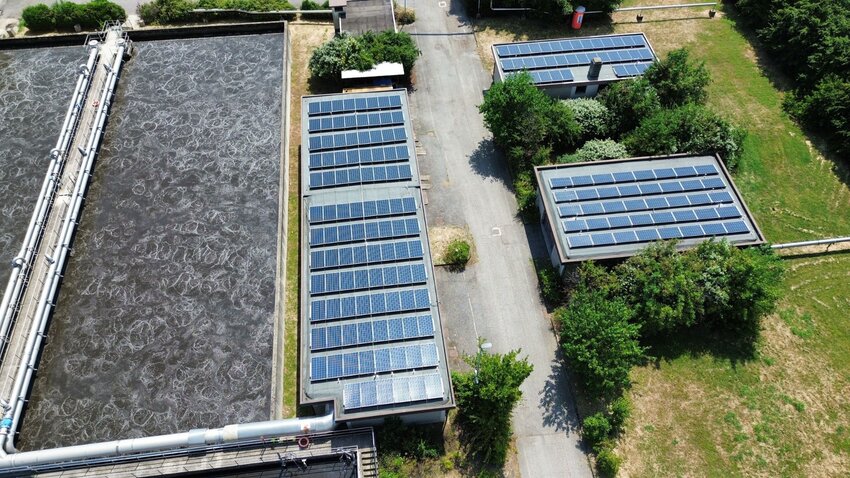
The first priority is to maximise self-generation and self-consumption; the second is to make the best use of existing surfaces – the roofs of treatment plants and water facilities, parking lots, tanks and other infrastructure – while limiting the use of additional land. Where conditions allow, energy production and agriculture can coexist through agrivoltaic solutions.
At Assago, solar canopies turn existing sealed surfaces into energy assets serving the treatment plant. The industrial model can also vary: the public-private partnership (PPP), for example, plans for 10 new photovoltaic installations, an investment of 10.9 million euros and expected annual production of more than 7 GWh. In 2025, Gruppo CAP already had photovoltaic installations in operation with an installed capacity of more than 5 MWp and production of 4.3 GWh, all used for self-consumption.
Our strategy combines reduced consumption, renewable energy self-generation and greater efficiency in energy management, making the decarbonisation process a structural one.
Which technologies will have the greatest impact on the development of environmental utilities over the next five to ten years?
The scope will gradually change, moving towards greater integration between infrastructure, data, energy and material flows, driven in part by developments in European policy.
Gruppo CAP is anticipating this transformation along several fronts. The first is digital technology and artificial intelligence: around 28.6 million euros in IT investment is planned for 2026–2030, alongside resources dedicated to cybersecurity and generative AI, to make asset and process management increasingly predictive. The second concerns the circular economy and energy. By 2033, the plan provides for around 40.3 million euros for the circular economy and 23.5 million euros for the Energy Plan, covering material recovery, biomethane, the valorisation of organic feedstocks, photovoltaics, heat recovery and energy efficiency. A third area concerns new treatment and recovery technologies, from managing emerging contaminants to trials involving phosphorus recovery, ozonolysis and the use of hydrogen. Research has a clear industrial objective: to test solutions under real-world conditions, assess their technical and economic viability and scale up those that can genuinely change how plants operate.
What will your attendance at Ecomondo involve?
It will be an opportunity to showcase our industrial transformation, which we are pursuing through dedicated companies, each with its own industrial specialisation but all working within a shared strategy. CAP Evolution develops activities relating to wastewater treatment, waste valorisation and the recovery of materials and energy, while ZeroC represents one of the most advanced examples of integration between environmental value chains, through the BioPlatform in Sesto San Giovanni.
Ecomondo will also be an important opportunity to discuss the changes reshaping the waste and environmental services sectors, drawing on the experience of Neutalia and ALA, which allows us to bring together different areas of industrial expertise. Finally, we will present our work on the valorisation of sludge and other materials recovered at our plants, new technological solutions for emerging contaminants and innovative tools for increasingly circular water management.
Article written by Maria Carla Rota
This blog is a joint project by Ecomondo and Renewable Matter
PUBBLICAZIONE
15/10/2026
Altre news correlate

06/07/2023
5 Start-up circolari da non perdere

03/04/2025
5 under 30 che hanno rivoluzionato l'economia circolare

23/04/2025
7 giovani under 30, leader della green and circular economy
05/12/2024
7 trend nell'economia green che definiranno il 2025

15/12/2024
AI, big data e tecnologie predittive per la Blue Economy
30/05/2023
Acqua in Europa: come affrontare il cambiamento climatico

17/12/2025
Africa, frontiera della prossima economia verde

29/04/2025
Agricoltura di precisione: quali vantaggi offre e come può sostenere i paesi del Nordafrica?
10/05/2024
Alluvione in Emilia-Romagna, un anno dopo

26/11/2025
Aziende: come comunicare la transizione nell’era del greenlash?

24/04/2025
Batterie al sodio: la tecnologia che può rendere l'UE più indipendente dai materiali critici

29/01/2026
Benessere e felicità: quando la scienza incontra impresa, società e natura

23/06/2026
Bioeconomy in North Africa: Between Resource Abundance and Structural Constraints in Tunisia, Morocco, and Egypt
07/04/2026
Bioenergy and industrial ecosystems: models and research projects in Europe