
Poland is one of the European countries most reliant on coal, which remains its main source of electricity generation, but the national energy policy landscape is evolving: alongside the rapid growth of solar and wind power and the future nuclear programme, bioenergy is gaining an increasingly significant place in the transition towards a circular economy. This transformation is set to have a profound impact on the decarbonisation of sectors most difficult to electrify – such as industry, heating and heavy transport – and on the utilisation of residual biomass.
From waste biomass to biomethane
In Poland, as in other EU countries, the bioenergy sector has for a long time relied almost exclusively on the use of solid biomass, such as wood, pellets, wood chips and agricultural residues, for domestic heating or for use in thermal power stations, often in co-firing with coal. This model, however, is gradually making way for a different approach: changes to European legislation, in particular the revision of Directive (EU) 2023/2413 on renewable energy (RED III), have introduced stricter sustainability criteria for forest biomass, prioritising the use of residues and by-products over virgin raw materials. At the same time, the energy crisis triggered by Russia’s invasion of Ukraine has increased interest in domestic sources of renewable gas within Europe.
Today, biogas, and above all biomethane, represent one of the main areas of growth for European bioenergy by 2030, as also stated by the International Energy Agency (IEA, Renewables 2025), which ranks Poland among the countries with the greatest potential, thanks to its abundance of agricultural residues.
- You may also be interested in: The European bioenergy landscape: strategic potential and challenges
Not just energy: a new role for agriculture
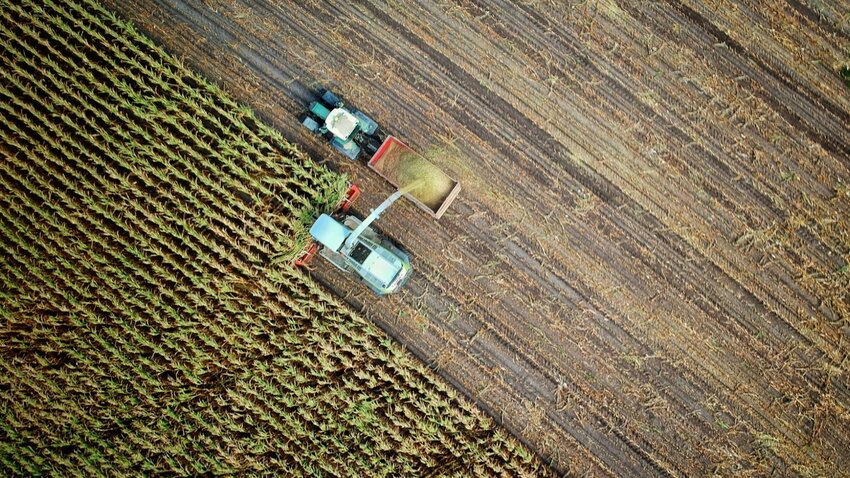
Poland is, in fact, one of the EU’s leading agricultural producers, ranked among the top producers of apples, potatoes, cereals and poultry: it has a particularly well-developed livestock sector and one of the most important agri-food industries in Central and Eastern Europe. Livestock waste, manure, crop residues, by-products of food processing and fruit and vegetable waste are ideal feedstocks for the production of agricultural biogas, not least from the perspective of sustainability and circularity.
Rather than dedicating land to specialised energy crops, the Polish model targets the utilisation of materials from existing supply chains: waste becomes an energy resource, while the digestate produced by biogas plants can be returned to the fields as organic fertiliser, reducing reliance on synthetic fertilisers. This approach addresses a number of challenges: the reduction of methane emissions generated by the management of livestock manure; a decrease in dependence on imported fossil gas; the utilisation of by-products, which would otherwise incur disposal costs; closing material cycles; and the creation of new sources of income for agricultural businesses.
Agricultural biogas production in Poland
According to the Krajowy Ośrodek Wsparcia Rolnictwa (KOWR), the National Support Centre for Agriculture, at the end of May 2026, there were 209 agricultural biogas plants in Poland, operated by 175 operators, with a total authorised production capacity of approximately 840 million cubic metres of agricultural biogas per year and 11 million m³ of biomethane.
The most significant figure, nevertheless, concerns not so much the volumes as the origin of the raw materials: around 91% of the biomass used in 2025 – almost 7.7 million tonnes – came from waste and by-products. The largest share consisted of distillation manure (20.38%), slurry (16.59%) and fruit and vegetable residues (14.75%).
Through the anaerobic digestion of these raw materials, producers generated 515.2 million m³ of agricultural biogas, of which 482.5 million m³ were used to generate electricity (over 1,080 GWh). Also in 2025, 2,500 m³ of biomethane were produced, all of which were fed into the gas network, along with more than 6.1 million tonnes of digestate.
The agricultural sector is part of a broader context which, in the first quarter of 2026, comprised 443 biogas plants across all categories (agricultural biogas plants, digesters at wastewater treatment plants and landfill gas recovery systems), of which only one produced biomethane.
Future biomethane production: estimates
Poland is thus in the early stages of development, still lagging behind the leaders in Western Europe, but the potential is there and the trend is positive. Two scenarios in particular are outlined in the National Energy and Climate Plan (NECP), the document in which Warsaw sets out its energy strategy up to 2030, in line with European targets. According to the WEM scenario (based on existing measures and solutions), domestic biomethane production is expected to reach around 0.5 billion m³ in 2030 and 0.56 billion m³ in 2040. The WAM scenario (incorporating additional measures, policies and actions), on the other hand, forecasts nearly 1 billion m³ by 2030 and 3.3 billion m³ by 2040.
The current gap between theoretical potential and installed capacity is caused by a series of obstacles to be removed through public policies and private investment, if the aim is to provide concrete incentives for development, as also suggested by the report Management Challenges in the Biogas Production Sector in Poland – Current Status, Potential and Perspectives. For example, these include often complex authorisation procedures, lengthy delays in connecting plants to the gas network, high investment costs and a regulatory framework which, until a few years ago, did not offer sufficient stability to operators. The availability of qualified personnel and technical expertise also poses a challenge, particularly in rural areas.
Partnership between agriculture and energy: the projects
One of the most recent initiatives with which Poland is translating its decarbonisation strategy into practical projects is the “Improving energy security through the use of biomethane” programme, launched in May 2026 by the National Fund for Environmental Protection and Water Management (NFOŚiGW) and funded by the Modernisation Fund, with a total budget of 800 million złoty. The first call for proposals, running from May to August 2026, has a budget of 300 million złoty and provides grants of up to 45% of eligible costs to support the construction of facilities for the production and feed-in of biomethane.
- You may also be interested in: Biofuels in the Netherlands and Belgium: the new frontier in sustainable fuel
In June 2026, the Polish development bank Bank Gospodarstwa Krajowego (BGK) invested €25 million in the SWEN Impact Fund for Transition 3 (SWIFT 3), an infrastructure fund managed by the French firm SWEN Capital Partners, to finance the construction of biogas and biomethane plants in Poland. In February 2026, ORLEN, Poland’s leading energy group, and KOWR signed a cooperation agreement to build new plants and develop a production capacity of around 240 million cubic metres of biomethane per year by 2035.
To this end, a plant has been built in Głąbów, in the south-western region of Lower Silesia: it will produce around 7 million cubic metres of biomethane per year and will be the first plant in Poland equipped with a liquefaction system for the production of bioLNG. The ORLEN Group also operates three agricultural biogas plants, with capacities ranging from 1.2 to 2.0 MW, all of which are currently undergoing conversion into modern biomethane plants. This also brings a significant benefit to local farmers, as each site requires between 80,000 and 100,000 tonnes of substrates per year to operate: this also helps to limit emissions associated with logistics, thanks to reduced transport costs.
Article written by Maria Carla Rota
This blog is a joint project by Ecomondo and Renewable Matter
Credits
Photo by no one cares

PUBBLICAZIONE
29/07/2026
Altre news correlate

06/07/2023
5 Start-up circolari da non perdere

03/04/2025
5 under 30 che hanno rivoluzionato l'economia circolare

23/04/2025
7 giovani under 30, leader della green and circular economy
05/12/2024
7 trend nell'economia green che definiranno il 2025

15/12/2024
AI, big data e tecnologie predittive per la Blue Economy
30/05/2023
Acqua in Europa: come affrontare il cambiamento climatico

17/12/2025
Africa, frontiera della prossima economia verde
29/04/2025
Agricoltura di precisione: quali vantaggi offre e come può sostenere i paesi del Nordafrica?

10/05/2024
Alluvione in Emilia-Romagna, un anno dopo

26/11/2025
Aziende: come comunicare la transizione nell’era del greenlash?
24/04/2025
Batterie al sodio: la tecnologia che può rendere l'UE più indipendente dai materiali critici

29/01/2026
Benessere e felicità: quando la scienza incontra impresa, società e natura

23/06/2026
Bioeconomy in North Africa: Between Resource Abundance and Structural Constraints in Tunisia, Morocco, and Egypt
07/04/2026
Bioenergy and industrial ecosystems: models and research projects in Europe