
<<The situation in which water service operators find themselves is undergoing profound change, driven by unprecedented global trends and extending to new European and national regulatory responsibilities. Water has entered a critical phase: increasing scarcity, extreme weather events, and pressure on the quality and availability of the resource.>>This is the analysis of Tania Tellini, Director of the Water Sector at Utilitalia and member of the Technical and Scientific Committee of Ecomondo, who emphasises how operators today are called upon to reinvent models, technologies and governance to guarantee universality, equity, continuity and quality, even in contexts of growing social vulnerability.

Which are the international points of reference?
We can identify three key areas. The first is the Climate Smart Utilities Initiative, focused on smarter networks, reducing leaks, diversifying sources, water reuse, sustainable desalination and managing extreme weather events. The second is the One Health approach, which considers water quality, human health, ecosystems and food security as part of a single system. Finally, the UN 2030 Agenda goals recognise access to water and sanitation as a fundamental human right.
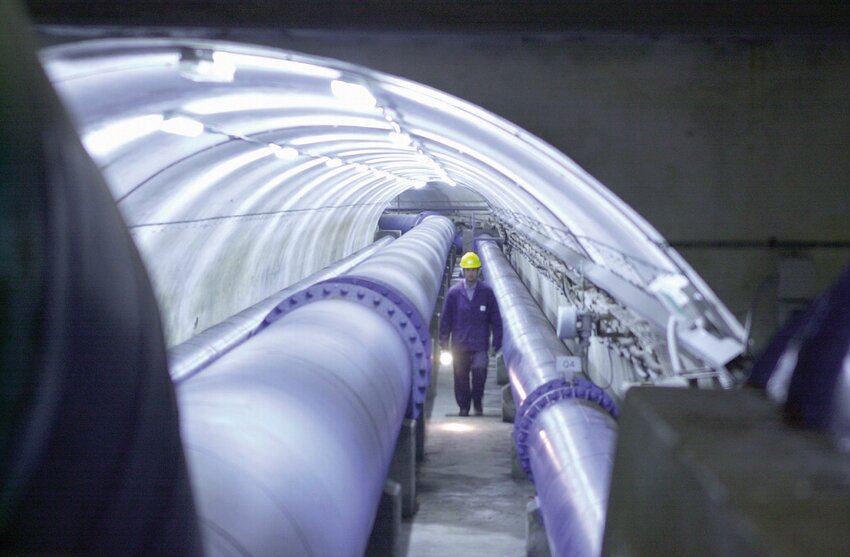
Europe is redefining the scope of water services through an approach based on resilience and prevention.
The Water Resilience Strategy signals a paradigm shift: it is no longer enough to manage water; we must protect it. The European Commission is urging operators to ensure service continuity even under extreme conditions, such as droughts, floods, contamination and energy crises. The approach is becoming preventive throughout the entire integrated water cycle, while the “polluter pays” principle assumes a central role. For Italy, the challenge is particularly pressing: we are among the European countries most exposed to drought and extreme weather events. We therefore need more investment, innovation and resilience.
- You may also be interested in: The crucial battle for water is playing out in Brussels
In Italy, according to your Blue Book, average investments have risen from €66 per inhabitant per year in 2021 to €106 in 2026. What has changed in the sector, and what challenges remain?
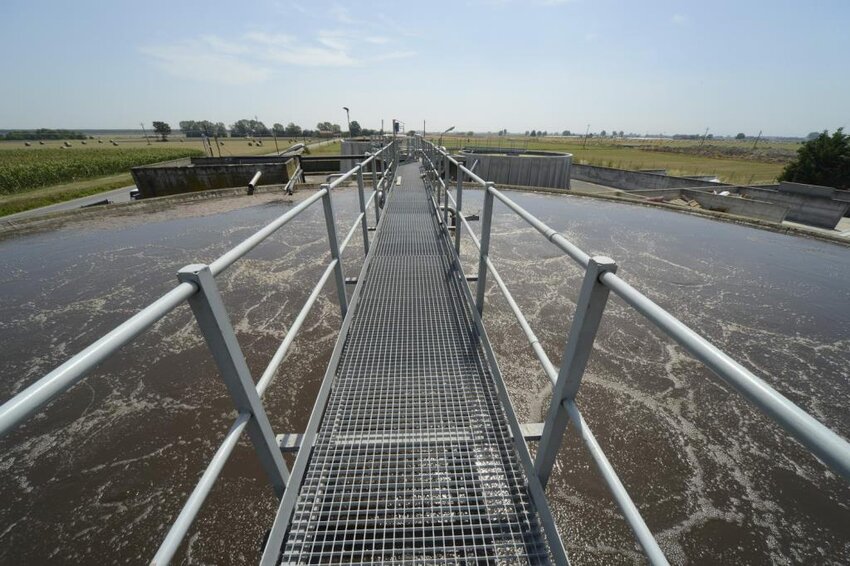
The sector has solidified its investment capacity. Data from the 2026 Blue Book show that, following the PNRR (National Recovery and Resilience Plan), the expected decline in investment is limited to around 10%, a sign of the system’s greater resilience. The speed with which the PNRR brought in resources has, however, highlighted certain critical issues. On the one hand, cash flow pressures, with an average shortfall of €20 per inhabitant per year, have arisen due to the gap between the advance payment of investments and the actual disbursement of grants; on the other, there has been significant strain on supply chains and the procurement of materials. We await the final figures, but we expect networks to become more digitalised and capable of generating data useful for improving infrastructure management. Nevertheless, numerous challenges remain: water resilience, reducing leaks, managing emerging pollutants, energy efficiency, recovering materials from wastewater and sludge, and reusing treated water within a circular economy framework.
Are there any management models that could serve as a benchmark?
There are many, starting with the Italian system itself, an interesting case study. In the Mediterranean, one of the world’s climate hotspots, we see other significant examples. Spain, Greece and Cyprus have invested in desalination, while Israel reuses around 85% of its treated water, mainly in agriculture. In addition to water scarcity, we must also learn to manage excess water. An example is Copenhagen, which has developed the “sponge city” model, whereby rainwater is retained and reused during periods of scarcity. Milan is also moving in this direction. On the regulatory front, however, France presents an interesting case due to the restrictions it has introduced on the use of PFAS.
- You may also be interested in: Turkey’s water infrastructure: rising demand and climate pressures
What are the main challenges to be addressed?
The first is the availability of water itself, as this is likely to become a limiting factor not only in ensuring safe water for all but also for economic development. The second concerns water quality. As outlined in the Global Water Bankruptcy report, pollution can make the recovery of water resources economically unsustainable. For this reason, preventing pollution at the source and extending producer responsibility are crucial; the latter has, for the first time, albeit belatedly, been included in the Waste Water Directive (EU/2024/3019, ed.). Lastly, there is the issue of investment: we need more modern infrastructure, technological innovation, digitalisation and smart-oriented governance.
In light of these challenges, which opportunities are opening up for the sector?
The first relates to innovation. According to the Water Resilience Strategy, 40% of global patents for water technologies originate from the European Union. Italian operators are also making significant investments in research and development, often in collaboration with universities and research centres. The real uncertainty, however, lies in the post-PNRR period. The European Commission itself acknowledges that without further public and private investment, progress towards water resilience would be too slow. In this regard, the €15 billion provided by the European Investment Bank for the period 2025–2027 is significant. To capitalise on this opportunity, ready-made projects, financial capacity and greater collaboration between operators will be required. It may also be an opportunity to definitively overcome the problem of in-house management and promote more efficient regional partnerships.
What role could Italy play in the development of water projects in Africa and the Middle East?
So far, Italy’s presence has been scattered, but our operators are internationally recognised for their expertise in areas such as network districting, wastewater treatment, sludge management and training. As Utilitalia, we have supported the MAIA-TAQA project, focused on water efficiency in southern Mediterranean countries, including Lebanon, Jordan and Egypt. Today, the Mattei Plan may represent an important tool for coordination and cooperation, provided that the difficulties linked to governance and local authorisations can be overcome. The geopolitical situation also reminds us that water infrastructure is critical infrastructure. Its protection, including against cyber attacks, is now a strategic priority.
Culturally speaking, how can we raise awareness about the value of tap water?
Italy is among the countries with the highest consumption of bottled water, and, according to ISTAT, one in four people do not trust tap water. At the same time, our consumption of drinking water is higher than the European average. The causes are many: outdated infrastructure, high tourist numbers, relatively low tariffs and certain misconceptions about water quality. For example, the idea that water with higher mineral salt content, particularly carbonates, causes kidney stones, or the fear that the condition of internal plumbing within buildings might affect the water’s safety or alter its organoleptic qualities. When looking at the younger generations, however, a positive trend is emerging. Young people are showing greater awareness of consumption and greater confidence in tap water, partly thanks to the environmental education initiatives promoted for years by water suppliers in local communities and schools.
Ecomondo gives ample space to the theme of the Water Cycle & Blue Economy. What will the priorities be in the coming years?
Utilitalia has always supported the growth of the water sector within Ecomondo, where in recent years there has been significant growth in both the number of exhibitors and the quality of content. As part of the Technical and Scientific Committee, we are part of a group of experts that every year promotes topical issues at both the national and international levels. The aim is to promote innovation, research and the practical expertise of operators, facilitating dialogue between operators, public institutions and the scientific community. The challenge in the coming years is to expand the European and international scope further, in order to learn about global best practices and to export the know-how developed by Italian operators abroad, many of whom represent true global excellence.
Article written by Maria Carla Rota
This blog is a joint project by Ecomondo and Renewable Matter
PUBBLICAZIONE
11/06/2026
Altre news correlate
08/09/2022
Inquinamento da plastica in mare: cause, conseguenze e soluzioni

21/03/2024
Ma dai, è solo un mozzicone
24/07/2023
RAEE: una miniera di materie prime critiche
20/09/2023
La plastica: da problema a risorsa
30/05/2023
Acqua in Europa: come affrontare il cambiamento climatico

03/04/2025
5 under 30 che hanno rivoluzionato l'economia circolare
21/04/2023
La giornata mondiale della terra, vista dal mare
19/05/2023
Ecomondo Mexico ed economia circolare in America Latina
31/07/2023
Economia circolare in Cina. Ieri, oggi e domani
14/05/2023
Sulla strada della sostenibilità: elettrificare il trasporto merci
06/11/2023
Lifegate presenta Water Defenders Alliance, una grande alleanza per difendere le nostre acque
20/10/2023
Legno-arredo, la filiera che ha messo la sostenibilità al centro

07/06/2023
Le maree stanno cambiando

03/08/2023
La filiera del riciclo della carta: eccellenza italiana con margini di miglioramento

10/10/2023
Responsabilità estesa ed ecoinnovazione, la sfida del tessile sostenibile non può attendere
13/05/2023
Europa: arriva il nuovo piano industriale per l’era net-zero