
For centuries, forests have mainly been viewed as a supply of timber, but today they are taking on a much broader role: they are natural infrastructures capable of providing renewable raw materials, absorbing carbon, protecting biodiversity and supporting new low-emission industrial supply chains.
This vision informs the forest bioeconomy, one of the most promising sectors in the transition to a post-fossil fuel economy, but for this potential to translate into real environmental benefits, sustainable forest management must remain at the heart of industrial and climate strategies.
Europe is moving in this direction with the EU Forest Strategy, one of the pillars of the European Green Deal and the European Biodiversity Strategy. The aim is to improve the quality, quantity and resilience of forests, covering about 40% of the EU’s territory, by, amongst other things, protecting the most valuable areas and planting three billion new trees by 2030.
However, it is across the Atlantic that the forest bioeconomy has reached a particularly advanced stage.
The Canadian model
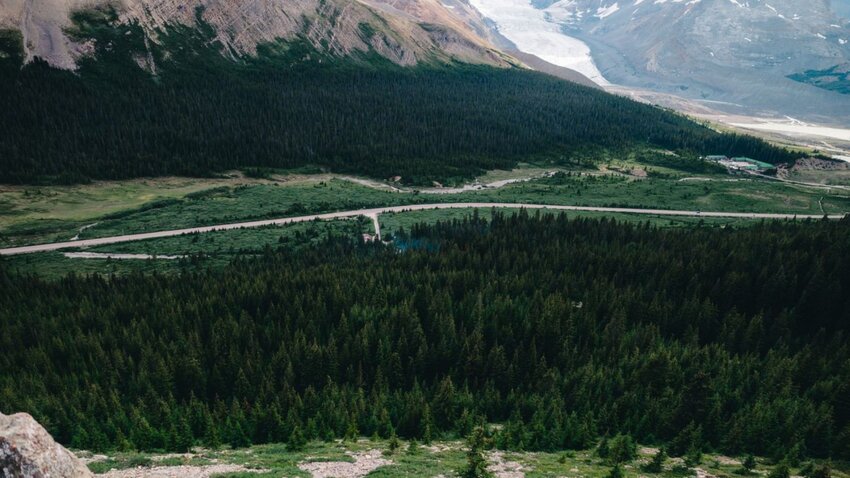
With 347 million hectares of forest – equivalent to around 9% of the global total – Canada has one of the largest forest areas on the planet and the highest per capita biomass stock. 72% of this area consists of state-owned forests certified to third-party standards that are internationally recognised for sustainable forest management, as explained by Natural Resources Canada (NRCan), the government department responsible for the sustainable development, management and regulation of Canada’s natural resources.
The guiding principle of the local forest bioeconomy is the cascading use approach, whereby every part of the tree is put to the highest possible value-added use before final energy recovery. Not only the trunk, then, but also the bark, branches, tree tops, sawdust, wood shavings and other industrial residues are recovered and put to good use, maximising both the economic return and the environmental benefits derived from every tonne of biomass harvested.
Ottawa also considers the sustainable utilisation of biomass to be a driver of regional development: a third of Canadians and over half of the indigenous population live within or near forests. According to the Forest Products Association of Canada, the forest products sector generates over 87 billion dollars in annual turnover and provides around 200,000 direct jobs spread across hundreds of communities across the country.
- You may also be interested in: The bioeconomy, from research to the market: initiatives redefining industrial supply chains
From cellulose to batteries
The main components of wood – cellulose, hemicellulose and lignin – can be converted into a wide range of products. Cellulose is used to produce packaging materials, textiles, automotive components, pharmaceutical products and household goods. Hemicellulose is used in the production of low-calorie sweeteners, organic acids and recyclable plastics. Lignin, a natural polymer historically considered a by-product of wood processing, is used to produce binders, insulation materials, engineering foams and even battery components.
The aim is to progressively replace materials and substances derived from oil and natural gas with renewable, low-carbon alternatives while developing new economic opportunities for forestry communities.
Among the most promising areas, for example, is advanced biofuels. According to Natural Resources Canada, fuels produced from forest biomass, including those for aviation, can have a carbon intensity up to 80% lower than conventional fossil fuels.
The mass timber revolution
Another strategic sector is construction. In recent years, Canada has invested significantly in the development of mass timber, the type of engineered timber used for multi-storey buildings and complex structures.
These materials make it possible to replace steel and concrete, which are among the most carbon-intensive materials in the construction industry, while also storing carbon within buildings for decades. From this perspective, timber is not merely a renewable raw material but becomes a tool for climate mitigation. According to a report by the Forest Products Association of Canada, by 2024 nearly 700 buildings constructed using mass timber technologies had been completed, with over 140 projects under construction or in the planning stage.
Bioenergy also plays an important role in Canada’s energy mix. Much of the production comes from forestry residues, which are converted into thermal and electrical energy.
- You may also be interested in: Bioeconomy in North Africa: Between Resource Abundance and Structural Constraints in Tunisia, Morocco, and Egypt
The climate-imposed constraints
The very resource on which this strategy is based is, however, increasingly exposed to the effects of climate change. The wildfires that struck Canada in 2023, burning around 15 million hectares of land, served as a global wake-up call: according to a study published in the journal Nature and reported by Reuters, around 647 megatonnes of carbon were released into the atmosphere that year, an amount greater than that emitted by seven of the top ten emitting countries in 2022, including Germany, Japan and Russia.
The fires exposed the vulnerability of forest ecosystems and the risk of treating forests as permanent carbon sinks. The same concerns are emerging in Europe: according to another analysis published in Nature, conducted by the European Commission’s Joint Research Centre, between 2020 and 2022, the carbon absorption capacity of European forests fell by 27% compared with the period 2010–2014 due to the combined effect of climate change, extreme events and management pressures.
This is a paradox that Italy is also facing: woodland continues to expand and now covers around 40% of the country’s territory, but a significant proportion of it is not actively managed. Forest fires are a clear sign of this fragility: according to Legambiente, over 94,000 hectares of land went up in smoke in 2025 – almost double the figure for the previous year – with Sicily, Calabria and Puglia among the regions hardest hit.
The lesson is clear: conservation, economic use and sustainable management must go hand in hand. The forests’ real contribution to the bioeconomy and to climate neutrality in the coming decades will depend on this balance.
Article written by Maria Carla Rota
This blog is a joint project by Ecomondo and Renewable Matter
Credits
Photo by Ali Kazal
PUBBLICAZIONE
07/07/2026
Altre news correlate

06/07/2023
5 Start-up circolari da non perdere

03/04/2025
5 under 30 che hanno rivoluzionato l'economia circolare

23/04/2025
7 giovani under 30, leader della green and circular economy
05/12/2024
7 trend nell'economia green che definiranno il 2025

15/12/2024
AI, big data e tecnologie predittive per la Blue Economy
30/05/2023
Acqua in Europa: come affrontare il cambiamento climatico

17/12/2025
Africa, frontiera della prossima economia verde
29/04/2025
Agricoltura di precisione: quali vantaggi offre e come può sostenere i paesi del Nordafrica?

10/05/2024
Alluvione in Emilia-Romagna, un anno dopo

26/11/2025
Aziende: come comunicare la transizione nell’era del greenlash?

24/04/2025
Batterie al sodio: la tecnologia che può rendere l'UE più indipendente dai materiali critici

29/01/2026
Benessere e felicità: quando la scienza incontra impresa, società e natura

23/06/2026
Bioeconomy in North Africa: Between Resource Abundance and Structural Constraints in Tunisia, Morocco, and Egypt
07/04/2026
Bioenergy and industrial ecosystems: models and research projects in Europe