
<<From groundwater to wastewater, from rivers to the sea: PFAS travel through the entire environmental system and can remain in circulation for decades, as evidenced by a study on their spread in the Upper Danube basin. Therefore, tackling these “forever chemicals” requires a multi-faceted approach.>>
by Maria Carla Rota
PFAS are often described as contaminants generically “present in water”, but their distribution in the environment is in fact highly complex: these compounds can be transported via surface and groundwater, enter wastewater, be released from landfill leachate and even spread through the atmosphere.
This is confirmed by research on the Upper Danube basin, published in Environmental Sciences Europe and recently highlighted by Science for Environment Policy, the information service of the European Commission’s Directorate-General for the Environment.
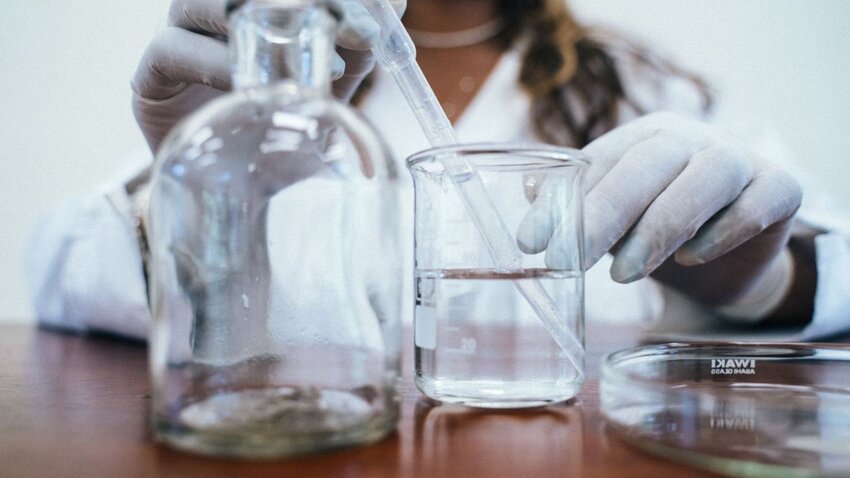
PFAS: the study on the Upper Danube basin
PFAS, which stands for per- and polyfluoroalkyl substances, are a large family of man-made chemical compounds characterised by high persistence in the environment and slow degradation; for this reason, they are commonly referred to as “forever chemicals” – chemicals that last forever. Used since the 1950s in industry for non-stick and water-repellent treatments, some PFAS are associated with potential risks to human health, including endocrine, reproductive and cancer-related problems.
The study into their prevalence in the Upper Danube catchment area was conducted over two years across an area spanning five European countries – Germany, Austria, the Czech Republic, Slovakia and Hungary – covering a total of approximately 186,059 km² and home to over 27.5 million inhabitants. What emerged was a scenario of widespread contamination: at least one PFAS compound was identified in 60% of all samples analysed, with PFOA, PFOS and short-chain compounds such as PFBA and PFBS being the most prevalent. The percentages vary significantly depending on the environmental compartment, reaching 100% in landfill leachate and surface run-off samples, followed by wastewater (98%), surface water (83%), atmospheric deposition (73%) and groundwater (50%).
- You may also be interested in: Egypt’s Water Future: From Nile Dependence to a New Era of Adaptation
From industrial activities to the aquifers
Not all PFAS have the same origin: substances that are still used in industry have been detected, as well as legacy compounds – the use of which is now banned but which continue to be present in the environment – such as PFOA and PFOS. This demonstrates how the termination of a substance’s use does not necessarily mean the end of the environmental problem.
In this regard, one of the most significant cases is the Gendorf chemical park in Bavaria, along the River Alz, which represents a major contamination hotspot: PFOA production was phased out and ceased in 2008, but the compound continues to be detected downstream due to historical contamination in the soil and groundwater. Besides industrial activities, the main pathways of dispersion include wastewater treatment plants, former contaminated sites and municipal landfills lacking adequate systems to prevent leaching into aquifers, as well as sites where fire-fighting foams containing PFAS have been used.
As the study highlights, the issue cannot be resolved by intervening at the final stage of the cycle, as traditional processes do not substantially reduce concentration levels. Furthermore, even so-called bank filtration – the natural filtration process through riverbanks used in several European cities, such as Berlin and Budapest, as a drinking water supply system – can remove many particles and pollutants, but in the case of forever chemicals it has proven to be a limited barrier.
PFAS move throughout the entire environmental and water system, with an impact that can persist for years through contaminated soil, groundwater and sediments, while new compounds may enter the environment as substitutes for those that are gradually phased out. For example, PFHxA (undecafluorohexanoic acid) has often been used as a substitute for another compound that has already been banned (perfluorooctanoic acid, or PFOA), but since 10 October 2024, a ban on the sale and use of PFHxA and related substances in various consumer products has come into force in the EU.
The EU moves towards a “universal” ban on PFAS
The restriction on PFHxA, introduced under the REACH Regulation – the European legislation on chemicals – should not be confused with the proposed restriction on the entire group of PFAS, comprising around 10,000 molecules, put forward in January 2023 by the national authorities of Germany, Denmark, the Netherlands, Norway and Sweden.
In August 2025, after concerns raised by various industrial sectors, the five proposing Member States updated the dossier, introducing sector-specific assessments for certain sectors, including medical, military, technical textiles, machinery and sealants, and exploring possible regulatory alternatives to a blanket ban.
The European Chemicals Agency’s (ECHA) evaluation process is now in its final stage (see timeline): in March 2026, the Committee for Risk Assessment (RAC) adopted its final opinion on issues such as health and the environment, while by the end of 2026, once the relevant consultation has closed, the Committee for Socio-Economic Analysis (SEAC) will express its view on the socio-economic impacts of a general ban on PFAS and on the potential for developing alternative materials. The two final assessments will be evaluated by the European Commission, which will draw up a proposal for a restriction to be submitted for discussion and a vote by the REACH Committee, comprising representatives of the Member States.
<<ECHA’s Scientific Committee has already confirmed that a universal restriction is the right tool. The key issue is the exemptions, how many and how long they should last, as for some sectors we are talking about transition periods of up to twelve years. And every year of delay means the substance remains in the environment forever>> comments Paola Ficco, a lawyer, environmental jurist and scientific director of ReteAmbiente, as well as a member of the Ecomondo Advisory Board.

Regarding drinking water, however, the current benchmark in Europe is Directive 2020/2184/EU (Drinking Water Directive, DWD), which introduced stricter limits for chemicals, mandatory from 12 January 2026: the threshold is 500 nanograms per litre for total PFAS and 100 nanograms per litre for the sum of 20 PFAS.
The matter of responsibility
The European debate on PFAS is not simply a matter of choosing between banning the substances at source and managing existing contamination, as Paola Ficco emphasises once again: <<These are two aspects of the same problem, and both are needed. The issue, in my view, is another: who pays? Europe does not yet have a producer liability mechanism for remediation. The new Water Directive (2026/805) simply asks the Commission to assess this by 2029. In the meantime, water operators and citizens foot the bill, and liability is determined on a case-by-case basis in the courts. The real urgency today is liability, not a ban.>>
The issue of exemptions requested by industrial sectors must also be addressed urgently, without creating a conflict between environmental protection and the continuity of production. <<The balance is not between the environment and production; it is between certainty and uncertainty>>, the legal expert points out. <<For a company, the worst cost is not the ban itself: it is not knowing when it will come into force and what its scope will be. The PFAS dossier has been open since January 2023, and the Commission’s proposal is still not available: that’s three years during which no one has been able to plan a transition. Those asking for more time are justified, but that time must be granted with a fixed deadline, not through constant postponements.>>
She adds: <<An exemption is valid if it is time-limited, conditional upon emissions monitoring and end-of-life management, and linked to documented evidence that the company is working on a replacement. An open-ended exemption justified solely on the grounds that ‘there are no alternatives’, without supporting investment, is not a balance: it is a postponement.>>
The most sensitive issue? <<I believe the exemption should be based on use, not on substance class,>> replies Ficco. <<Excluding fluoropolymers entirely is not an exemption; it is redefining the scope, and it removes precisely that case-by-case assessment which makes the measure defensible in court.>>
Germany: from contamination to prevention
Germany represents an interesting case study for observing how the management of forever chemicals is attempting to go beyond the mere treatment of contaminated water.
From a regulatory perspective, the National Water Strategy, adopted in 2023, targets reducing the release of pollutants into the environment through the protection of water resources, monitoring and the strengthening of the regulatory framework. Furthermore, from January 2026, a limit of 0.1 micrograms per litre will apply to the sum of 20 PFAS in drinking water, while from 2028 a stricter limit for PFHxS, PFOS, PFOA and PFNA will come into force.
When it comes to existing contamination, a recent report by the Federal Environment Agency (Umweltbundesamt, UBA) has revealed that PFAS have now permeated Germany’s rivers, lakes and seas, travelling along complex contamination pathways that start in towns and cities and end up in the deep sea. In urban areas, sewerage systems and municipal wastewater treatment plants are the main points of contact between human activity and surface waters. According to the UBA, every year around 36 kg of PFOS (perfluorooctanesulfonate) and 53 kg of PFOA (perfluorooctanoic acid) are released into the environment solely from the effluent of treatment plants lacking specific systems for the removal of micropollutants. Added to this are around 12 kg of PFOS and 18 kg of PFOA, which enter the water each year via stormwater drains and overflows from combined sewer systems, some of which discharge excess water into the environment during heavy rainfall events.
Monitoring conducted between 2020 and 2023 highlights a critical situation for watercourses, which act as genuine conveyor belts, carrying PFAS towards the North Sea and the Baltic Sea. The highest concentrations are recorded in coastal areas, where in many places the environmental quality standard for PFOS is exceeded.
On top of this, a new phenomenon has caught the attention of researchers: the accumulation of PFAS in sea foam. Initial investigations carried out along the German coast have detected high concentrations of PFOS and PFOA, similar to those already reported in Belgium and the Netherlands: the concern is that the foam may carry the contaminants back to the mainland, potentially exposing people and animals along the beaches.
- You may also be interested in: Water, from crisis to resilience: building a better-prepared Europe
The German case highlights the full complexity of the PFAS challenge: there is no single point in the cycle where action can be taken; instead, a balance must be struck between prevention, water protection, technological feasibility and the continuity of industrial activities. It is on this that a decisive part of the European debate on PFAS hinges today.
Article written by Maria Carla Rota
This blog is a joint project by Ecomondo and Renewable Matter
Credits
Photo by Anna Tarazevich
PUBBLICAZIONE
09/09/2026
Altre news correlate
08/09/2022
Inquinamento da plastica in mare: cause, conseguenze e soluzioni

21/03/2024
Ma dai, è solo un mozzicone
24/07/2023
RAEE: una miniera di materie prime critiche
20/09/2023
La plastica: da problema a risorsa
30/05/2023
Acqua in Europa: come affrontare il cambiamento climatico
03/04/2025
5 under 30 che hanno rivoluzionato l'economia circolare
21/04/2023
La giornata mondiale della terra, vista dal mare
19/05/2023
Ecomondo Mexico ed economia circolare in America Latina

31/07/2023
Economia circolare in Cina. Ieri, oggi e domani
14/05/2023
Sulla strada della sostenibilità: elettrificare il trasporto merci
06/11/2023
Lifegate presenta Water Defenders Alliance, una grande alleanza per difendere le nostre acque

20/10/2023
Legno-arredo, la filiera che ha messo la sostenibilità al centro

07/06/2023
Le maree stanno cambiando

03/08/2023
La filiera del riciclo della carta: eccellenza italiana con margini di miglioramento

10/10/2023
Responsabilità estesa ed ecoinnovazione, la sfida del tessile sostenibile non può attendere
13/05/2023
Europa: arriva il nuovo piano industriale per l’era net-zero