The water sector has, for some time now, been evolving from a quality control-based model to an approach increasingly focused on risk prevention throughout the entire supply chain. This change is addressed on a daily basis by utilities operating across Italy, such as Viveracqua, a consortium comprising 12 wholly publicly-owned companies responsible for managing water supply, sewage and wastewater treatment services in 580 municipalities in the Veneto region and parts of Friuli-Venezia Giulia, covering a total population of around 4.7 million.
This consolidation strategy, initiated over a decade ago, has resulted in one of the leading public entities in the integrated water services sector at the national level, with a production value of around one billion euros and over 3,000 people employed by the associated operators.
<<In the past, quality control focused primarily on testing the water supplied and on the ability to take action when a problem arose. Today, monitoring remains essential, but it is part of a broader approach that allows us to identify the system’s vulnerabilities in advance, understand which events could compromise quality, and define preventive measures to reduce the risk.>> explains Monica Manto, president of Viveracqua.
Within this context, to what extent are Water Safety Plans affecting the situation, and what changes do they entail for the day-to-day work of utility companies?
Water Safety Plans represent one of the most significant steps in the evolution of the integrated water service, specifically because they shift the focus from control to prevention. In Veneto, this involves a vast and complex water system comprising over 3,000 abstraction points, around 1,350 reservoirs, 360 water treatment plants, more than 47,000 kilometres of distribution networks and approximately 1,000 homogeneous supply zones.
Operators in Veneto have concluded that managing this complexity requires standardised tools and shared assessment criteria. Viveracqua began implementing the Water Safety Plans as early as 2019, prior to the obligation introduced by Legislative Decree 18/2023. In recent years, standardised tools have been developed to identify hazardous events, carry out inspections, classify system components in a consistent manner, define control measures and assess risk using shared criteria.
- You may also be interested in: The crucial battle for water is playing out in Brussels
A significant change also in organisational terms.
Each operator retains detailed knowledge of their own area and, through Viveracqua, brings together methods, expertise and tools. This collaboration strengthens the ability to prevent risks and reinforces public supervision of an essential resource.
Data will play an increasingly important role, as your projects, including ViveracquaLab, also show. In the coming years, how strategic will utilities' ability to collect, share and interpret information be for planning investments and increasing the resilience of water systems?
The ability to collect, share and interpret data will be an increasingly crucial factor in the management of integrated water services. The investments we are making today are set to have an impact for decades to come and must contend with increasingly unpredictable variables, starting with climate change: this requires an in-depth understanding of the infrastructure and the areas in which we operate.
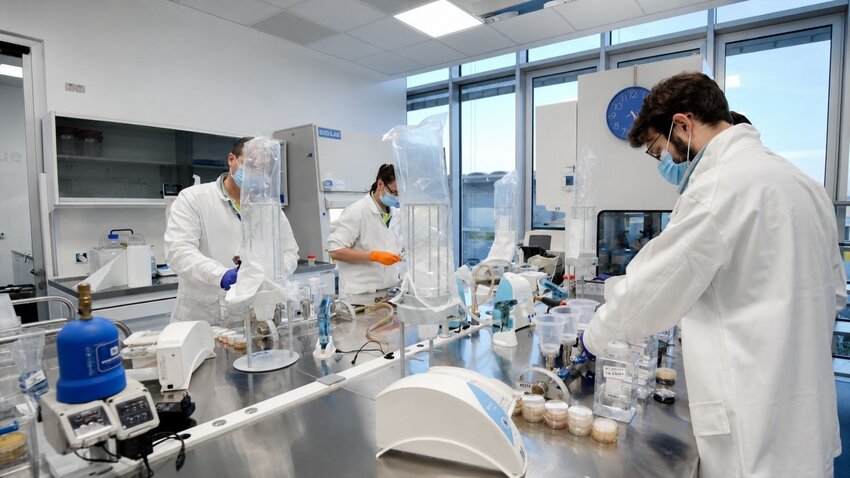
From this perspective, ViveracquaLab represents much more than just a network of labs. The collaboration between laboratories and technicians from public water operators in the Veneto region – who analyse over 100,000 samples of drinking water and wastewater each year, testing for around 2.5 million parameters – allows specialist expertise to be shared, ensures greater consistency in analytical methodologies, and facilitates the development of joint solutions for researching and monitoring emerging contaminants. The results of these analyses are thus incorporated into a broader assessment system: they help to track changes in water quality, verify the effectiveness of treatment processes and facilitate dialogue with health and environmental authorities.
This same approach underpins DATACLIME, the platform developed in collaboration with the Euro-Mediterranean Centre on Climate Change.
Using over 200 indicators, DATACLIME helps assess the vulnerability of water sources, networks, sewage systems and treatment plants to specific climate events, offering operators practical support in setting priorities for action. The information generated by the platform is integrated with technical knowledge of the systems and investment planning, so as to guide decisions that remain consistent over time, from upgrading networks to protecting water sources, right through to adapting treatment plants.
This work supports the adaptation of water services to climate change and contributes to service continuity in the coming years.
Today, utilities are no longer simply expected to provide an efficient service, but also to play an active role in the ecological transition, contributing to climate resilience, the circular economy and the protection of ecosystems. Which skills will become increasingly crucial in the coming years?
In the coming years, adopting a systemic approach, considering water throughout its entire cycle and assessing the service, the environment and the local area as a whole will be crucial. This means that integrated water service operators must combine network and facility management with the availability of the resource, the quality of water bodies, the effects of climate change and investment decisions.
The target is to avoid partial responses and build solutions that are more robust over time while dealing with less predictable water availability and stricter environmental standards. This requires expertise capable of delving into the specifics of decision-making. It is not enough to know a plant or a network; one must understand how that infrastructure reacts to a climatic event, what margins exist for recovering water, energy or materials, and which investments are truly sustainable over time.
The expertise of the future will, more precisely, be the ability to link technical considerations with environmental responsibility.
- You may also be interested in: Industrial water reuse: a strategic opportunity in an era of scarcity
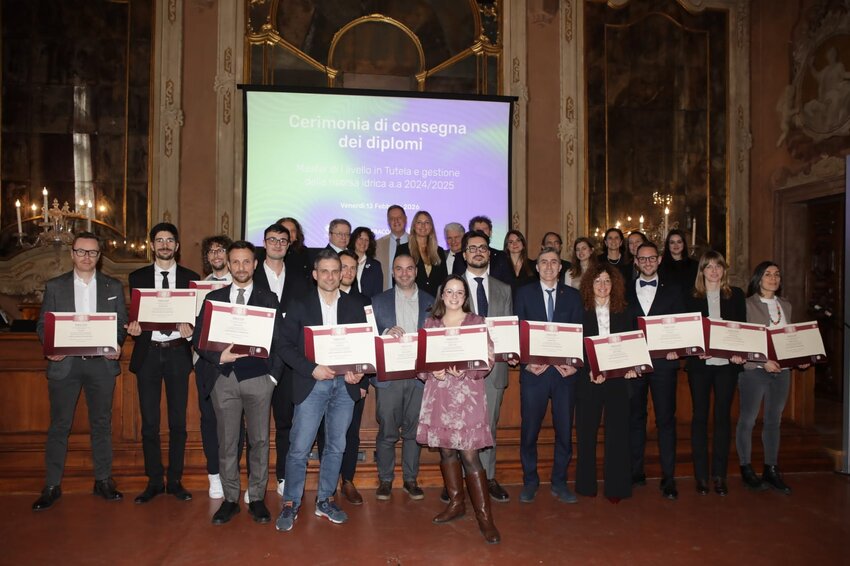
The Master's degree in “Water Resource Protection and Management”, run by Ca’ Foscari University of Venice in collaboration with Viveracqua, was created in response to this need: what is its aim?
The Master’s programme is designed to train professionals capable of tackling the complexities of the sector using appropriate scientific and technical tools. The ecological transition of the water sector will depend heavily on the talent we are able to attract and develop.
Resources remain crucial, however it is skills that transform them into sound decisions, useful projects and measurable results for local communities.
See you at Ecomondo 2026
Viveracqua will be participating in Ecomondo 2026 (Hall B7-D7) to showcase the expertise acquired by the public water service operators in the Veneto region on the key aspects of the environmental transition: water quality and safety, adaptation to climate change, innovation, education and the circular economy. The stand will serve as a space for discussion and in-depth analysis, illustrating how collaboration between operators allows challenges affecting different territories, infrastructure and communities to be tackled on a larger scale.
Article written by Maria Carla Rota
This blog is a joint project by Ecomondo and Renewable Matter
Credits
Photo by Viveracqua
PUBBLICAZIONE
31/08/2026
Altre news correlate

06/07/2023
5 Start-up circolari da non perdere

03/04/2025
5 under 30 che hanno rivoluzionato l'economia circolare

23/04/2025
7 giovani under 30, leader della green and circular economy
05/12/2024
7 trend nell'economia green che definiranno il 2025

15/12/2024
AI, big data e tecnologie predittive per la Blue Economy
30/05/2023
Acqua in Europa: come affrontare il cambiamento climatico

17/12/2025
Africa, frontiera della prossima economia verde

29/04/2025
Agricoltura di precisione: quali vantaggi offre e come può sostenere i paesi del Nordafrica?

10/05/2024
Alluvione in Emilia-Romagna, un anno dopo

26/11/2025
Aziende: come comunicare la transizione nell’era del greenlash?

24/04/2025
Batterie al sodio: la tecnologia che può rendere l'UE più indipendente dai materiali critici

29/01/2026
Benessere e felicità: quando la scienza incontra impresa, società e natura

23/06/2026
Bioeconomy in North Africa: Between Resource Abundance and Structural Constraints in Tunisia, Morocco, and Egypt
07/04/2026
Bioenergy and industrial ecosystems: models and research projects in Europe