
Far from being merely a component of European environmental policies, the bioeconomy is one of the main levers with which the EU27 is seeking to address, simultaneously, the climate crisis, the loss of industrial competitiveness and geopolitical instability, in the knowledge that dependence on fossil raw materials constitutes a source of economic and strategic vulnerability.
The sector has grown significantly: in 2025, it generated €3,174 billion in output, accounting for 8.8% of total output, and employed over 17 million people, as shown in the twelfth report “The Bioeconomy in Europe”, produced by the Research Department of Intesa Sanpaolo in collaboration with Cluster SPRING.
The figures are indisputable. This is one of the few sectors in which Europe still holds a position of global technological leadership; however, this cannot be taken for granted, as the difficult phase the European industry is currently going through risks undermining even the most innovative sectors.
European industry is under increasing pressure
<<Since 2022, the European industrial sector has lost 37 million tonnes of production capacity – almost 9% of the total – and over 20,000 direct jobs,>> emphasised Catia Bastioli, president of Cluster SPRING and CEO of Novamont, during the cluster’s annual report presented in June. One of the key factors at play is the asymmetric competition from non-European economies, particularly China: in recent years, Beijing has supported domestic industry through massive public investment, vastly increasing production capacity across numerous manufacturing sectors. <<The result is the flooding of the European market with products at extremely competitive prices, which are difficult for many of our supply chains to sustain. This opens up a scenario of progressive industrial desertification across the continent, with key production sectors at risk of being replaced or severely scaled back,>> continues Bastioli.
Is there a European response? <<It is certainly belated, but it exists. However, it is not yet equal to the strategic challenge we face. Commercial defence tools, such as anti-dumping measures, have clear limitations. We can no longer think in terms of individual products; we must protect the entire supply chain. Defending just one link in the chain risks penalising those further down the chain and still favouring imports.>>
The bioeconomy as a new industrial policy
In this complex landscape, the circular economy and the circular bioeconomy are emerging as complementary development models, fundamental to Europe’s competitive and sustainable future in economic, environmental and social terms.
<<The circular economy enhances the efficiency of existing resource use through reuse and recycling, while the bioeconomy introduces radical innovations based on non-fossil resources: renewable raw materials, advanced biotechnologies, efficient use of water and soil, and the enhancement of local supply chains. If firmly rooted in local areas and developed according to circular principles, it can generate a wide range of bioproducts and bioenergy without competing with food production and, indeed, by often making use of waste and marginal land,>> continues Bastioli.
<<This transformation can strengthen the quality and resilience of traditional Made in Italy and Made in Europe supply chains, creating new value chains and integrating agriculture, the chemical industry and energy. These are new economic opportunities that can be replicated on a national and international scale.>>
Between innovation and regulation
The main obstacle to development does not lie in research, considering that many technologies are already mature: in Europe, advanced biorefineries, new bio-based materials, innovative waste recovery systems and fully operational integrated supply chains already exist. The problem lies rather in the ability to transform these innovations into a widespread industrial system, preparing for a genuine leap in production, regulation and market scale.
It is therefore no longer possible to postpone the establishment of a coherent, stable and forward-looking European regulatory framework capable of giving businesses the confidence they need to invest. <<The potential of the bioeconomy is enormous, and it is time to create the best conditions to realise it fully,>> says Mario Bonaccorso, director of Cluster SPRING. <<The new European strategy published last November is an excellent document, but we now need to ensure that we move from strategy to action.>> In this context, the Circular Economy Act and the Biotech Act, anticipated in the coming months, could prove to be decisive drivers, provided they are implemented ambitiously and deliver tangible results in the short term.
<<But resources are also needed,>> adds Bonaccorso. <<Every year, hundreds of billions of euros from the EU’s pension funds end up in investments in the US. It is time to change course and invest in the European circular bioeconomy.>>
Italy starts from a position of strength
Italy is in a particularly favourable position. With production worth €433.3 billion in 2025 and an increase of 2.7% compared with the previous year, it ranks as the third-largest European bioeconomy in absolute terms, after Germany and France, while in relative terms it is one of the most specialised economies: the sector accounts for 10% of the entire national economy and employs over two million people, equivalent to 7.6% of total employment.
The result is driven primarily by the agri-food sector, but other sectors such as wood and furniture, paper, bio-based chemicals, pharmaceuticals, rubber, plastics and textiles are also strengthening their role.
Encouraging signs are also emerging on the innovation front. In 2025, 707 innovative start-ups active in the bioeconomy were recorded, accounting for 6.2% of those registered in the innovative start-ups section of the Business Register. They are concentrated primarily in research, biomaterials, waste recovery, new food models and applications for sustainable energy and construction. In the future, <<AI could play a key role in promoting biotech innovation, bio-manufacturing and precision agriculture while reducing research times and resource consumption and increasing yields>>, adds Bonaccorso.
From the bioeconomy to European resilience
The message that emerges from the exchange between institutions, businesses and the research community is clear: the bioeconomy can no longer be regarded as a niche sector.
For Europe, it represents one of the few areas where it is still possible to build industrial leadership based on innovation, scientific expertise and the integration of agriculture, industry and the local area. However, it only works when it becomes a system: we must rapidly develop investment strategies, integrated supply chains, industrial alliances and regional projects capable of generating shared value. Ultimately, this also means rethinking the tax regime for bio-based products to encourage made-in-Europe manufacturing by imposing fair tariffs on imports from abroad, proportionate to other trade mechanisms.
Article written by Emanuele Bompan
This blog is a joint project by Ecomondo and Renewable Matter
Credits
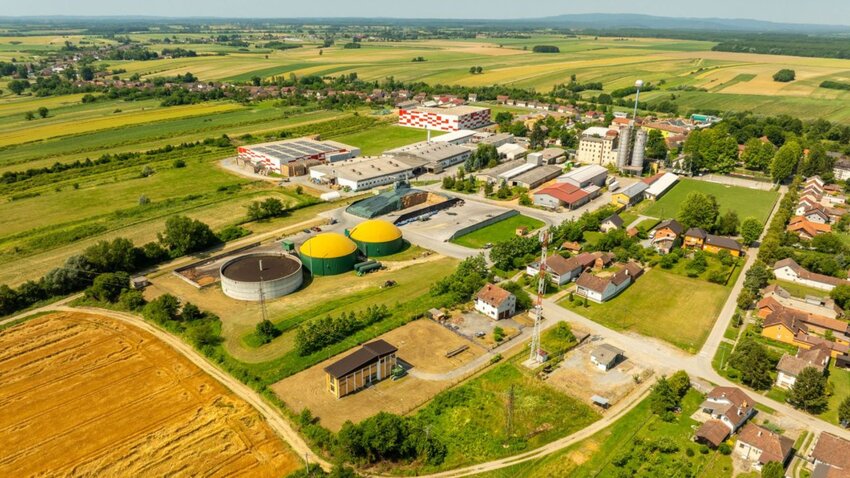
Photo by Vladimir Srajber
PUBBLICAZIONE
07/07/2026
Altre news correlate

06/07/2023
5 Start-up circolari da non perdere
03/04/2025
5 under 30 che hanno rivoluzionato l'economia circolare

23/04/2025
7 giovani under 30, leader della green and circular economy
05/12/2024
7 trend nell'economia green che definiranno il 2025

15/12/2024
AI, big data e tecnologie predittive per la Blue Economy
30/05/2023
Acqua in Europa: come affrontare il cambiamento climatico

17/12/2025
Africa, frontiera della prossima economia verde
29/04/2025
Agricoltura di precisione: quali vantaggi offre e come può sostenere i paesi del Nordafrica?
10/05/2024
Alluvione in Emilia-Romagna, un anno dopo

26/11/2025
Aziende: come comunicare la transizione nell’era del greenlash?
24/04/2025
Batterie al sodio: la tecnologia che può rendere l'UE più indipendente dai materiali critici

29/01/2026
Benessere e felicità: quando la scienza incontra impresa, società e natura

23/06/2026
Bioeconomy in North Africa: Between Resource Abundance and Structural Constraints in Tunisia, Morocco, and Egypt
07/04/2026
Bioenergy and industrial ecosystems: models and research projects in Europe