
The textile supply chain has one of the highest environmental and social impacts in the world. According Ellen MacArthur Foundation, over 100 billion garments are produced each year. For this reason, throughout continents steps are being taken to improve the sustainability of production processes and market dynamics. In this regard, Europe is considered a testing ground and a global reference point. Among several actions being undertaken, the Old Continent is introducing the Extended Producer Responsibility (EPR) regime for clothing, footwear, and textiles.
As established by Directive (EU) 2025/1892, before April 2028 each EU member state must launch its own system, based on strict criteria of transparency, traceability, and efficiency. The Directive stipulates that textile and footwear manufacturers will have to pay a fee for each product placed on the market. The fees will finance a collection and management systems for used items that includes processes for reuse, recycling, and disposal. These fees will be eco-modulated, meaning that their amount will be adjusted according to durability and recyclability, established by the Regulation on the Ecodesign of Sustainable Products (ESPR).
- You may also be interested in: Challenging fast fashion: from “textile graveyards” to the new European regulations
The future of EPR
The success of EPR will depend on how countries structure their supply chain. Beyond regulatory compliance, success requires that the EPR system is supported by adequate infrastructure for the collection and treatment of post-consumer products. This is one of the most critical operational aspects: some countries already showcase advanced management capabilities, while other are less developed on this aspect, with sporadic separate collection or fragmented systems between regions and municipalities.
In order to generate real economic and environmental value, one needs to improve the quality of the flows collected, strengthen second-hand markets, upgrade treatment facilities, and create concrete incentives to engage consumers and operators.
- You may also be interested in: Europe launches TexMat: financial incentives for those who return used clothing
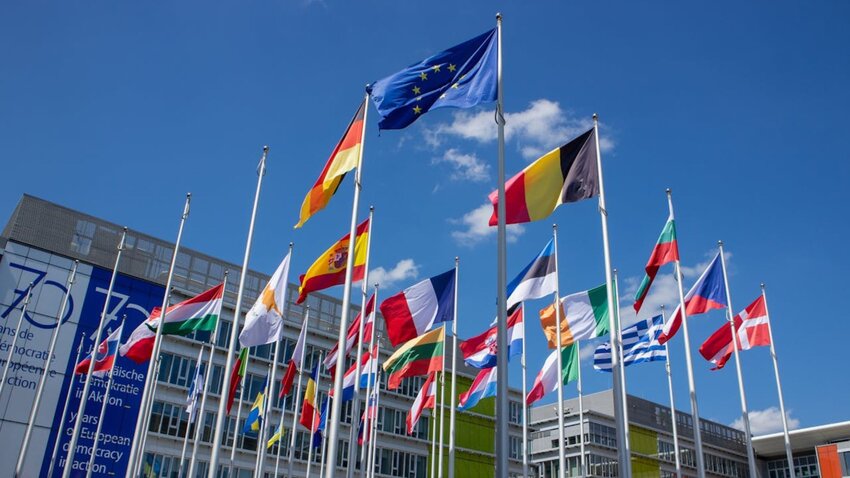
EU countries that already have EPR for textiles
The 2025 report by the Global Fashion Agenda, “Mapping of Global Extended Producer Responsibility (EPR) for Textiles,” takes stock of the situation. It offers a comprehensive overview of mandatory and voluntary Extended Producer Responsibility systems that already exist or are under development.
- Within the EU, France is one of the countries with the richest experience, that includes also other sectors, such as furniture. In France, the EPR system for textiles has been active for over 15 years, regulated by the AGEC law. The organization responsible for the coordination of the collection and recycling of clothing, footwear, and home textiles is Refashion. Both French companies placing products on the domestic market and foreign companies supplying products to French distributors are required to comply. A distinctive feature is the obligation to use the Triman logo. This serves to inform consumers that the product is subject to separate collection and recycling rules. The French model includes eco-modulation mechanisms for environmental contributions, with the aim of encouraging more durable and recyclable products.
- Since 2022, the Netherlands is implementing a mandatory EPR system for textiles, with responsibility assigned to producers, importers, and distributors. The main organizations responsible for management are Stichting UPV textiel, Collectief circulair textiel and European recycling platform
- Hungary introduced its own EPR for textiles in 2023: the system is managed by MOHU and covers a wide range of products, including accessories and carpets. Also foreign companies selling directly to customers in Hungary are required to comply.
- In Latvia, EPR was implemented in July 2024. Here, the government introduced a natural resource tax €0.50 per kg of textile products for those who do not participate in the system. The main PROs (Producer Responsibility Organizations) involved are Latvijas Zalais Punkts and Eco Baltia Vide.
EU countries working on EPR schemes
- Germany, has so far implemented a voluntary EPR scheme and it is working on a pilot project called “Textil+Mode”. This involves experts and representatives from associations, the scientific community, and producer responsibility organizations. The widespread separate collection system, the solid network of treatment facilities, and experience with EPR systems in other sectors (e.g., packaging, batteries, and household appliances) shed a favourable light on perspective of implemention of new rules in the textile sector as well.
- In Italy, the most recent information indicates that the Ministry of the Environment and Energy Security is working to bring EPR into force by summer 2026, in collaboration with the main consortia established after the introduction of mandatory separate collection of textiles in 2022: Consorzio Ecotessili, COBAT Tessile, Erion Textile, ERP Italia Tessile, RE.CREA, ReDress and Retex.green. These consortia highlighted that the lack of clear rules has slowed down the creation of new collection and recycling systems. This affected the competitiveness of Italian companies compared to EU countries already active on the EPR front. The idea is to establish the Coordination Center for Textile Recycling (acronym in Italian is CORIT), an absolute novelty in the governance of the textile supply chain. Drawing on the experience gained in other areas, such as the WEEE sector, this new entity will act as a central element of the system in accordance with European guidelines.
- Finally, an interesting case is that of Sweden, which is currently planning its EPR scheme. The idea is to provide strategic exemptions for manufacturers who make textile products using more than 80% textile waste (fiber-to-fiber recycling). Currently, this country does not have a separate collection system for textile waste, but it has a long tradition of collecting used clothing for reuse, mainly managed by voluntary organizations.
Article written by Emanuele Bompan and Maria Carla Rota
This blog is a joint project by Ecomondo and Renewable Matter
Credits:
Photo by Gintare K
PUBLICATION
10/03/2026
Other related news

08/09/2022

21/03/2024
Come on, it's just a cigarette stub
24/07/2023
WEEE: a mine of critical raw materials
20/09/2023
30/05/2023

03/04/2025
5 under 30 who have revolutionized the circular economy
21/04/2023
19/05/2023
Ecomondo Mexico and the circular economy in Latin America

31/07/2023
Circular economy in China – past, present, future
14/05/2023
06/11/2023
20/10/2023

07/06/2023
Tides are changing
03/08/2023
10/10/2023
13/05/2023
A new EU industrial plan for the net-zero age