
New collections hitting stores one after another at a rapid pace, clothes sold at throwaway prices, as if they were disposable goods: this is fast fashion, a trend that has been gaining ground around the world for quite some time now. According to estimates by the Ellen MacArthur Foundation, over 100 billion garments are produced globally each year, most of which are worn very few times, if at all, before being thrown away. These dynamics are further exacerbated by ultra-fast fashion, which reduces production times and costs even more, multiplying supply and reducing average quality.
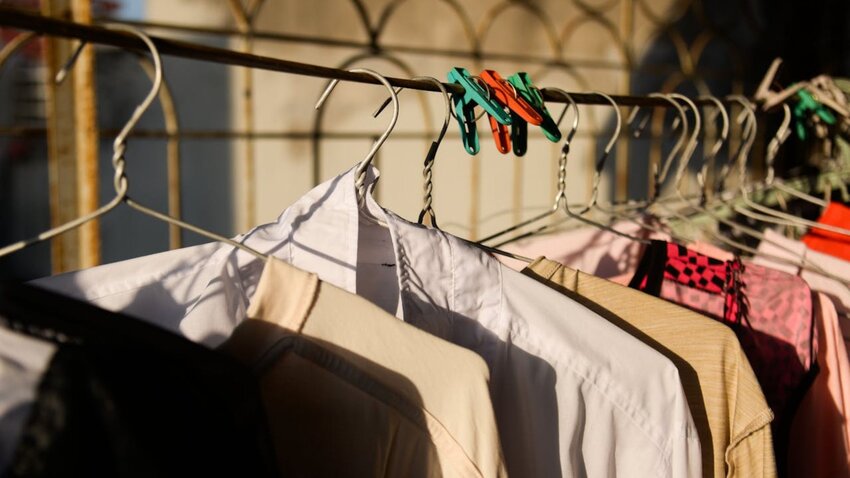
The “textile graveyards” across the world: from Chile to Ghana
What happens to these clothes when they are discarded? Part of them end up in landfills, while another part is exported to countries in the Global South, where the environmental and social effects of fast fashion are particularly severe.
The Atacama Desert in Chile, for one, has become a symbol of this imbalance: every year, thousands of tonnes of unsold or used garments, mainly from Europe, the United States and Asia, are dumped here in the open air. Made from synthetic fibres, they are either burnt illegally or left to degrade, resulting in the release of microplastics and chemicals into the soil and atmosphere. The situation is similar in Ghana, especially in the Accra area, which is seeing a massive influx of used clothing from the global North, causing an environmental and health crisis with direct consequences for local communities. This is highlighted in the report by Greenpeace Africa and Greenpeace Germany entitled “Fast fashion, slow poison: the toxic textile crisis in Ghana”.
Fashion is also one of the most impactful industries in terms of water consumption, chemical use and climate-changing emissions, accounting for 4-10% of the global total.
- You may also be interested in: Europe launches TexMat: financial incentives for those who return used clothing
The European countermeasures
In this scenario, in which countries that consume the most shift the environmental costs of their consumption model elsewhere, the European Union has started developing a stricter regulatory framework to mitigate its impact and promote circular economy dynamics.
As well as making separate collection of textiles mandatory in all EU countries from 1 January 2025, it also introduced the obligation for Member States to establish Extended Producer Responsibility (EPR) schemes for textiles as part of the revision of the Waste Framework Directive last year. The legislation was published at the end of September 2025 and came into force on 17 October 2025: as of this date, Member States have 30 months (i.e., until April 2028) to implement the system, which will require companies to contribute financially to the end-of-life management of products by covering the costs of collection, sorting and recycling.
The third pillar of the EU strategy is the Regulation on the Ecodesign of Sustainable Products (ESPR – EU Regulation 2024/1781), introducing requirements for the durability, repairability and recyclability of goods: in practical terms, it means designing garments that can withstand numerous washing cycles, ensuring they maintain their performance over time and are more easily recyclable, through the choice of specific fibres and manufacturing processes.
A key change also relates to the management of unsold goods. From 19 July 2026, large companies will no longer be allowed to destroy shoes and clothes left in stock, a practice previously used to manage excess supply, and one of the most obvious paradoxes in the sector. The ban seeks to reduce overproduction and encourage alternatives such as donation, reuse, resale or recycling.
- You may also be interested in: Epr in Europe: extended producer responsibility for textiles from 2025
The French case: even stricter on ultra-fast fashion
Lastly, in Europe, the French government is leading the way in regulating ultra-fast fashion, specifically targeting large, low-cost online platforms. The Parliament is drafting a bill that includes measures such as eco-scores to assess the environmental impact of products, financial penalties for brands with the worst scores, restrictions on advertising for ultra-fast fashion platforms, and potential sanctions for influencers who promote particularly harmful models. Legislative progress is not yet complete and requires further steps, including coordination with the European Commission, but the direction to follow is clear: intervention is needed both to improve waste management and to change the business model underlying overproduction. Furthermore, it is also essential to recognise the need to push society towards a cultural rethinking of its relationship with clothing.
Article written by Emanuele Bompan and Maria Carla Rota
This blog is a joint project by Ecomondo and Renewable Matter
Credits:
Photo by The Hung
PUBLICATION
23/02/2026
Other related news

08/09/2022

21/03/2024
Come on, it's just a cigarette stub
24/07/2023
WEEE: a mine of critical raw materials
20/09/2023
30/05/2023

03/04/2025
5 under 30 who have revolutionized the circular economy
21/04/2023
19/05/2023
Ecomondo Mexico and the circular economy in Latin America

31/07/2023
Circular economy in China – past, present, future
14/05/2023
06/11/2023

20/10/2023

07/06/2023
Tides are changing
03/08/2023
10/10/2023

13/05/2023
A new EU industrial plan for the net-zero age