
Encouraging the return of used clothing, making it simple, automated and, above all, cost-effective for citizens: this is the idea behind TexMat, a project conceived as part of the Horizon Europe programme, seeking to revolutionise the collection of post-consumer textiles through an economic incentive system linked to second-hand markets.
Launched on 1 October 2025 and set to run until 31 March 2029, the initiative has a total budget of €7.6 million, of which over €6.7 million comes from the European Union. It brings together 14 partners from seven EU countries and involves various types of entities, such as research centres, universities, businesses and organisations.
A “deposit” system for textiles
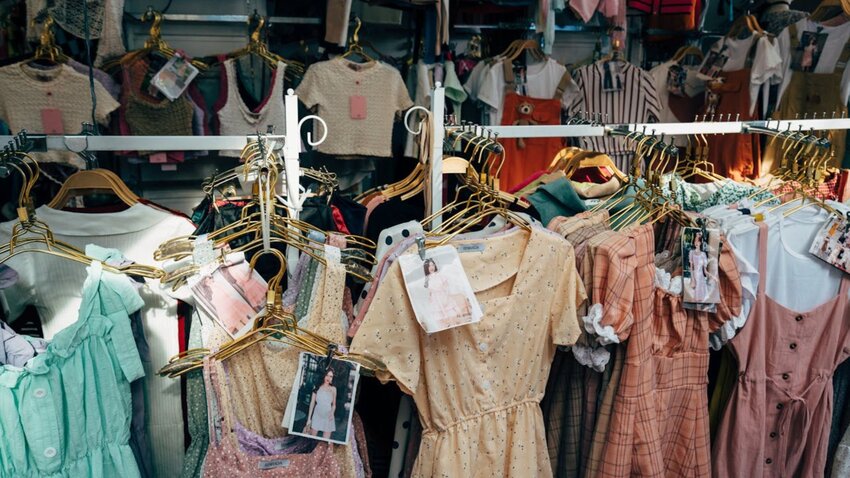
The project is based on a reward system for people who return reusable or recyclable items. In practice, it is a form of Deposit Return Scheme (DRS) for end-of-life textiles: those who return used clothing receive a financial incentive in return. The goal is twofold: increasing collection rates and reducing the volume of clothing that currently ends up in landfill or incineration.
According to estimates, in 2022, approximately 16 kg of textile waste per person was generated in Europe (6.94 million tonnes in total), of which around 11 kg per capita was not collected separately and ended up in unsorted household waste. TexMat seeks to capture this share, making collection not only an environmental obligation but also an economically advantageous action.
- You may also be interested in: Circular Economy in the EU: 7 news for 2026
Smart containers and digital passports
But that's not all. The system also includes automated collection units, i.e., smart containers capable of assessing the quality of the garments deposited and automatically sorting reusable items from those destined for recycling or disposal. The technology interacts with the future digital product passport (DPP) required by European ecodesign standards. Through the acquisition of information on the materials and composition of the garments, the system is able to direct each item to the most appropriate channel: second-hand market, recycling or waste management. This means that citizens no longer have to evaluate for themselves which garments can be resold or recycled. Automation also reduces the amount of manual labour required during the sorting process and improves the accuracy of classification. The system is also able to notify manufacturers when returned textiles require official waste management, contributing to the implementation of extended producer responsibility (EPR).
- You may also be interested in: Epr in Europe: extended producer responsibility for textiles from 2025
New models of circular business
TexMat is developing new business models, generating commercial opportunities related to extending the life cycle of textile products, in line with the circular economy. To assess the effectiveness of the system, pilot projects will be carried out in Finland and Spain, testing the solutions in real-world contexts to evaluate consumer participation, technical performance and the possibility of scaling the model to a European level.
One of the companies participating in the project, Estonian company Protex Balti, is working on integrating a digital product passport into clothing, while Spanish companies Rovimatica and STAM SRL, along with Italian company IRIS Technology Solutions, are working together to develop the smart container and related digital tools.
The long-term ambition, therefore, is to accelerate the transition to a more sustainable and circular textile economy, thereby contributing to waste reduction, the enhancement of second-hand markets and the strengthening of European independence from resources. More specifically, TexMat intends to transform a growing problem, the surplus of discarded clothing, into an economic and environmental opportunity.
Article written by Maria Carla Rota
This blog is a joint project by Ecomondo and Renewable Matter
Credits:
Photo by Markus Winkler
PUBLICATION
23/02/2026
Other related news

06/07/2023
5 European Start-ups non to be missed

03/04/2025
5 under 30 who have revolutionized the circular economy

23/04/2025
7 young leaders under 30 in the green and circular economy
05/12/2024
7 trends in the Green Economy that will define 2025

15/12/2024

30/05/2023

17/12/2025
Africa, a frontier for the next Green Economy

29/04/2025
Precision agriculture: what advantages does it offer and how can it support North African countries?

10/05/2024

26/11/2025
Companies: how to communicate the transition in the greenlash era?

24/04/2025
Sodium batteries: the technology that could make the EU less dependent on critical materials

29/01/2026
Wellbeing and happiness: when science meets business, society and nature

23/06/2026
Bioeconomy in North Africa: Between Resource Abundance and Structural Constraints in Tunisia, Morocco, and Egypt
07/04/2026
Bioenergy and industrial ecosystems: models and research projects in Europe