
In April 2024, the European Parliament adopted definitively the Regulation on the ecodesign of sustainable products, better known as the Ecodesign for Sustainable Products Regulation (ESPR), a pillar of the Circular Economy Action Plan (CEAP). The legislation seeks to improve various aspects of products to make them more durable and reliable, easier to reuse, upgrade, repair and recycle, and more sustainable in terms of resource consumption. The scope of the historic Ecodesign Directive is therefore expanded to include almost all physical goods marketed in the EU, including iron, steel, aluminium, textiles, furniture, tyres, detergents, paints, lubricants and chemicals.
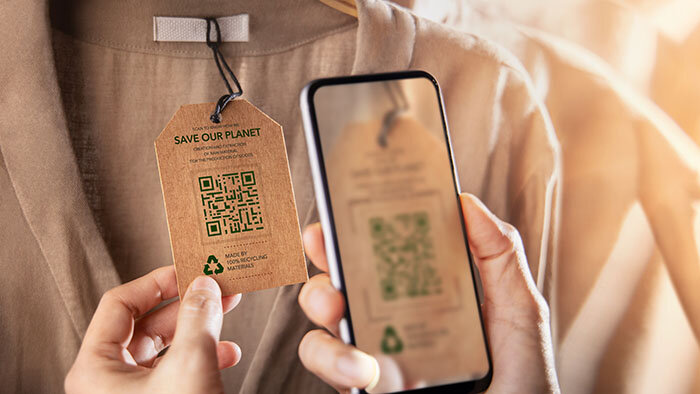
What is the Digital Product Passport
One of the main measures laid down in the Ecodesign Regulation is the introduction of the Digital Product Passport: this document will provide the products concerned with a unique digital identity and will contain a structured set of digital data that will follow the goods throughout their life cycle, from design to production, from distribution to use, right up to end-of-life management. For example, origin, material composition, presence of hazardous substances, information on durability and updatability, repair and maintenance options, correct disposal methods, and recyclability of the various components.
The Digital Product Passport will be accessible via digital media (such as QR, NFC tags, or other electronic identification tools) and can be consulted, with different levels of accessibility, by the various actors involved in the entire value chain, such as consumers, economic operators, and competent authorities.
- You may also be interested in: Europe launches TexMat: financial incentives for those who return used clothing
Which products are affected by the DPP?
As explained by the European Commission in the ESPR Work Plan 2025-2030, the Digital Product Passport will be introduced in stages, once the specific regulations for each type of goods have been approved. The first stage, starting on 18 February 2027, will cover batteries, a category already regulated by Regulation 2023/1542. This will be followed, also in 2027, by textiles and tyres, in 2028 by furniture and in 2029 by mattresses. As regards intermediate products, iron and steel are expected to come into force in 2026, and aluminium in 2027.
Overall, by 2030, almost all physical products placed on the European market will have to be equipped with a Digital Product Passport, with the exception of certain categories, such as food, animal feed, medicines, plants/animals and vehicles. To meet these deadlines, by 2026 companies will need to be able to manage product data through digital registers that comply with European standards, such as GS1. It is therefore a profound transformation, combining aspects of both digital and circular transition, from the digitisation of supply chain processes to supplier traceability, and from the collection and standardisation of environmental data to investments in interoperable IT systems.
- You may also be interested in: Challenging fast fashion: from “textile graveyards” to the new European regulations
Digital Product Passport in the textile sector
The fashion industry, one of the sectors with the greatest environmental impact, will be one of the pilot sectors and will have to activate the Digital Product Passport starting in 2027. In this regard, an international team coordinated by ENEA (the Italian National Agency for New Technologies, Energy and Sustainable Economic Development) has developed new guidelines for the collection and management of traceability and sustainability data throughout the entire textile supply chain.
The document, published by the European Committee for Standardisation (CEN), is an operational tool to accompany companies through a phase of regulatory and digital transition. To this end, the results of some important European applied research initiatives on traceability and the circular economy are also illustrated. For example, the TRICK project has developed a digital platform to support the traceability of textile products throughout their life cycle, while CISUTAC focuses on the optimised management of post-consumer textile waste, and PESCO-UP is dedicated to the recycling of mixed fabrics, in particular cotton and polyester.
Article written by Emanuele Bompan and Maria Carla Rota
This blog is a joint project by Ecomondo and Renewable Matter
PUBLICATION
06/03/2026
Other related news

08/09/2022

21/03/2024
Come on, it's just a cigarette stub

24/07/2023
WEEE: a mine of critical raw materials
20/09/2023

30/05/2023

03/04/2025
5 under 30 who have revolutionized the circular economy

21/04/2023

19/05/2023
Ecomondo Mexico and the circular economy in Latin America

31/07/2023
Circular economy in China – past, present, future

14/05/2023

06/11/2023

20/10/2023

07/06/2023
Tides are changing

03/08/2023

10/10/2023

13/05/2023
A new EU industrial plan for the net-zero age