
Industrial and environmental biotechnology are among the enabling technologies for the circular bioeconomy. Biosolutions – products, processes and services based on the application of biological knowledge, microorganisms, cells, enzymes, biomolecules or other biological systems – allow value to be derived from renewable resources and by-products, develop new materials and improve the efficiency of a wide range of production processes.
Turning this potential into tangible results, however, means overcoming the barriers that continue to slow the transition from research to industry, while creating the right conditions for investment and the wider adoption of biosolutions in the marketplace.
We discussed these topics with Elena Sgaravatti, vice president of Assobiotec, the national association for the development of biotechnology, which is part of Federchimica.
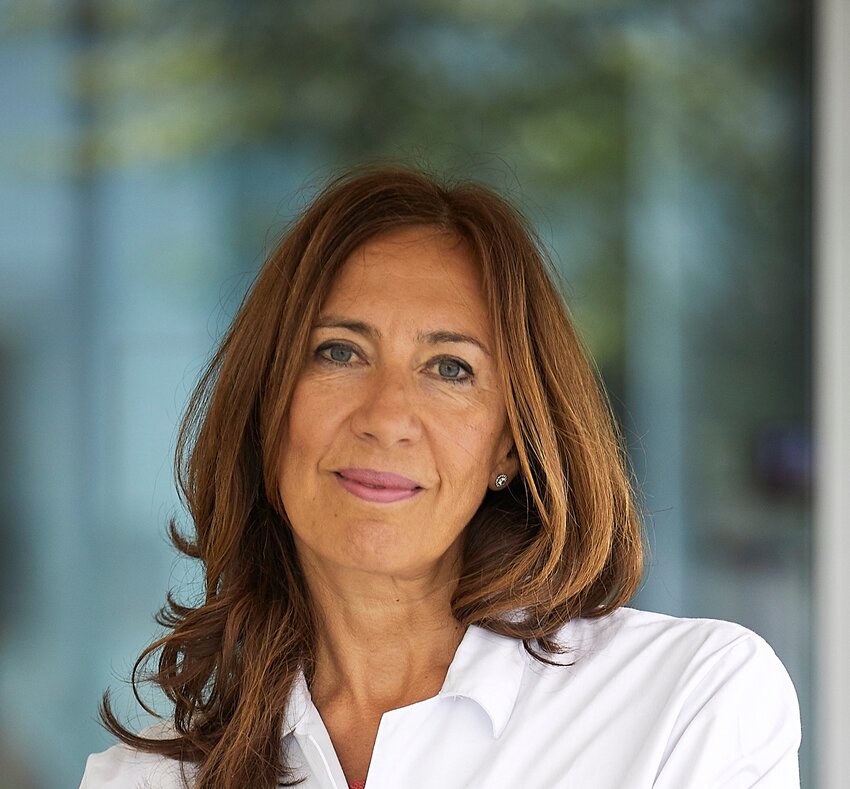
The European Commission is working on Biotech Act II. In Assobiotec’s view, what are the main challenges that need to be addressed to support the development of industrial and environmental biotechnology in Europe? What measures should be prioritised to create a clearer regulatory framework that encourages innovation and business competitiveness?
Europe has high-level scientific and technological expertise, but it needs to create more favourable conditions to translate that expertise into industrial innovation, new businesses and manufacturing capacity.
One of the main challenges is undoubtedly regulatory fragmentation: overlapping rules, differences between member states and poorly coordinated approval procedures create uncertainty, drive up costs and delay market access for these solutions.
Biotech Act II presents an opportunity to establish a clearer, more coherent and predictable framework. We need more efficient approval procedures, greater certainty over timescales, better harmonisation across Europe and tools to avoid duplication in assessments, without compromising safety standards.
It is also important that rules are proportionate to the characteristics of the technologies and products.
Competitiveness, however, also depends on market conditions. Bio-based products must compete with supply chains that benefit from established infrastructure and economies of scale.
Regulatory simplification must therefore go hand in hand with measures to stimulate demand, support investment and facilitate the development of pilot and demonstration plants.
Biotech Act II should strengthen the links between research, industry and the market, ensuring that Europe is not merely a place where new technologies are created, but also a region where they are developed, produced and brought to market on a competitive scale.
What are the main obstacles to taking a biotech solution from the laboratory to industrial production, and how can they be overcome?
The step from research to production is one of innovation’s most sensitive stages. A process that works in the laboratory cannot automatically be scaled up to industrial production.
As production volumes increase, yields, timescales, consumption and costs can all change, requiring further investment in development and optimisation.
Added to this is the limited availability of suitable infrastructure and the difficulty, particularly for start-ups and SMEs, of bearing the costs and risks associated with the intermediate stages, from pilot plants to demonstrating a process’s economic viability. Overcoming these obstacles requires more than funding early-stage research.
We need to support bio-based solutions throughout their entire development. We must create the conditions in which innovations can be developed, tested and produced at industrial scale. This is how scientific knowledge can translate into competitiveness, skilled employment and new industrial supply chains.
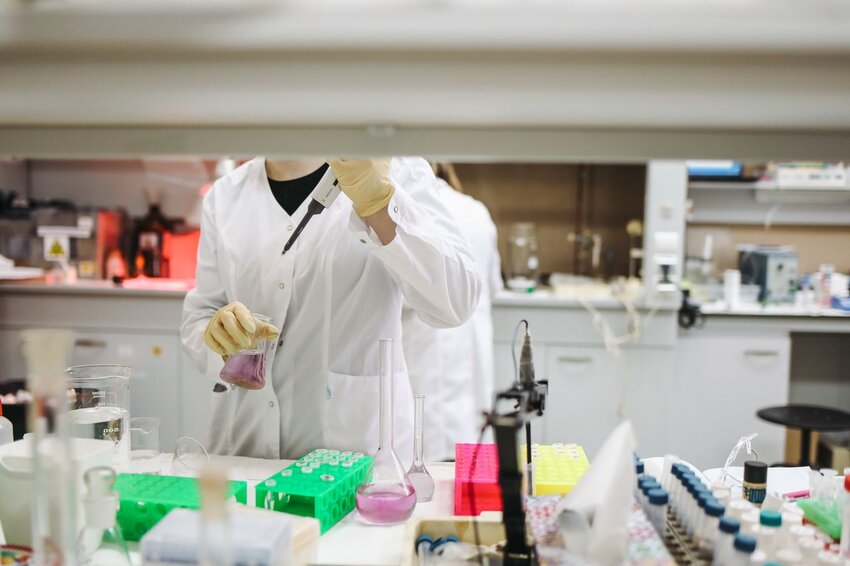
Photo by Polina Tankilevitch / Pexels
Which applications of industrial and environmental biotechnology hold the greatest promise for advancing circularity today?
The most promising applications rethink how resources are used throughout production processes: turning by-products into raw materials, replacing certain conventional processes with bio-based alternatives and developing innovative materials from renewable resources.
One area is conventional and precision fermentation. Microorganisms and enzymes can help improve process efficiency, make better use of different raw materials and enhance food preservation processes. A second area is nutrient recovery and the valorisation of by-products, which can help close production loops and reduce waste. A third is bio-based biomaterials.
These technologies open up new possibilities for producing materials through biological processes and creating value from alternative resources. Although these applications differ, they share the potential to harness biology as a tool for industrial innovation.
Their value lies in their ability to reduce resource use, extract value from residual streams and generate competitive products.
- You may also be interested in: Six news stories for six perspectives on the circular economy
What criteria should be used to assess the actual contribution of a biotech solution to the circular economy? How can theoretical potential be distinguished from proven environmental and economic benefits, considering energy consumption, biomass availability, costs and the possibility for large-scale deployment?
Life-cycle assessment, combined with measurable economic and production indicators, helps distinguish opportunities from solutions that deliver genuine results.
Circularity must be demonstrated through measurable outcomes, rather than simply claimed because of the technology used. It is essential to adopt metrics and assessment criteria that take the entire life cycle into account, capturing tangible benefits in terms of resource efficiency, by-product recovery, emissions reductions and economic value creation.
This is the prerequisite for biotechnology to truly become a credible driver of ecological transition and industrial competitiveness.
Are there any "business experiences" that use biotechnology as a driver of innovation in the circular bioeconomy?
On the Italian national scene, there are many interesting organisations that fit into some of the biotech development trends identified in the report Biotech in Italy: Figures, Stories and Trends (Il biotech in Italia. Numeri, storie e trend), produced by Assobiotec in collaboration with the Politecnico di Milano. Among the most promising areas mentioned in the document, we once again note precision fermentation, alongside New Genomic Techniques (NGT) and bioconversion.
In the field of precision fermentation – an advanced process that uses microorganisms such as modified bacteria, fungi or yeasts to produce specific compounds – several interesting companies specialise in developing and optimising bioprocesses, including the work required to transfer them from the laboratory to industrial scale. These include developing biomanufacturing platforms that combine precision fermentation, advanced bioreactors and artificial intelligence to make bio-based molecule production more efficient and scalable.
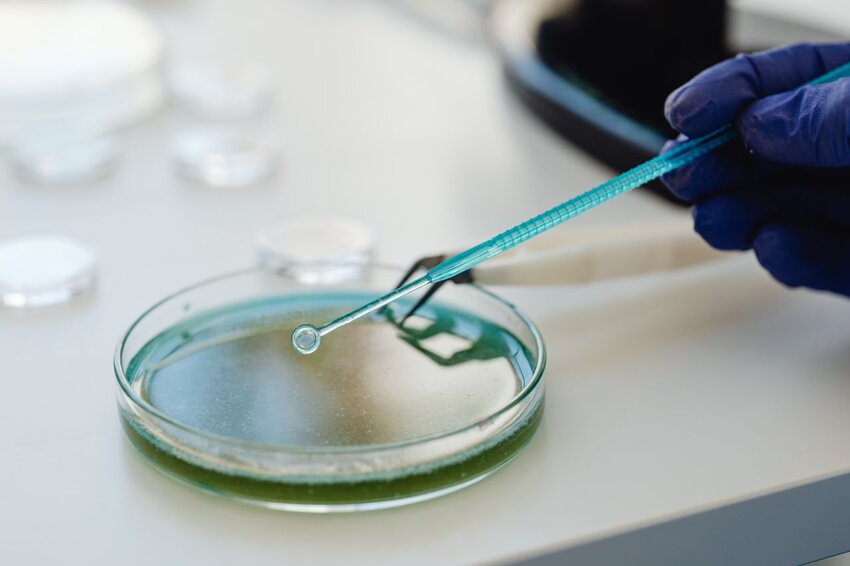
Photo by Kaboompics / Pexels
And what about NGT?
New Genomic Techniques offer new opportunities to develop plant varieties with characteristics that can help address challenges facing agriculture. Through genetic improvement techniques, it is possible to work towards resistance to pathogens and resilience to climate change, supporting productivity and reducing pressure on natural resources.
In the wine sector, I would like to mention a company that began as a university spin-off and is developing prototype grapevines using DNA-free genome editing techniques, seeking to produce more resilient varieties without compromising their genetic identity or original organoleptic characteristics.
These applications demonstrate how biotechnological innovation can contribute to more resilient agriculture and a more efficient use of resources.
Finally, what about bioconversion and biomaterials?
Bioconversion makes it possible to transform raw materials and residual streams through biological processes, opening up new opportunities to recover resources and produce higher-value products.
One interesting industrial example involves recovering nitrogen from anaerobic digestate and converting it into protein-rich microbial biomass, with potential applications in the production of microbial fertilisers and biostimulants. In this way, a residual stream can become a resource for new production processes.
Other companies are working to extract value from bioactive compounds of plant origin, including those derived from biomass and by-products, to develop ingredients for the cosmetics, nutraceutical and healthcare sectors. In agriculture, there are also companies that convert production waste into bioenergy, including bioethanol.
As for biomaterials, several companies use mycelium – the network of filaments of fungi – to create materials for packaging, design, architecture and fashion, offering alternatives to conventional materials.
- You may also be interested in: Spain’s circular economy: from recycling waste to building new industries
These diverse examples show the breadth of opportunities offered by biotechnology, from producing molecules and valorising waste to developing new materials.
Article written by Maria Carla Rota
This blog is a joint project by Ecomondo and Renewable Matter
Credits
Photo by Polina Tankilevitch and Kaboompics
PUBLICATION
27/10/2026
Other related news

06/07/2023
5 European Start-ups non to be missed
03/04/2025
5 under 30 who have revolutionized the circular economy

23/04/2025
7 young leaders under 30 in the green and circular economy
05/12/2024
7 trends in the Green Economy that will define 2025

15/12/2024
30/05/2023

17/12/2025
Africa, a frontier for the next Green Economy
29/04/2025
Precision agriculture: what advantages does it offer and how can it support North African countries?

10/05/2024

26/11/2025
Companies: how to communicate the transition in the greenlash era?

24/04/2025
Sodium batteries: the technology that could make the EU less dependent on critical materials

29/01/2026
Wellbeing and happiness: when science meets business, society and nature

23/06/2026
Bioeconomy in North Africa: Between Resource Abundance and Structural Constraints in Tunisia, Morocco, and Egypt
07/04/2026
Bioenergy and industrial ecosystems: models and research projects in Europe