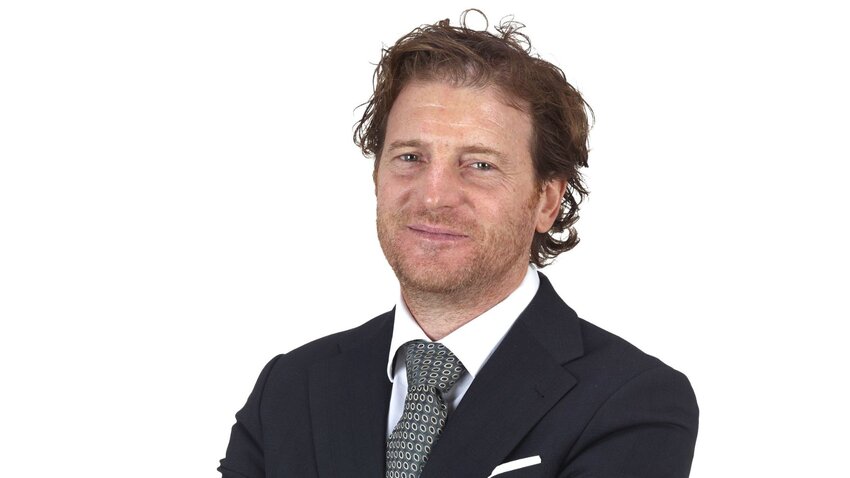
<<It’s a recurring pattern: first Ukraine, then Iraq, and now Iran. Every time there is an international crisis, the prices of oil and, above all, gas rise. The world, and Europe in particular, seems surprised by these events, yet we know just how strong our dependence on fossil fuels is,>> Michael Niederbacher, a South Tyrolean entrepreneur and CEO of the companies TerraX and BiHcon, in his third term as vice-president of EBA – European Biogas Association, explains.
<<Before the pandemic, we consumed around 450 billion cubic metres of natural gas every year, of which 78 billion were in Italy alone and 100 billion in Germany, which, incidentally, has a much larger population: 83 million inhabitants compared to 58 million. In terms of per capita consumption, Italy is among the countries most dependent on gas: this is reflected in energy prices.>>
From biogas to biomethane: a paradigm shift
In this context, biomethane is emerging as one of the most promising solutions for boosting resilience across all European countries. <<Over the last fifteen years, the focus has shifted from biogas – used to generate electricity and heat – to biomethane, a purified gas that can be fed directly into the natural gas network.>> Why this shift? <<Europe has placed enormous emphasis on generating electricity from renewable sources: over the years, solar and wind power have become highly competitive, and biogas now struggles to compete on price, except in specific niche markets.>> The sector is therefore looking to biomethane: <<Even with the future growth of electrification, a large share of energy will remain in the form of molecules, mainly gas, which by 2050 must be renewable.>>
Demand is growing, but clear regulations are necessary
By 2030, the EU aims to produce 35 billion cubic metres of biomethane per year. <<Realistically, at the current rate we won’t get there, so today we tend to include biogas in the figures as well, but I think the target should focus solely on biomethane.>> The figures are clear: <<We currently produce around 18 billion cubic metres of biogas and 6–7 billion of biomethane. We must significantly accelerate our efforts.>> The potential, however, is high: <<By 2050, we could be producing 150 billion cubic metres of renewable gas, covering most of our needs, which will have decreased in the meantime, again as a result of increased electrification. Gas consumption has fallen from around 450 billion in 2020 to around 332 billion in the period 2024–2025 (as shown in the EBA Statistical Report 2025, ed.), and could reach 100 billion by mid-century.>> However, in order to achieve production targets, <<it is necessary to utilise the full potential of biomass and all available technologies: anaerobic digestion, wood gasification and biological methanation.>>
- You may also be interested in: "From South Tyrol, an impetus for the green revolution: technologies for biomethane and biohydrogen"
Agriculture and sustainability: the role of digestate
One of the most controversial themes relates to the relationship between bioenergy and agriculture. <<There are concerns about competition between food (human consumption, ed.), feed (animal nutrition, ed.) and energy, but this is not the case. The sector has changed, and sustainability criteria are now more rigorous.>> For example, new plants no longer use traditional feedstocks, such as silage maize, an animal feed obtained by chopping the whole maize plant: <<Today we are moving away from monocultures to work with crop rotation and double harvests in the same year: energy in winter, food in summer.>> A method that also improves soil quality: <<With new agronomic techniques and the use of digestate – a by-product of the biogas production process – fertility is enhanced. Moreover, digestate is now buried rather than spread on the surface, preventing the loss of nutrients and improving effectiveness. Additionally, keeping the soil continuously cultivated and therefore covered throughout the year reduces erosion, prevents nutrient loss and increases humus levels.<< The use and valorisation of agricultural by-products and livestock waste, such as straw, citrus pulp, maize stalks, olive pomace, manure and slurry, are also fundamental to production, in line with the principles of the circular economy and sustainability. “In this way, we close the carbon, nitrogen and phosphorus cycles.>>
- You may also be interested in: Bioenergy and industrial ecosystems: models and research projects in Europe
Priorities for the EU: biomass, infrastructure and market
While the direction to take is clear, practical action is needed at the European level.
<<The first point is biomass: we must unlock its potential and overcome prejudices. Food, feed and energy can be part of a flexible and resilient system, in which energy still gives priority to the first two links in the chain. In 2023, during the drought, this already happened: some biomass intended for power plants was used to feed animals.>> The strategy to be pursued is that of <<healthy overproduction>>: <<At the agricultural level, we could produce 20–30% more than food demand and use the surplus for biogas and biomethane, allocating it to food and feed instead in the event of an emergency.>> Synergy between the various sectors could also facilitate the reclamation of marginal and uncultivated land, thanks to greater investment in technology and precision farming.
The second issue that needs resolution is the accessibility of the current gas network, which can be utilised for biomethane. <<We must encourage transmission and distribution companies to collaborate. If connection obligations are not met – given that no penalties are in place – development slows down.>>
Thirdly, the market: <<Biomethane has the potential to have a negative carbon footprint, as it avoids the emissions associated with the spreading of livestock manure. However, this benefit is not yet fully recognised.>> If it were, <<it could contribute even more effectively to decarbonisation, for example through the Emissions Trading System.>>
The issue of biofertilisers also remains open, even more so in the current context, where sourcing is more difficult: <<Europe is lacking about a third of its urea supply, and prices have tripled. In the future, fertiliser will be even more important than energy molecules. We need to work towards establishing a European production target, while also considering financial support for the supply chain.>> In short, the direction has been set, but time is running out: <<We have the technologies, the know-how and the resources. What we need now are clear political decisions; otherwise, we risk losing a fundamental opportunity for the European energy transition. In this context, Italy can play a central role: it is one of the leading countries, if not the best, in the production of the molecule but above all in the supply of technology and in its capacity for innovation. >>
Article written by Maria Carla Rota
This blog is a joint project by Ecomondo and Renewable Matter
PUBBLICAZIONE
10/04/2026
Altre news correlate
08/09/2022
Inquinamento da plastica in mare: cause, conseguenze e soluzioni
21/03/2024
Ma dai, è solo un mozzicone
24/07/2023
RAEE: una miniera di materie prime critiche
20/09/2023
La plastica: da problema a risorsa
30/05/2023
Acqua in Europa: come affrontare il cambiamento climatico

03/04/2025
5 under 30 che hanno rivoluzionato l'economia circolare
21/04/2023
La giornata mondiale della terra, vista dal mare
19/05/2023
Ecomondo Mexico ed economia circolare in America Latina

31/07/2023
Economia circolare in Cina. Ieri, oggi e domani
14/05/2023
Sulla strada della sostenibilità: elettrificare il trasporto merci
06/11/2023
Lifegate presenta Water Defenders Alliance, una grande alleanza per difendere le nostre acque
20/10/2023
Legno-arredo, la filiera che ha messo la sostenibilità al centro

07/06/2023
Le maree stanno cambiando
03/08/2023
La filiera del riciclo della carta: eccellenza italiana con margini di miglioramento
10/10/2023
Responsabilità estesa ed ecoinnovazione, la sfida del tessile sostenibile non può attendere
13/05/2023
Europa: arriva il nuovo piano industriale per l’era net-zero