
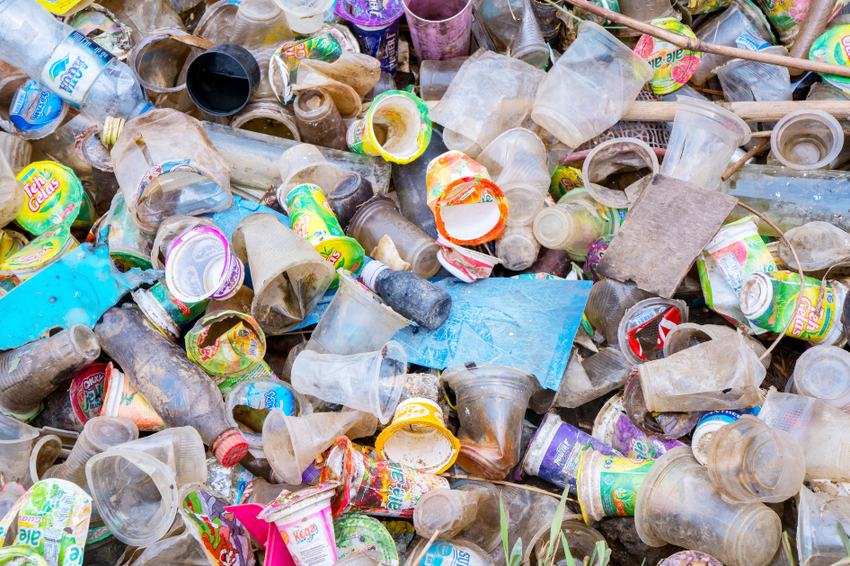
One of the main solutions to reduce single-use plastics is introducing a deposit refund scheme on beverage packaging, what in the past used to be called “returnable empties”. This practice, now known as Deposit Return Scheme (DRS), is a well-established reality in several EU Member States, where positive results have been achieved in terms of collecting plastic bottles, but also metal cans and glass containers.
Deposit Return Scheme: what it entails
Under the DRS, consumers purchasing a beverage in a single-use container also pay a small additional deposit. This will be fully refunded once they return the empty container to the point of sale or deliver it to a dedicated collection centre. The aim is to increase the return of packaging, preventing it from being dispersed in the environment or ending up in unsorted waste. Another objective is to improve the quality and quantity of the materials collected, so that they can be recycled more effectively.
At the end of 2025, 18 EU Member States had an operational Deposit Return Scheme. This number is set to grow in the near future as a result of EU legislation. In practice, according to a , approximately 188.6 million European citizenscan access to DRS systems. Globally, the total number reaches 357 million people. the total number reaches 357 million people.
- You may also be interested in: Circular Economy in the EU: 7 news for 2026
European obligations and the pressure on Member States
In the EU, the relevant legislation is the EU Packaging Regulation (Single-Use Plastics Directive or PPWR). It was approved in 2024 and it requires Member States to achieve a 90% collection rate for single-use plastic and metal beverage containers (up to three litres) by 2029. To achieve this ambitious goal, Member States are required to introduce deposit schemes and return systems, unless they can demonstrate to be able to achieve the same results through equally effective alternative instruments. The text also includes binding waste reduction targets: -5% of packaging produced by 2030 compared to 2018, -10% by 2035 and -15% by 2040.
- You may also be interested in: Space as a workshop for the future: the new frontiers of the circular economy
Europe: where DRS is already operational and with what results
Among the most recent examples of DRS in Europe there is Austria, which last December took stock of the first year of implementation of the national system. This is based on a deposit of around 0.25 euro per unit: in twelve months, over 1.2 billion PET bottles and aluminium cans were returned.
Romania, where the system came into force in November 2023, also achieved very satisfactory results: according to The Guardian, in about two years citizens have returned 7.5 billion beverage containers. The returns include 4 billion PET bottles, 2 billion metal cans and 1.5 billion glass containers: in total, over 500,000 tonnes of high-quality recyclable materials have been collected. The significance of Romania's turnaround is even more striking if considering the country's starting point. For over a decade, it in fact remained at the bottom of EU statistics on urban waste recycling: between 2011 and 2021, the rate remained steady at between 11% and 14%, while the rest of the EU saw a marked improvement.
Besides these recent examples, there are also countries with long-standing experience. The historical reference point in Europe is Germany, where the system has been in place since 2003 and covers PET bottles, glass bottles and aluminium cans. The average deposit is €0.25 and the return rate is 98%. Also Nordic countries – Sweden, Denmark, Finland and Norway – have decades-long traditions: their DRS, in place since the 1990s, achieve return rates of between 85 and 95%. Furthermore, Lithuania is one of the fastest rising success story in Europe: the system was introduced in 2016 and it has quickly achieved a return rate of over 90%. Similar results have also been achieved in Latvia, which in just two years, starting in 2022, has exceeded 80%.
Lastly, where does Italy stand? Despite resistance from some packaging producers, on Monday 19 January 2026, the legislative process for the introduction of the DRS was launched and a bill was assigned to the Chamber of Deputies' Environment Committee. This step marks a possible, perhaps decisive, turning point to increase the collection rates of this packaging and to reduce its dispersion in the environment.
Article written by Maria Carla Rota
This blog is a joint project by Ecomondo and Renewable Matter
PUBLICATION
19/02/2026
Other related news

08/09/2022

21/03/2024
Come on, it's just a cigarette stub
24/07/2023
WEEE: a mine of critical raw materials
20/09/2023
30/05/2023

03/04/2025
5 under 30 who have revolutionized the circular economy
21/04/2023
19/05/2023
Ecomondo Mexico and the circular economy in Latin America

31/07/2023
Circular economy in China – past, present, future
14/05/2023
06/11/2023

20/10/2023

07/06/2023
Tides are changing
03/08/2023
10/10/2023
13/05/2023
A new EU industrial plan for the net-zero age