
How can we produce better with fewer resources? This is one of the key questions facing the future of agriculture, as it grapples with increasingly variable climatic conditions, water scarcity and rising energy costs. A sector intertwined with innovation since ancient times, from the plough revolution to that of mechanisation.
Whereas in the past innovation mainly meant producing more and reducing physical labour, today it means producing better, protecting soils and biodiversity without losing competitiveness or income. The challenge is to measure what is happening in the fields, understand the information and turn it into practical decisions, using sensors that monitor soil and plant conditions in real time, new-generation materials and decision-support software.
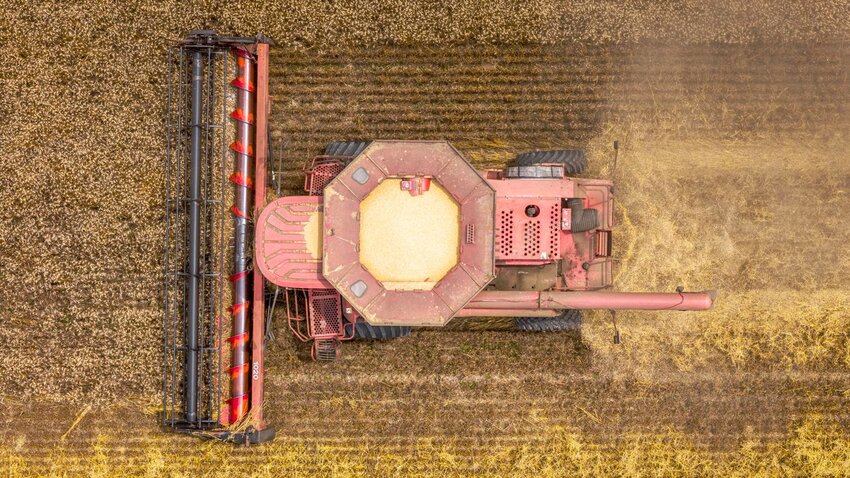
Photo by Mark Stebnicki / Pexels
When data helps save water
Water is one of the areas where this evolution is most visible. In the Mediterranean, and elsewhere too, where water availability directly affects production, new technologies can tailor irrigation to crops’ actual needs and avoid unnecessary watering.
This is demonstrated by some of the work carried out by CREA’s Research Centre for Agriculture and Environment (CREA-AA), described in the latest issue of CREAFuturo.
For example, as part of the Water4AgriFood project, an experimental peach orchard in Rutigliano, in the province of Bari, was monitored over three growing seasons.
The trial combined ground-based monitoring – using weather stations, probes measuring soil water content, sensors tracking the sap rising through the trunk and instruments recording fruit growth hour by hour – with aerial observations from drones equipped with cameras capable of assessing plant health and temperature.
The data collected measured the effects of two straightforward solutions: sheets covering the soil beneath the trees and shade nets. The sheets, in particular, made water use more efficient: with the same amount of irrigation, water-use efficiency increased by 24%, while production per cubic metre of water rose by up to 17%.
The study thus shows that increased production does not necessarily depend on having more water available, but can instead result from making better use of the water already being used.
- You may also be interested in: Global water crisis: the solution lies in efficiency, reuse and investment
Information to support decision-making
Measurement, however, is only part of the process. To be useful to farmers, data must be turned into practical guidance that helps them decide when to irrigate, how much water to use and which areas of the field.
This is the aim of EaSiCroM, software developed by CREA in collaboration with the company Vantia and the University of Bari. It simulates crop growth and provides guidance on water management. Already tested on tomatoes, sorghum, sunflowers and durum wheat, it can be used through a standard browser and requires less initial information than traditional models. The system can be updated throughout the growing season with images from drones or satellites, producing maps that show the irrigation needs of different areas of the field. This makes it possible to manage irrigation more precisely, moving away from a uniform approach towards interventions tailored to crop conditions and the individual areas.
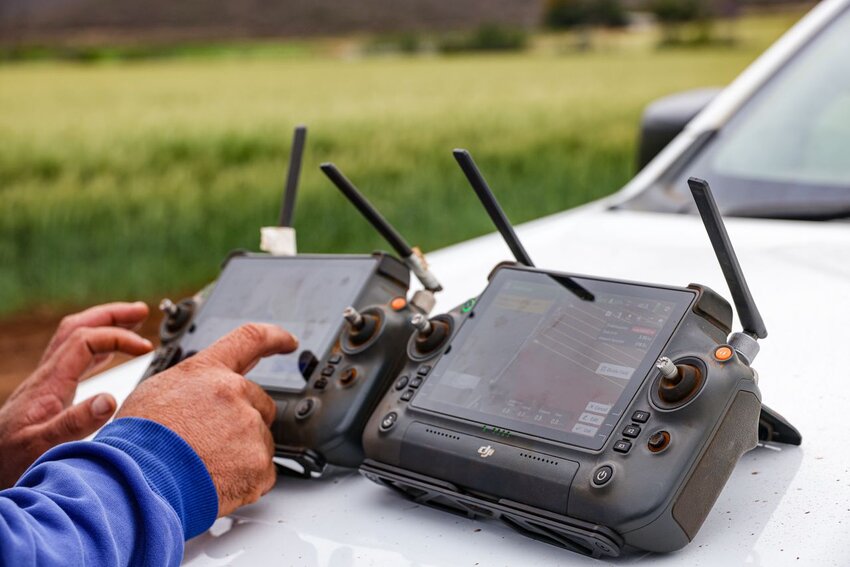
Photo by Magda Ehlers / Pexels
Although the findings are linked to the settings studied, they show how combining agronomic knowledge with decision-support tools can help identify more efficient strategies. For processing tomatoes in Capitanata, for example, the analysis indicates that 300–400 millimetres of irrigation over the growing season offers the best balance between yield, profitability and water consumption. In an organic olive grove in Salento, meanwhile, stopping irrigation when the fruit stone hardens and using biochar (charcoal that helps improve the soil) saved around two-thirds of the water without any loss of production.
From data precision to artificial intelligence
The tech transformation in agriculture goes beyond water management and covers the entire production cycle. Connected machinery, sensors, satellite images, drones and decision-support systems make it possible to combine information from different sources, including soil conditions, plant health, weather patterns and machinery performance.
As Elio Romano, director of CREA Engineering and Agro-Food Processing, explains, <<agricultural machinery is no longer simply mechanical equipment that carries out a task, as it has done until now and will continue to do. It is becoming increasingly intelligent, able to communicate with satellite data, monitoring instruments and decision-support systems. One important element is the use of prescription maps: information that tells machinery how to vary its operations in different areas of a field. For example, fertiliser distribution can be guided by the needs identified, adjusting the nozzles to avoid applying the same quantity everywhere>>.
The potential benefits are therefore twofold: using agricultural inputs more precisely and reducing waste, with positive effects on sustainability and company costs. For these solutions to work, however, the information must be understandable and translatable into operations by the machinery working in the fields. Artificial intelligence can extend these possibilities further by processing large quantities of information to identify signs of crop stress, anticipate risks, estimate requirements and support yield forecasts. The aim is not to replace farmers’ experience, but to complement it with tools that help them make more timely and better-informed decisions. <<One of the biggest challenges today,>> Romano points out, <<is not so much collecting data, which is now available in large quantities, as integrating it and turning it into guidance that can actually be used>>.
Another very important area is advanced sensing technology. <<We can monitor the water status, nutritional condition and health of crops in a level of detail that would have been unthinkable just a few years ago. Then there is agricultural robotics, which will probably be one of the major developments of the next decade. In the future, we will have an agriculture in which machines can work alongside operators, making the work safer, more efficient and less demanding>>.
Sustainability and the circular bioeconomy are also important, particularly when it comes to saving the resources we use. <<First of all, we need to try to throw as little away as possible, focusing on reducing waste. Anything that cannot be eliminated should be given a second life, either by recovering its energy value or by turning it into new materials>>.
Which of these challenges holds the greatest promise? <<I would not single out one technology. I would say that the real innovation will lie in bringing all these technologies together and integrating different tools and areas of knowledge>>.
- You may also be interested in: Biotech and the circular bioeconomy: how to turn opportunities into industry
Innovation, circularity and access to expertise
This leaves the issue of widespread adoption. The fragmented structure of Italian agriculture and the differences between companies and areas can lead to unequal access to digital solutions. Connectivity, training and technical support are therefore essential to ensure that the new tools do not remain the preserve of the best-equipped businesses. Alongside technological research, farmers need support in choosing and using the solutions best suited to their own production conditions, wherever they are in the world.
One initiative in this direction is the memorandum of understanding signed in May 2026 between the FAO and Politecnico di Milano. It aims to develop collaboration on geospatial technologies (Geospatial IT) and artificial intelligence applied to geographical data (GeoAI), to strengthen territorial monitoring, agricultural planning and natural resource management. The goal is to accelerate the sustainable transformation of the agricultural sector and contribute to the achievement of the Sustainable Development Goals set out in the 2030 Agenda.
As Dejan Jakovljevic, director and chief information officer of Digital FAO, said: <<This partnership demonstrates FAO’s commitment to bringing advanced digital tools to the service of agriculture. By integrating geospatial IT and GeoAI into our work, we can better support countries in addressing food security, managing natural resources and building resilient agrifood systems. Together, we are laying the foundations for a smarter, more sustainable future>>.
Article written by Maria Carla Rota
This blog is a joint project by Ecomondo and Renewable Matter
Credits
Photo by Mark Stebnicki and Magda Ehlers
PUBLICATION
28/10/2026
Other related news

06/07/2023
5 European Start-ups non to be missed
03/04/2025
5 under 30 who have revolutionized the circular economy

23/04/2025
7 young leaders under 30 in the green and circular economy
05/12/2024
7 trends in the Green Economy that will define 2025

15/12/2024
30/05/2023

17/12/2025
Africa, a frontier for the next Green Economy
29/04/2025
Precision agriculture: what advantages does it offer and how can it support North African countries?

10/05/2024

26/11/2025
Companies: how to communicate the transition in the greenlash era?
24/04/2025
Sodium batteries: the technology that could make the EU less dependent on critical materials

29/01/2026
Wellbeing and happiness: when science meets business, society and nature

23/06/2026
Bioeconomy in North Africa: Between Resource Abundance and Structural Constraints in Tunisia, Morocco, and Egypt
07/04/2026
Bioenergy and industrial ecosystems: models and research projects in Europe