
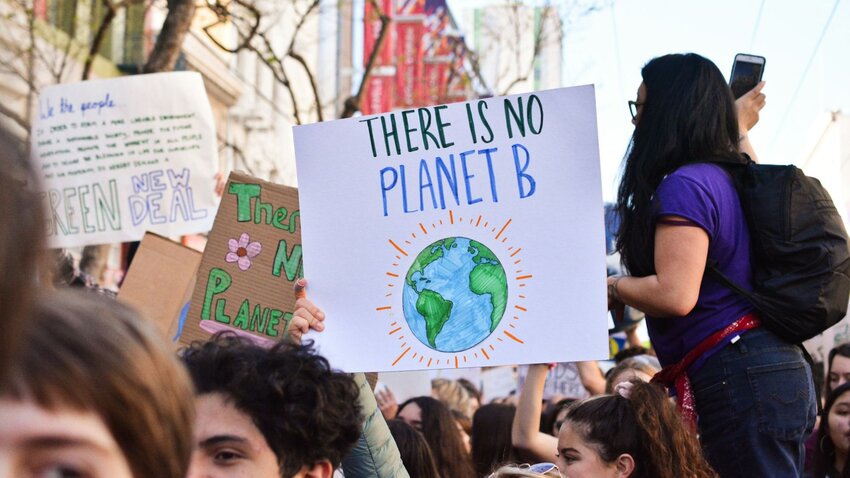
For some time now, sustainability is no longer an issue that only institutions and scientific communities are interested in but a topic of daily debate for millions of citizens: every person, through their behaviour and lifestyle choices, can and must contribute to respecting the environment and ecological transition.
More than one in two people worldwide (56%) think about climate change on a daily or weekly basis, including 63% of those living in less developed countries, according to the Peoples' Climate Vote 2024, conducted by the United Nations Development Programme (UNDP), in collaboration with the University of Oxford and the research agency GeoPoll, on a sample of over 73,000 people in 77 countries, representing 87% of the world's population. 80% of respondents believe that their governments need to take more decisive action to combat the climate crisis, while an even higher proportion (86%) hope that countries will overcome geopolitical differences and work together to achieve this goal. Nevertheless, perceptions can vary greatly from country to country. For this reason, from the East to the Americas, we have chosen to highlight three very different realities, namely China, Mexico and Canada, to discover how sustainability is conceived and experienced at the local level.
China: powerful state role and citizen support
While China is the world's largest emitter of greenhouse gases, Beijing now holds the leadership in global climate policy, evident in President Xi Jinping's speech to the UN General Assembly in New York in September 2025. China's goal is to reduce emissions by at least 7-10% below peak levels by 2035. This vision requires practical action:
- further investment in renewables to exceed 30% of total energy consumption;
- expansion of the domestic carbon trading market to high-emission sectors;
- and a sixfold increase in wind and solar power capacity compared to 2020, reaching 3,600 GW installed.
And more: <<We will increase our forests to 34 billion cubic metres, make clean fuel cars mainstream, and build a society adapted to climate change,>> said Xi Jinping.
In China, where the Italian Exhibition Group organises an annual event dedicated to ecological transition and the circular economy, the government's strategies are met with high levels of trust and widespread approval from citizens, as revealed by a study published in PLOS. Moreover, there is also a strong willingness to participate in individual actions: the Chinese have a fairly high awareness of the existence and anthropogenic causes of climate change, even if they consider it less urgent than other localised environmental issues, such as air or water pollution, issues that directly affect daily life in urban areas.
There is still a long way to go, but much has changed, as sinologist Giada Messetti writes in her book La Cina è un'aragosta (China is a lobster, Mondadori): <<The sky above Beijing is finally blue, a sign of a real green revolution.>> Just ten years ago, breathing the polluted air of the capital was equivalent to smoking 1.5 cigarettes per hour, according to the American institute Berkeley Earth, which reported that people were breathing in 300 dust particles per day instead of 25, the limit set by the World Health Organisation (WHO). <<Like a growing lobster, forced to abandon its old shell and wait in a vulnerable state for a new one to form, today's China is also undergoing a difficult and complex phase of change,>> adds Messetti, emphasising that she has been able to see <<how widespread attention to the environment has become>> in the country of the Dragon.
- You may also be interested in: Green economy, what to keep an eye on: the situation in Italy and what's happening around the world
Mexico: high awareness among citizens
In autumn 2025, Mexico faced one of the most serious environmental crises in recent years. Hurricane Priscilla, together with the tropical depression Raymond, caused torrential rain for days, resulting in devastating floods and landslides, killing dozens of people and leaving more than 320,000 homes without electricity. It is only the latest in a series of extreme events that have occurred over the last few years in this country, affected by global warming at a rate higher than the world average (3.2°C per century; source: Universidad Nacional Autónoma de México). This trend has likely contributed to the country ranking among the world's highest in terms of increased awareness of this issue: 77% of Mexicans say they are more concerned about climate change than they were a year ago (People's Climate Vote 2024). Moreover, international opinion polls by Yale and NBER (2022-2023) show that 92% of the population recognises the anthropogenic origin of climate change and 88% believes that climate action should be a national priority: percentages well above the US averages of 63% and 58%, respectively.
And again, as highlighted by Climate Storecard (a climate change reporting and advocacy project by The Global Citizens' Initiative), concern about climate change is highest among young Mexicans, particularly Millennials and Gen Z, across political divides, uniting urban voters and rural communities.
This perception of sustainability is strongly linked to the vision of the country's future: Mexican citizens see the transition to renewables not only as an environmental choice but also as an economic opportunity to improve daily life and create jobs, as noted in a 2023 survey on climate in Latin America conducted by the European Investment Bank. 87% of Mexicans are in favour of prioritising investment in green energy over fossil fuels: 58% support large-scale projects, such as wind and solar farms, while 29% prefer smaller installations, such as rooftop solar panels.
President Claudia Sheinbaum, an environmental scientist and former collaborator with the Intergovernmental Panel on Climate Change (IPCC), has been leading the country's strategies for over a year. While serving as mayor of Mexico City (2018-2023), Sheinbaum was praised for her work on environmental initiatives, including the increasing electrification of city buses, support for the installation of solar panels and efforts to reduce plastic use. During her election campaign, Sheinbaum emphasised her commitment to promoting Mexico's gradual transition from fossil fuels to cleaner energy sources, such as wind and solar power. With this in mind, the current president has distanced herself from the line taken by her predecessor, Andrés Manuel López Obrador (known as AMLO), founder of the Morena party, of which she herself is a member, who favoured fossil fuels and the state's energy sovereignty.
- You may also be interested in: Sustainability, what will 2026 look like? 10 trends and events to look forward to
Canada: high awareness and willingness to transition
Canada also stands out for its high level of public awareness of climate change. Prime Minister Mark Carney is taking action on both clean and conventional energy: if given the choice, two-thirds of citizens would prioritise the former, according to a survey released by Abacus Data on behalf of Clean Energy Canada last summer, as the country faced a wave of forest fires.
There is extremely strong support for continuing climate action as well: only 14% of Canadians say the federal government should do less to promote the transition; 41% believe the government is doing the right thing; and 44% want even more to be done. Support for maintaining, if not increasing, climate action is widespread across all regions and regardless of political affiliation.
One of Mark Carney's projects, for instance, involves the construction of new homes: in this regard, Canadians are calling for low-carbon buildings. At equal cost, almost two-thirds (64%) of respondents favour the use of green materials, while 15% oppose it. 70% of Canadians also believe that new homes should be equipped with electric vehicle charging stations and heat pumps at minimal cost.
Canada has committed to reducing its greenhouse gas emissions by 45-50% from 2005 levels by 2035. This goal is based on the current 2030 target, which aims to reduce emissions by at least 40-45%, also from 2005 levels. As stated on the government's website, <<In 2015, Canada was on track to reach a new peak (9%) in emissions in 2020, but then the curve was successfully bent. Thanks to the efforts of all Canadians, our economy continues to grow while reducing pollution.>>
Article written by Emanuele Bompan and Maria Carla Rota
This blog is a joint project by Ecomondo and Renewable Matter
Credits:
Photo by Li-An Lim, Unsplash
PUBLICATION
27/01/2026
Other related news

08/09/2022

21/03/2024
Come on, it's just a cigarette stub
24/07/2023
WEEE: a mine of critical raw materials
20/09/2023
30/05/2023

03/04/2025
5 under 30 who have revolutionized the circular economy
21/04/2023
19/05/2023
Ecomondo Mexico and the circular economy in Latin America

31/07/2023
Circular economy in China – past, present, future
14/05/2023

06/11/2023
20/10/2023

07/06/2023
Tides are changing

03/08/2023

10/10/2023
13/05/2023
A new EU industrial plan for the net-zero age