
Water is no longer an invisible commodity: recycling and reuse technologies are converting industrial waste into a new strategic resource.
For decades, European industry has regarded water as an infinite resource: it gets extracted, used and discharged. A linear model that is now revealing all its shortcomings. Recurring droughts, the climate crisis, restrictions on water withdrawals and rising costs are turning water from an invisible commodity into a strategic factor for competitiveness. And this is where one of the great paradoxes of Europe’s ecological transition becomes apparent. Every year, the European Union withdraws around 200 billion cubic metres of water, excluding water used for hydroelectric power, according to the European Environment Agency.
A significant portion ends up in industrial processes, which generate over 25 billion cubic metres of wastewater annually. Yet only a minimal share is recovered and reused. When industrial and municipal wastewater are combined, just 2.5% of treated water is actually reused, according to a study published in the Journal of Cleaner Production. At the same time, in Europe, at least 11% of the population is already experiencing water scarcity, as noted by the European Commission.
While water is becoming an increasingly critical resource, huge volumes of already treated water still continue to leave the production system as waste. Nevertheless, the reuse of industrial wastewater constitutes one of the most tangible applications of the circular economy. It implies treatment of process water and its reintroduction into production cycles, thereby transforming an operational cost into an alternative source of supply. For businesses, this means a reduction in primary water consumption, cost containment and, above all, more stable access to a resource increasingly exposed to climate shocks.
- You may also be interested in: Bioenergy and industrial ecosystems: models and research projects in Europe
A market growing alongside scarcity
Even on an economic level, the figures point to a potential that remains largely untapped. The same study published in the Journal of Cleaner Production estimates that increasing industrial wastewater recovery to 80% would raise energy consumption in European industry by just 4.1%, requiring investments equivalent to 1.5% of the EU’s GDP. A relatively modest cost when compared with the systemic benefits in terms of water security, industrial resilience and reduced operational risk.
The European Commission is also attempting to quantify the cost-benefit ratio: around €700 million allocated to reuse infrastructure would enable the treatment of 6.6 billion cubic metres of water per year, at a cost of less than €0.50 per cubic metre, and would reduce water scarcity by an estimated 5% to 10%. In the meantime, the market is already on the move. According to Global Market Insights, the water recycling and reuse sector – including industrial uses – was worth around $17.89 billion in 2025 and could exceed $29.61 billion by 2030. Bluefield Research, on the other hand, estimates that the European industrial water market will exceed €100 billion by the end of the decade, a trend driven by various factors, including the growth in semiconductor production, the spread of data centres and increasingly stringent regulations.
Finally, on a global level, the World Bank believes that, given the right policies and targeted investment, water reuse could grow eightfold by 2040, reaching 430 million cubic metres per day – equivalent to a quarter of freshwater withdrawals in the municipal sector.
Technology is not the problem
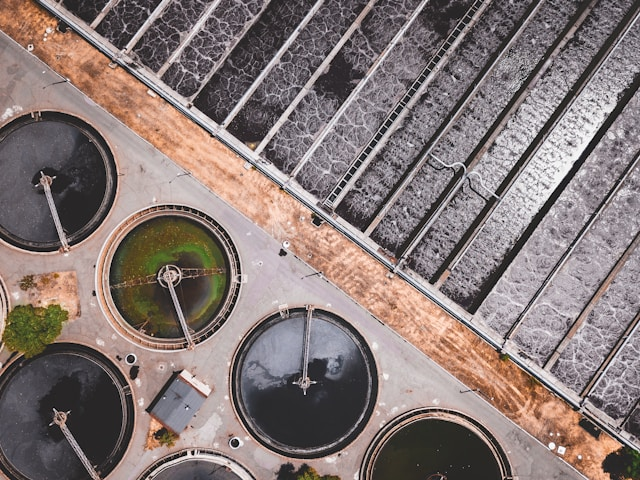
The main hurdle, however, is not a technical one. The technologies required for the reuse of industrial water are already in place and, in many cases, have been perfected for years. Ultrafiltration and micro-filtration systems use membranes with microscopic pores to remove bacteria, viruses and particulates with very high levels of efficiency. Reverse osmosis and nano-filtration, meanwhile, enable the removal of salts and dissolved solids, resulting in water that is suitable even for the most sensitive industrial processes.
Membrane bioreactors (MBRs) that combine biological treatment with physical separation are also becoming increasingly prevalent, ensuring higher-quality wastewater compared to conventional activated sludge systems. Finally, the cycle is completed by Zero Liquid Discharge (ZLD) systems, designed to eliminate liquid discharges, concentrate solid residues and even recover salts and reusable raw materials. In the semiconductor sector, for example, companies such as Intel, TSMC and leading water technology suppliers have devised advanced treatment and recirculation systems that allow the vast majority of water used in chip production – one of the world’s most water-intensive industrial processes, which requires ultra-pure water – to be reused. In Singapore, the public NEWater programme uses micro- or ultrafiltration, reverse osmosis and UV disinfection to transform treated wastewater into ultra-pure water intended primarily for the electronics industry. The question, therefore, is no longer whether reuse is technically possible, but how quickly European industrial infrastructure can adapt to a context in which water can no longer be considered an abundant and low-cost resource.
Article written by Giorgio Kaldor
This blog is a joint project by Ecomondo and Renewable Matter
Credits
Photo by Ivan Bandura
PUBLICATION
26/05/2026
Other related news
08/09/2022

21/03/2024
Come on, it's just a cigarette stub
24/07/2023
WEEE: a mine of critical raw materials
20/09/2023
30/05/2023

03/04/2025
5 under 30 who have revolutionized the circular economy
21/04/2023

19/05/2023
Ecomondo Mexico and the circular economy in Latin America

31/07/2023
Circular economy in China – past, present, future
14/05/2023
06/11/2023
20/10/2023

07/06/2023
Tides are changing
03/08/2023

10/10/2023

13/05/2023
A new EU industrial plan for the net-zero age