
The circular economy, often associated with large-scale industrial strategies or global policies, can also assume much smaller, local and hyperlocal dimensions, all the way down to the domestic sphere. This is demonstrated by Foodres.AI Printer, a 3D printer developed by a group of researchers at the Massachusetts Institute of Technology (MIT) in Boston, which transforms food waste into everyday objects.
This innovative tool, aided by artificial intelligence, processes materials such as eggshells, coffee grounds and fruit peels into a bioplastic paste ready to be modelled. Practically speaking, in just a few minutes, and within the walls of your home, organic waste can be turned into coasters, cups or small decorative accessories. <<This goes beyond simple recycling as it involves people in daily eco-friendly practices, turning the act of reuse into a creative gesture,>> explain MIT researchers Yiqing Wang and Biru Cao.
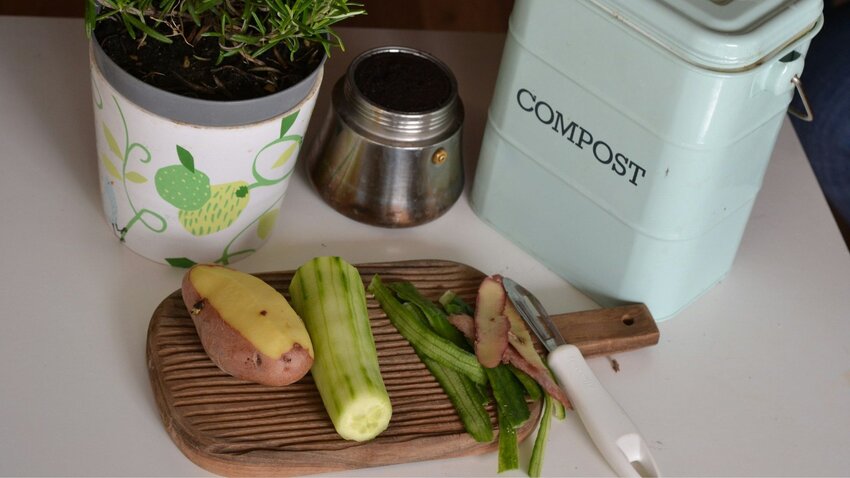
Food wastage around the world
The project is part of the Foodres.AI initiative, which uses artificial intelligence to reduce food waste in real time and improve the distribution of surplus food. By visually recognising and processing data from cameras and mobile apps, the system automatically matches unsold or uneaten food surplus with nearby food banks. This optimises logistics and delivery times and prevents food from ending up in the rubbish or compost bins.
A model born out of a global emergency: researchers have found that in a single supermarket in Cambridge, near MIT, around 860 kilograms of food are thrown away every day, enough to feed more than 300 people. Overall, 35 million people in the United States, including 10 million children, live in conditions of food insecurity. Globally, one-third of food production ends up in landfills, according to data released by Waste Watcher International on International Food Loss and Waste Awareness Day, established by the United Nations and celebrated every 29 September. This means that 1.5 billion tonnes of food are wasted annually, with a direct impact on the environment: food waste is responsible for 10% of global greenhouse gas emissions, five times those generated by air transport.
- You may also be interested in: Presgo, AI at the service of ESG reporting
How does Foodres.AI Printer work
With the idea that every citizen should do their part, the Foodres.AI Printer was conceived as a creative household appliance. It was designed to be intuitive and accessible to everyone, although the realistic costs and purchase price of a product like this will need to be evaluated in the future.
How does it work?
Users can photograph their food waste with their smartphones: a special app, using a visual recognition system based on artificial intelligence, identifies the different materials and suggests a series of products that can be produced through 3D printing. From there, it only takes a few steps: the object to be produced is selected, the shape and colour are chosen, and the machine does the rest. The printer then automatically combines the waste with natural additives to create a biodegradable bioplastic paste, subsequently extruded and moulded by a heated three-dimensional system. At the end of the process, without requiring any interaction or technical knowledge on the part of the user, the finished object can be retrieved from a side door.
- You may also be interested in: The 10 most innovative technologies according to Ecomondo
The new frontier of 3D printed materials
The Foodres.AI Printer, which received several awards (2025 iF Design Award and 2025 Platinum A' Design Award in Social Design), is part of a broader trend redrawing the boundaries of 3D printing. After the era of polymers and metals, research is now looking at organic materials, paving the way for a more sustainable process known as “additive manufacturing”.
Workshops and start-ups around the world are experimenting with biopolymers based on algae, starch, cellulose or collagen, materials that not only reduce environmental impact but also allow the production of fully compostable objects. One of the main sectors is biomedicine, where 3D printing of tissues and biomaterials offers revolutionary prospects for regenerative medicine.
The printer designed by MIT represents a significant step forward in this context. <<Beyond purely technical innovation,>> concludes Biru Cao,<<the FOODres.AI printer tackles the broader issue of the environmental impact of food waste. Making sustainable behaviour interactive, creative and rewarding, the product helps to create a community-driven culture of eco-awareness.>>
Article written by Maria Carla Rota
This blog is a joint project by Ecomondo and Renewable Matter
Credits:
Photo by Lenka Dzurendova, Unsplash
PUBLICATION
04/12/2025
Other related news

08/09/2022

21/03/2024
Come on, it's just a cigarette stub
24/07/2023
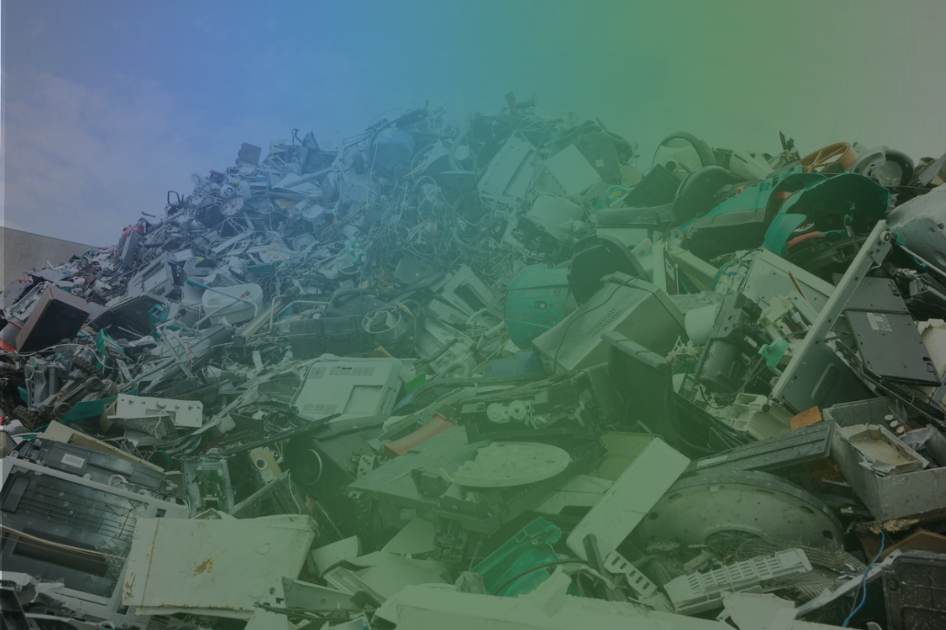
WEEE: a mine of critical raw materials
20/09/2023

30/05/2023
03/04/2025
5 under 30 who have revolutionized the circular economy

21/04/2023

19/05/2023
Ecomondo Mexico and the circular economy in Latin America

31/07/2023
Circular economy in China – past, present, future

14/05/2023
06/11/2023

20/10/2023

07/06/2023
Tides are changing

03/08/2023
10/10/2023

13/05/2023
A new EU industrial plan for the net-zero age