
Pirri (IIT): “Education is the real accelerator of the transition”
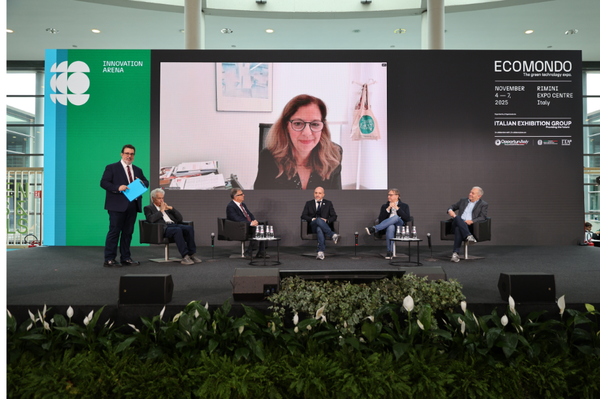
The ecological and digital transition is a strategic lever for Italian growth, as well as the main driver of transformation in the employment market. For the five-year period from 2025 to 2029, the total demand for workers with green skills is expected to reach 4 million, accounting for two-thirds of Italy's employment needs. This was estimated by an analysis of the Unioncamere – Excelsior information system, based on the Unioncamere Forecast Report - Ministry of Labour and Social Policies Forecast Report (2025-2029). It was presented at Ecomondo 2025 during the conference “Green Jobs, Capital of the Future”, organised by the Ecomondo-IEG “Green Jobs & Skills” project in collaboration with Unioncamere and Asvis.
Required skills
Three areas of expertise are most sought after by companies. The most common is a strong green attitude, namely sensitivity and ability to reduce waste and increase efficiency by adopting solutions that are effective in terms of energy saving and environmental impact. This is not a niche characteristic, but a basic requirement that will be considered essential for 70% of technical and specialised professions and 64% of manual and clerical workers, and will involve around 2.4 million workers, almost two-thirds of the total demand.
Secondly, companies are showing strong demand for profiles with specific technical skills for the management of green products and technologies: intermediate figures, approximately 1.6 million workers (43% of total demand), of which approximately 759,000 (20% of the total) will need to possess a high level of these specialisations, particularly in sectors such as energy efficiency, the circular economy and renewable energy.
As the ecological transition is inextricably linked to the digital transition, around 2.2 million workers (59% of the requirement) will be expected to hold basic digital skills. The demand for e-skill mix is also growing: over 910,000 professionals (25% of the requirement) are required to be able to integrate at least two advanced digital skills, such as the use of Big Data and Artificial Intelligence for plant optimisation.
Most in-demand professions
Entering into detail regarding the most sought-after professional figures, some will see particularly high demand, often in synergy with the activities of the PNRR (National Recovery and Resilience Plan). For instance, skilled construction workers (124-148 thousand), to be employed in the energy upgrading of buildings and green building, and specialists in management, commercial and banking sciences (105-114 thousand), who will be involved in green finance, corporate sustainability management (ESG) and non-financial reporting. And again: engineering technicians (59-72 thousand), who will deal with installation, maintenance and environmental monitoring, engineers (51-59 thousand), specialising in energy efficiency, circular economy and sustainable design, and finally chemists (19.6-17.6 thousand), for new entries into industry.
Companies, education system, institutions
The main challenge is not the creation of new jobs, but the qualitative and quantitative shortage of human resources with the right skills. A mismatch between training supply and demand, in danger of becoming a major obstacle to Italy's ecological transition.
How can this obstacle be overcome? Everybody has a role to play. Companies will have to look beyond technological investment alone and invest strategically in human capital, through targeted upskilling and reskilling plans. The education system, comprising schools, technical colleges and universities, needs to accelerate its efforts to integrate green and digital issues into its curricula on a permanent basis and train a new generation of hybrid professionals. Institutions, meanwhile, have a duty to simplify and strengthen active labour market policy instruments, encouraging continuous and specialist training.
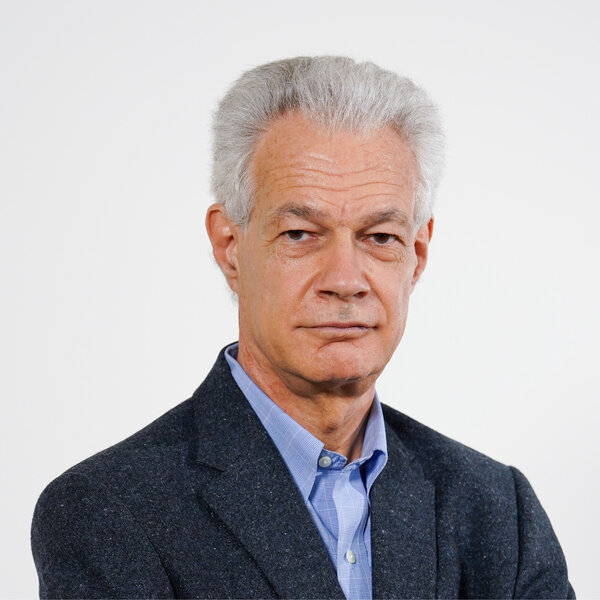
Photo: Fabrizio Pirri
The role of research centres
<<Education is a key issue, and the figures prove it. Post-graduate courses must also be taken into consideration. In Italy last year, approximately 5,800 graduates obtained a PhD in STEM subjects, the same number as in the Netherlands (which, however, has a population of only around 18 million, compared to Italy's 59 million, ed.),” explains Fabrizio Pirri, Director of the Centre for Sustainable Future Technologies (CSFT) at the Italian Institute of Technology and professor at the Polytechnic University of Turin, at the conference “Green Jobs, Capital of the Future”. <<At the end of their studies, many decide to leave Italy, as our level of education is highly sought after abroad. For example, the United Kingdom, France, Germany and the United States have a higher percentage of graduates than Italy, but their industrial fabric is so large that they are driven to import talent.>>Those same talents, then, do not return to our country, except for a small minority, because support policies are lacking, especially at the economic level: <<There are jobs here too, the problem is not a lack of positions, but salaries that are too low.>>
This is a sign of how far Italy still has to go to be one of the leaders in innovation: <<The development of new technologies that can revolutionise and drive the transition cannot be left solely up to the business world. We must take into account the fact that the vast majority of Italian companies are SMEs: they use innovative technologies, but do not have the resources to develop new ones internally.>> In this context, research centres and universities play a fundamental role, by investing in the training of young people, the driving force behind change, and supporting them in their research and in starting up new businesses. <<This is also the goal of the Italian Institute of Technology, a complex organisation with around 2,000 researchers: almost 1,000 are doctoral or post-doctoral students from the universities we collaborate with.<< In particular, the Centre for Sustainable Future Technologies is an interdisciplinary research centre fully committed to energy transition, the circular economy and sustainability. It was established in 2018 within the Environment Park in Turin, thanks to the synergy between the IIT Foundation and the Polytechnic University of Turin.
Not only STEM skills
<<Our mission is to disseminate knowledge, know-how and patents, allowing young people to work in highly complex workshops, on the same level as those in Europe, the United States and Japan, to develop the technologies of the future, sustainable and intrinsically linked to the society that will use them.>>
Innovation, yes, but not only: to redesign the economy, transforming it from linear to circular, skills in non-STEM areas are also needed. We require economists and lawyers, but also philosophers and historians: <<The transition requires culture, vision and critical thinking. We need people who know how to deal with what we have been and what we want to become tomorrow.>>
Articolo scritto de Maria Carla Rota
Questo blog è un progetto editoriale sviluppato da Ecomondo con Materia Rinnovabile
PUBLICATION
04/12/2025
Other related news

08/09/2022

21/03/2024
Come on, it's just a cigarette stub
24/07/2023
WEEE: a mine of critical raw materials
20/09/2023

30/05/2023

03/04/2025
5 under 30 who have revolutionized the circular economy

21/04/2023

19/05/2023
Ecomondo Mexico and the circular economy in Latin America

31/07/2023
Circular economy in China – past, present, future
14/05/2023
06/11/2023
20/10/2023

07/06/2023
Tides are changing

03/08/2023

10/10/2023

13/05/2023
A new EU industrial plan for the net-zero age