
The ecological and digital transitions, both now well underway, are advancing at an exponential rate. For this reason, STEM disciplines – Science, Technology, Engineering and Mathematics – are widely recognised as having the greatest potential for growth, innovation and social impact.
Yet, despite some progress, women remain significantly under-represented in these fields worldwide, both in terms of education and in senior positions within organisations. This disparity should not be underestimated, not only for reasons of fairness, but also for the competitiveness of economies and the effectiveness of future technological and sustainable changes, which can benefit greatly from female talent.
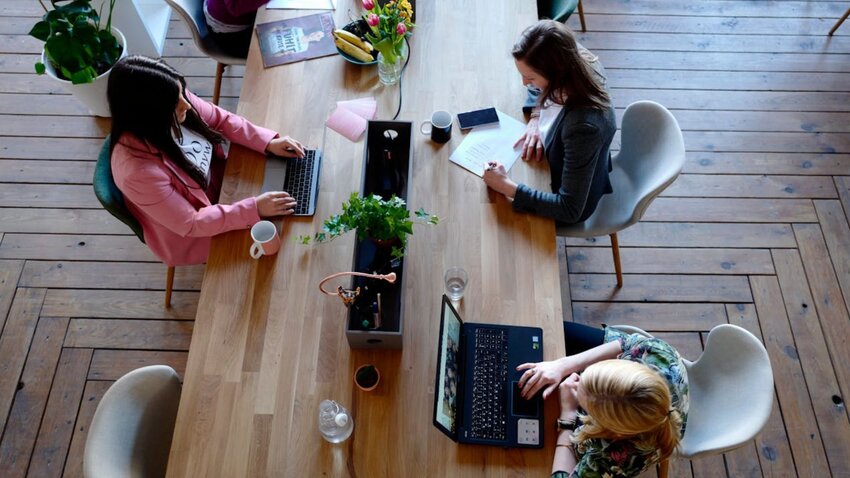
STEM graduates: only a third are women
According to the World Economic Forum's Global Gender Gap Report 2024, women make up just over 28% of the STEM workforce, compared to over 47% of non-STEM workers. Additionally, women account for over a third of STEM graduates, but female representation in companies decreases as you move up the ranks. Women hold almost a quarter of managerial positions (24.4%), yet only 12.2% reach the C-suite, i.e., the executive level (CEO, CFO, CTO, etc.).
While female education levels have risen steadily over the past century, to the point where they are now higher on average than male education levels in most high-income countries, there is still a clear shortage of women choosing scientific education, and even fewer who go on to fill technical roles and reach leadership positions in related fields.
- You may also be interested in: Companies: how to communicate the transition in the greenlash era?
How gender disparity varies around the world
The same is true worldwide, albeit with some significant differences depending on the geographical area. According to the UIS (UNESCO Institute for Statistics), for example, the global share of women researchers and female staff in science and engineering in R&D professions is 31.1% (2022 data; up from 29.4% in 2012). However, some regions of the world have almost achieved parity: in Central Asia, women account for 50.8% of R&D researchers, while in Latin America and the Caribbean the figure is 45.3%. The gender imbalance is very stark in East Asia/Pacific, as well as in South and West Asia, where women account for 26.3% and 26.9%, respectively. All regions, with the exception of Central and Eastern Europe, however, saw an increase in the presence of women in R&D between 2012 and 2022.
The gap also exists in Europe, as Martina Rogato, president and co-founder of HRIC – Human Rights International Corner and co-chair of Women7-G7, explained to Renewable Matter. <<According to Eurostat, women currently represent 41% of scientists and engineers in the European Union. So we are far from equality. If we broaden our view in the science & technology sectors as a whole, so also considering roles that are not purely engineering-related, women exceed 50% in the EU. But when we look at more technical and advanced roles, their presence drops significantly.>> Italy is below the European average, according to Eurostat. <<Women scientists and engineers account for around 34% of the total. This figure has been stable for several years and shows that our country struggles more than others to promote female talent in technical and scientific disciplines.>>
Gender gap in STEM: causes and opportunities not to be missed
Despite the geographical differences highlighted, the causes of gender inequality in technical and scientific fields are the same throughout the world: they are linked to history, cultural stereotypes and social expectations, as well as the lack of female role models in STEM sectors. Although mathematics and science scores between the genders are very similar in the early years of school, the educational paths of girls and young women soon diverge from those of their male peers. Starting in university, women encounter increasingly cumbersome structural and cultural barriers: male-dominated work environments, exclusive professional networks, lack of mentorship and implicit biases, all of which reduce opportunities for advancement.
Yet, it is short-sighted not to see the benefits of greater female inclusion in technical disciplines, such as increased innovation and competitiveness. Diversity in teams tends to produce more creative solutions and responses that are more consistent with the needs of a diverse society. Furthermore, the presence of women in STEM leadership roles can serve as a positive multiplier: increasing the visibility of female role models and filling the void that has characterised the past can encourage new generations of girls to consider these paths not only possible, but also desirable.
- You may also be interested in: (Un)Doing business: the story of a family company, symbol of resilience, in the sustainability and recycling sector
What is going to happen with artificial intelligence?
Lastly, a final thought on future scenarios. A report by the World Economic Forum and LinkedIn warns that the introduction of AI into the world of work could exacerbate gender inequalities and outlines how to reverse this trend.
Women are over-represented in jobs most exposed to automation, but they are also less aware of the impact that AI will have on their activities, showing, on average, greater reluctance to adopt these tools. This is precisely why it is important to turn risks into opportunities. The growing demand for skills related to AI is driving more and more people to seek training, including women. To consolidate this trend, targeted action is needed: investing in the training and technological upskilling of female workers, promoting inclusive business strategies that broaden the talent pool, and accompanying the transition with public policies capable of preventing new exclusions.
While AI is not an automatic solution to the gender gap in STEM, it can become a powerful accelerator of equality, provided it is governed in an informed manner.
Article written by Maria Carla Rota
This blog is a joint project by Ecomondo and Renewable Matter
Credits:
Photo by CoWomen
PUBLICATION
27/01/2026
Other related news
08/09/2022

21/03/2024
Come on, it's just a cigarette stub
24/07/2023
WEEE: a mine of critical raw materials
20/09/2023
30/05/2023
03/04/2025
5 under 30 who have revolutionized the circular economy
21/04/2023
19/05/2023
Ecomondo Mexico and the circular economy in Latin America

31/07/2023
Circular economy in China – past, present, future
14/05/2023
06/11/2023
20/10/2023

07/06/2023
Tides are changing

03/08/2023

10/10/2023
13/05/2023
A new EU industrial plan for the net-zero age