
COP30 concluded amidst general media indifference, with very weak results, failing to establish a roadmap for the transition away from fossil fuels to relaunch the – currently insufficient – efforts to mitigate climate-changing greenhouse gas emissions. There was no collapse of environmental multilateralism, as some had feared, due to geopolitical tensions and the US withdrawal from the Paris Agreement. But divisions remain huge between countries that do not want to give up on the long-term phase-out of fossil fuels (the Gulf countries, Russia and the US, but also India and South Africa) and those that have pushed for a shared and concrete transition path (Latin American countries, small island states, some African countries, Australia, the UK, France and Germany) and the others that do not know exactly which side to take, such as Italy.
For many negotiators and observers, this was undoubtedly the worst COP since Madrid, and perhaps even since Copenhagen, when the negotiating process collapsed completely. A truly dark moment for the UNFCCC, the United Nations Framework Convention on Climate Change.
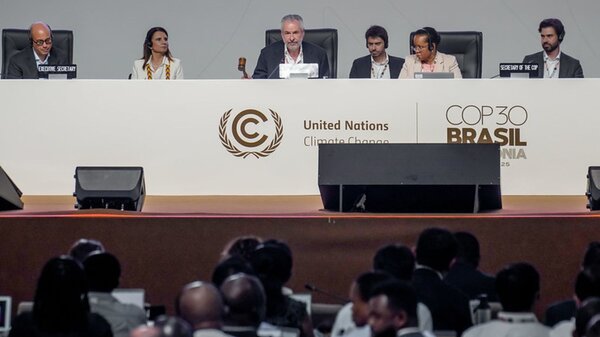
Photo credit: Foto: Rafa Neddermeyer/COP30 Brasil Amazônia/PR
The final draft of COP30
The Mutirão Decision, the final political text of COP30, is drab and flat, makes no explicit mention of fossil fuels, and does not accept the appeal made by President Lula and over 80 countries for a roadmap on fossil fuels and deforestation. It merely reiterates the trajectory outlined in Dubai on this issue, of transitioning away from coal, oil and gas, to be achieved somehow by 2050. Furthermore, despite the important announcement of the creation of the Tropical Forest Forever Facility (a fund that initially raised $5.5 billion and is expected to generate at least $25 billion by 2030, managed by the World Bank), the Brazilian Presidency of COP30 did not enclose a strong definition of action to combat deforestation with a numerical or concrete political objective.
Instead of giving clear guidance to countries, industry and the financial world, the UN negotiations have only stipulated the creation of new processes to accelerate the energy transition, such as the Global Implementation Accelerator and the Belém Mission to 1.5 °C. The aim is to turn them into practical tools that enable countries to work together, each with their own paths and respective interests, to work out a shared way to get rid of fossil fuels for good.
A few tried to react, especially Latin American countries: instead of waiting for the next COP, Colombia has offered to host, in collaboration with the Netherlands, the first international conference Just Transition Away from Fossil Fuels (28-29 April 2026 in Santa Marta, on the northern coast of Colombia). The aim would be to create shared strategies among the more than 80 signatories of the roadmap for phasing out fossil fuels. <<Colombia believes there is sufficient scientific evidence to assert that over 75% of global greenhouse gas emissions come from fossil fuels,>> Daniela Durán González, Colombia's climate delegate, told the press. <<We therefore believe that the time has come for the UN Climate Change Convention to start discussing this fact.>>
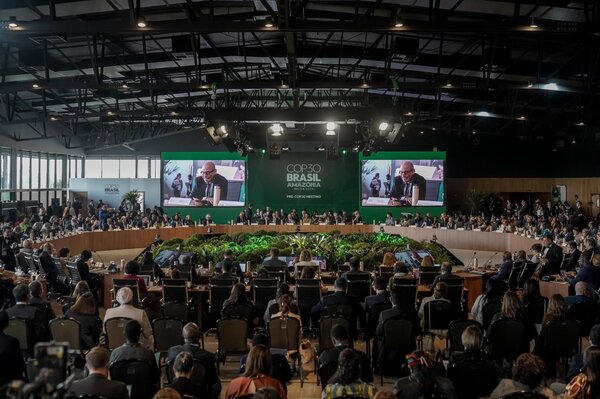
Ten years since the Paris Agreement
The weak political outcome was a lousy celebration of the Paris Agreement. The blame lies primarily with the petro-states, opposed even to initiating discussions on how to end dependence on fossil fuels: the Gulf countries, Russia, Poland and, of course, the US - increasingly the pariahs of decarbonisation, as they are primarily responsible for the total greenhouse gas emissions accumulated in the atmosphere. But that's not all: Europe has appeared weak, divided between greater ambition and the indecision of countries that have failed to grasp the great economic and strategic opportunity, such as Italy, Hungary and Poland. Finally, China, expected by many to play a stronger role in the negotiations, merely reiterated its commitment to decarbonisation (which is very strong) and defended the multilateral process of the UNFCCC.
The Brazilian presidency, led by André Correa Do Lago, attempted in every way to achieve a significant result, but had to capitulate on fossil fuels and forests, despite the launch of the Tropical Forest Forever Facility. The result pursued was overly ambitious, in a location that made everything more difficult, without working in advance with the petro-states.
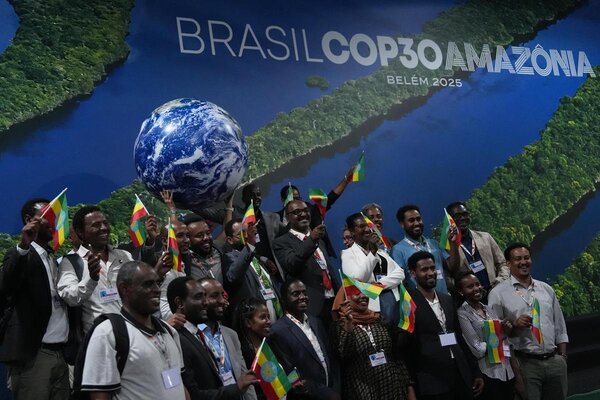
Date set for November 2026 in Turkey
Civil society has almost unanimously agreed to monitor the negotiation process, which increasingly requires genuine reform, starting with COP31. The next climate negotiations will be held in November 2026 in Turkey, with Australia co-chairing on behalf of the Pacific island countries (with a pre-COP to be held in a Pacific nation). Back to a transitional negotiation, without the excessive expectations generated by the Brazilian presidency and the media (the decision to hold it in the Amazon region mobilised the highest number of journalists ever), held in a predictable and easily accessible location. If COP30 revisited the negotiating chaos and disastrous failure of the 2009 Copenhagen summit, COP31 has what it takes to start laying the foundations for a renewal of the process: exactly as happened in 2010 in Cancún, at COP16, where the foundations for the Paris Agreement were laid. Preparations must be made to be ready for 2030 with the revision of certain rules and a clear idea of how the implementation of the Paris Agreement should be protected and organised, by working with the UN Secretariat to create a genuine Security Council for the Environment and Climate. Global peace also depends on climate and environmental security.
Article written by Emanuele Bompan
This blog is an editorial project developed by Ecomondo and Materia Rinnovabile
PUBLICATION
28/11/2025
Other related news

08/09/2022

21/03/2024
Come on, it's just a cigarette stub
24/07/2023
WEEE: a mine of critical raw materials

20/09/2023

30/05/2023

03/04/2025
5 under 30 who have revolutionized the circular economy

21/04/2023
19/05/2023
Ecomondo Mexico and the circular economy in Latin America

31/07/2023
Circular economy in China – past, present, future

14/05/2023

06/11/2023

20/10/2023

07/06/2023
Tides are changing

03/08/2023

10/10/2023

13/05/2023
A new EU industrial plan for the net-zero age