
In November 2025, with the publication of the Bioeconomy Strategy, the European Commission reaffirmed the importance of renewable biological resources in reducing dependence on fossil raw materials, promoting the development of new industrial value chains and strengthening economic resilience.
Within this context, various initiatives at different stages of development are underway: some projects focus on research and technological validation, while others are tackling industrial demonstration, scalability and market access. From biofertilisers to algae, and from bio-based packaging to the recovery of critical nutrients, here are some examples that combine innovation, competitiveness and circularity.
- You may also be interested in: Circularity, autonomy and security: Europe can no longer wait
I3 Instrument: from innovation to the market
Among the European tools most focused on the industrial exploitation of innovations is the Interregional Innovation Investments (I3) Instrument, managed by EISMEA (European Innovation Council and SMEs Executive Agency) and funded by the ERDF (European Regional Development Fund). It supports interregional projects in the scale-up and commercialisation phases, focusing therefore on initiatives that have already reached high levels of technological readiness (TRL 6–9). The goal is to help businesses and local ecosystems overcome the regulatory and market barriers that often hinder the transition to industrial investment by directing attention towards solutions that can generate a tangible economic impact.
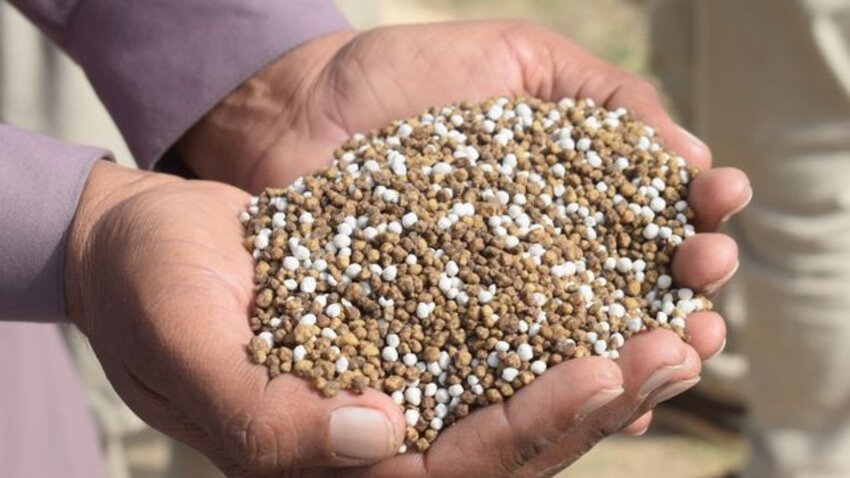
A European biofertiliser supply chain
One of the projects supported by the I3 Instrument is I3-4-BIOFERTILISERS, active from 2024 to 2027, aimed at creating a new transnational European supply chain dedicated to biofertilisers and biostimulants, thus reducing dependence on conventional chemicals. With €6.9 million in EU funding, the project involves Italy, France, Spain, Portugal and Belgium, and combines technical activities with a support programme for small and medium-sized enterprises.
Through a cascade funding mechanism (€1.8 million), up to 30 SMEs can access funding, mentoring, pilot infrastructure and specialist services to overcome the technological and commercial barriers that limit the adoption of innovations. Its aim is to promote more sustainable agricultural practices, improve soil health and develop circular economy models based on the recovery of nutrients and biomass.
Unlocking the potential of the blue bioeconomy
Also part of the I3 Instrument is I3-4-SEAWEED, which aims to develop a transnational value chain based on seaweed. With a budget of around 6.8 million euros, it involves 16 partners across 6 countries and spans 13 European regions, including peripheral and island areas, in order to strengthen coastal and maritime economies.
It focuses on the demonstration and commercialisation of high-value-added applications across various sectors: from seaweed cultivation systems to digital platforms for offshore aquaculture, right through to the development of food ingredients, organic fertilisers and cosmetic products derived from marine biomass. Its goals include advancing the technological maturity of the solutions developed, creating new employment opportunities and reducing the environmental impact of production chains. Here too, support for SMEs and preparation for market entry are central elements of the initiative.
Technological research into bio-based materials
A different approach characterises the CIRC-PACK and FRESH projects, cited by the European Commission’s Directorate-General for the Environment as examples of innovation in the fight against plastic waste through the development of bio-based materials and more sustainable packaging solutions. Supported by Horizon 2020 – the main European programme for research and innovation running from 2014 to 2020 – they received funding of 7.3 and 5.6 million euros, respectively. Initiatives such as these, located in a phase preceding the I3 projects, help build up a body of knowledge and technology that can subsequently be transferred to industry.
CIRC-PACK involved 22 European partners with the aim of rethinking the entire life cycle of plastic packaging, including bottles, caps, bags and food trays. The approach was systemic: the replacement of fossil-based materials with bio-based polymers, the redesign of multilayer materials to facilitate recycling and, finally, the improvement of sorting systems at treatment centres. Today, the project’s legacy lives on through specialised consultancy services, which help brands navigate the transition.
FRESH, on the other hand, has shifted its focus to the ready-meal sector, developing bio-based and biodegradable food trays for use in airline catering, military operations and food delivery services as an alternative to traditional fossil-fuel-derived plastic trays. By using a cellulose-based composite, paired with innovative lamination technologies, it has demonstrated that bio-based alternatives work, meeting stringent requirements, including a longer shelf life and safety for use in microwave ovens.
- You may also be interested in: GoodByO: Dallo spreco alimentare, CO2 e acque reflue alla chimica del futuro
From research to an industrial model
Diversey is a Dutch company operating in the professional hygiene sector, part of the Solenis group. Using by-products from the pulp industry, it has developed bio-based detergents. While not a project directly funded by the EU, the case is presented by the European Commission’s DG.
Environment as a practical example of bringing innovations to market that are consistent with the objectives of the bioeconomy.
The SURE range includes around 150 plant-based products (60 of which are EU Ecolabel certified) for professional use, ranging from surface cleaners to sanitising and personal care products. The formulations use raw materials of agricultural and agri-food origin, such as derivatives of sugar beet, maize, wheat and coconut, making the most of by-products and reducing dependence on fossil feedstocks.
The Diversey model also demonstrates that European certifications, such as the EU Ecolabel, can represent not only regulatory tools but also levers for industrial competitiveness in mature bioeconomy markets.
- You may also be interested in: Bioeconomy in North Africa: Between Resource Abundance and Structural Constraints in Tunisia, Morocco, and Egypt
Turning biomass into high-value resources
3R-BioPhosphate Ltd. is, last but not least, a leading example of the circular bioeconomy: the company develops industrial technologies, based on the Recycle-Recover-Reuse principle, aiming to transform agricultural waste and animal by-products into high value-added resources. At the heart of this is an advanced, zero-emission and energy-independent pyrolysis process: in essence, a high-tech furnace that breaks down organic materials.
This system produces two main product lines, which have already been validated in the field through EU-funded pilot projects such as WalNUT and Waste4Soil: on the one hand, bio-based fertilisers with a high nutrient content for agriculture, and on the other, adsorbent materials for water treatment.
The issue is of strategic importance for Europe, as it is heavily dependent on imports of phosphorus – an essential raw material for agriculture and classified as a resource of critical importance. Recovery of this element from waste streams means not only reducing waste production but also strengthening the self-sufficiency of supply chains and making the most of resources already present in the region.
Article written by Maria Carla Rota
This blog is a joint project by Ecomondo and Renewable Matter
Credits
Photo by Kashif Shah
PUBLICATION
03/07/2026
Other related news
06/07/2023
5 European Start-ups non to be missed
03/04/2025
5 under 30 who have revolutionized the circular economy
23/04/2025
7 young leaders under 30 in the green and circular economy
05/12/2024
7 trends in the Green Economy that will define 2025
15/12/2024
30/05/2023

17/12/2025
Africa, a frontier for the next Green Economy
29/04/2025
Precision agriculture: what advantages does it offer and how can it support North African countries?
10/05/2024

26/11/2025
Companies: how to communicate the transition in the greenlash era?
24/04/2025
Sodium batteries: the technology that could make the EU less dependent on critical materials

29/01/2026
Wellbeing and happiness: when science meets business, society and nature

23/06/2026
Bioeconomy in North Africa: Between Resource Abundance and Structural Constraints in Tunisia, Morocco, and Egypt
07/04/2026
Bioenergy and industrial ecosystems: models and research projects in Europe