
The climate crisis is not a matter of opinion, and the transition is an inescapable momentous challenge: it is neither advisable nor possible to opt out. The Economist pointed this out last September in relation to Trump’s anti-solar crusade, quoting the Eagles’ most famous song, Hotel California: “You can check out any time you like, but you can never leave”.
Rather, the green economy is the compass to follow, as reiterated at Ecomondo 2025 by the protagonists of the 14th edition of the States General of the Green Economy, promoted by the National Council of the Green Economy and the Foundation for Sustainable Development. Two days of debate on policies, investments and strategies, both at Italian and international level, drawing on different points of view from Europe to the United States, from China to Africa.
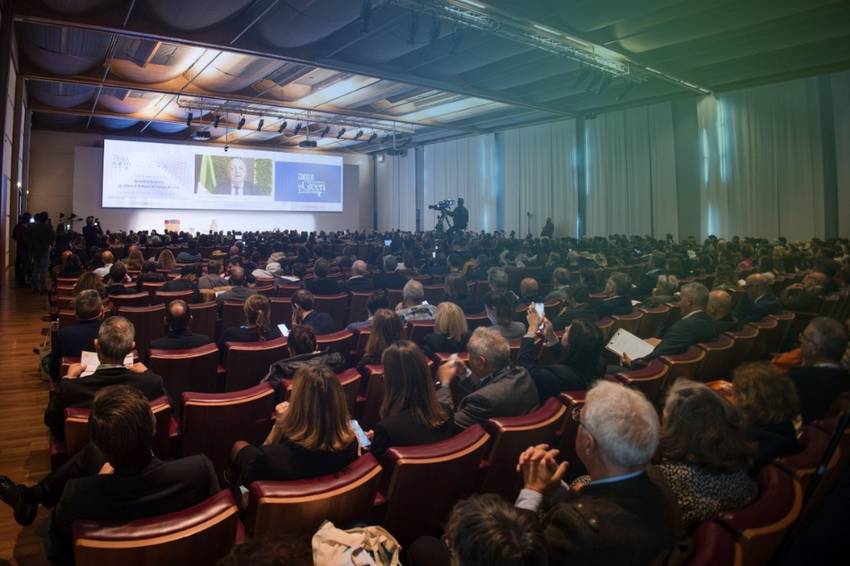
Green economy: why it does benefit Italy?
The health of the green economy in Italy records both positive and negative aspects, according to the Report on the State of the Green Economy 2025. On one side, positive results imported from abroad. Furthermore, land consumption continues unabated, while sustainable mobility is struggling with the fact that we have 701 cars per 1,000 inhabitants, the highest number in Europe.
At the heart of the debate, one question: is it beneficial for Italy to backtrack on its transition to a green economy? <<We believe it is not, especially in light of the positive impact on the Italian economy of the PNRR (National Recovery and Resilience Plan) projects, in which environmental sustainability has played a significant role,>> replied Edo Ronchi, President of the Sustainable Development Foundation. <<Without the PNRR, Italy’s GDP would have stagnated or even gone into recession, and it would have been very difficult to keep the deficit below 3%.>>
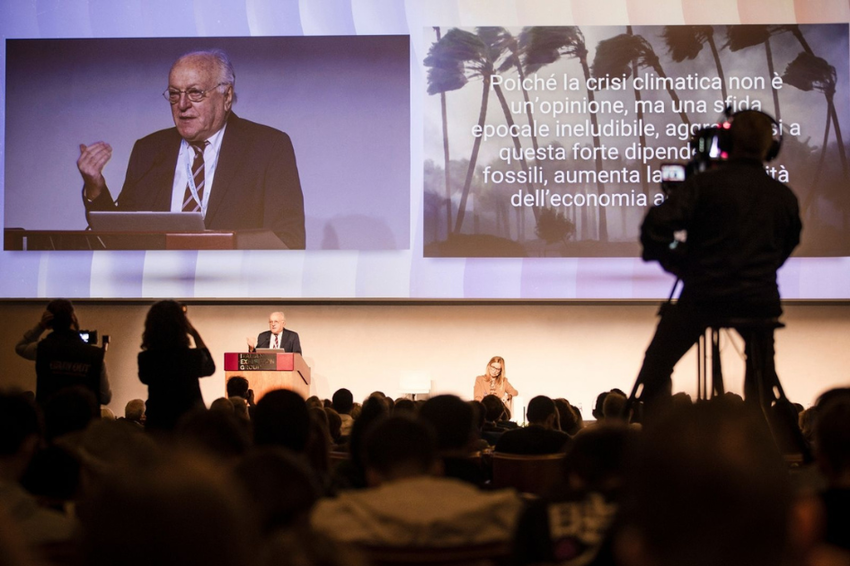
<<Italy, with its leadership in key sectors such as the circular economy, has what it takes to be at the forefront of a Europe seeking a realistic and pragmatic transition,>> emphasised Gilberto Pichetto Fratin, Minister for the Environment and Energy Security. <<In a complex geopolitical context, marked by severe climate change, our continent must invest in innovation, sustainable growth and energy security. Italy’s green economy businesses are an example to follow for the economy of the future.>>
The situation in Europe
Looking at Europe, the fastest warming continent, a few figures are enough to highlight the urgent need to tackle the climate crisis: extreme weather events between 1980 and 2023 cost €738 billion, while in 2024 alone, the EU spent €375.9 billion on fossil fuel imports.
The European Green Deal has not been easy or error-free, but thanks to Next Generation EU, its main pillar, the PNRRs have been financed, sustaining the ecological transition and post-Covid recovery. “We are currently on track with 21% of the targets, while 41% require accelerated progress to meet them. In 10% of cases, however, the trend needs to be reversed,” explained Alessandra Zampieri, Director of Sustainable Resources at the European Commission’s Joint Research Centre.
The positive results? In addition to the steady reduction in greenhouse gas emissions (-37% between 1990 and 2023), employment in the bioeconomy sector reached 17 million in 2024, over 8% of jobs in the EU; renewables exceeded 22%, with solar being the fastest growing energy source; and packaging waste recycling rates are steadily moving towards the 70% target by 2030.
Looking ahead, €700 billion has been allocated to climate and the environment in the proposed MFF (Multiannual Financial Framework) 2028-2034.
Where should we accelerate, then? <<We need to decouple economic growth from resource use and consumption footprints, reduce waste generation and accelerate the greenhouse gas emissions cuts in agriculture and transport, after the progress already made in other sectors, such as energy and industry. We must also halt biodiversity loss and reverse the decline in pollinators, which also affects food security. Finally, we must accelerate the growth of renewable energy to reach 42.5% (45%), improve water quality and halt land consumption.>>
Focus: biodiversity in Europe
According to the Global Risks Report 2025, biodiversity in Europe, along with the collapse of ecosystems, ranks second among the greatest risks perceived over the next 10 years. Only 15% of European habitats are in “good” condition, 4% are in “poor” condition, and 36% are in “bad” condition (45% are unclassified due to a lack of studies), based on the 2024 report by the European Environment Agency.
As for the species found in the European region, only 27% are in a good state of conservation and only 6% show a trend towards improvement. These and other indicators, coupled with unabated land consumption, clearly show that the EU is not on track to meet its biodiversity protection targets.
Reasons for the delays and problems are pretty clear: the climate crisis, the linear and wasteful model of economic growth, and the traditional influences of widespread urbanisation and a certain model of industrial agriculture, still common. Therefore, it’s vital to implement the Nature Restoration Law, a significant measure for biodiversity that the EU adopted in 2024.
Will China be the first "electro-state"?
When it comes to transition, China is clearly a top player. With 12 billion tonnes of CO2, the country was the world’s largest emitter in 2024 (32% of the global total) and ranks third in terms of historical climate responsibility (it could soon overtake the EU27). With 58% of global supply, China is the world’s leading supplier of coal, but it is also a leader in green technologies: 80% of solar panels, 60% of wind turbines and 50% of electric vehicles sold worldwide are produced in Beijing. Accounting for 29% of global electricity consumption, it aims to become the first major “electro-state”.
As has already happened with digitalisation, the impact of Beijing’s acceleration on the green economy is also inevitable: while European citizens and businesses have the benefit of access to good quality, low-cost Chinese green technologies and products, there is the risk of invasive competition, backed by state subsidies and effective industrial policies spanning decades. The way forward has been outlined by Junming Zhu, Associate Dean of the School of Public Policy and Management at Tsinghua University, who pointed out three steps: <<Balance between economy, environment and equity; radical transformation from politics to business, down to lifestyle; international collaboration for science, technology and politics>>.
In the United States, Trump does a U-turn
What, on the other hand, are the impacts of the Trump administration’s reversal, defending the interests of the fossil fuel industry, extremely powerful in the United States, given that this country is the world’s leading producer of natural gas and oil? Under the tycoon’s leadership, America withdrew from the Paris Agreement and cancelled its 2030 and 2035 targets, as well as its Net-Zero goal.
Data collected by Italy For Climate paints a clear picture: the United States is the largest per capita emitter of greenhouse gases (18 tonnes, three times the global average) and the country with the greatest historical responsibility for climate change. CO2 emissions have been reduced by only 3.7% compared to 1990 levels, 10 times less than the EU, while emissions are expected to increase by 1.8% in 2025.
The electric vehicle market is growing (+10% in 2024; 1.6 million electric vehicles sold), despite Tesla no longer being the world’s leading manufacturer, surpassed by China's BYD. Sales of green cars in the US will rise to 4.1 million in 2030 and account for 27% of total car sales, down 40% from previous forecasts.
Investment in renewables, networks and energy efficiency will amount to $390 million, ranking second after China, but the IEA has reduced its 2025-2030 forecasts by 45%.
Africa, a frontier for the future of green economy
Africa, home to 1.5 billion people (more than China), unavoidably attracts a great deal of attention, as this geographical area is expected to make significant progress towards a sustainable transition. Here are some figures: the continent has contributed only 3% of historical CO2 emissions, but is suffering the greatest impact (excess mortality in 2050 equal to 50% of the global total). It produces 2.2 tonnes of greenhouse gasses per capita, three times less than the global average and eight times less than the United States. The financial requirement for adaptation is an estimated $61 billion per year, but international public financial flows amounted to $13 billion (average 2018-2022), leaving a gap of $48 billion.
The African continent holds some of the world's most important natural resources for the development of the green economy, as highlighted by Davinah Milenge Uwella, Head of the Climate Change and Green Growth Department at the African Development Bank: <<Solar energy alone is worth 10 TW, equal to 60% of global potential. Added to this are 110 GW of wind power, 350 GW of hydroelectric power and 15 GW of geothermal power. In addition, Africa holds 65% of the planet's uncultivated arable land, is home to 25% of the world's biodiversity and holds 35% of the critical minerals needed for the energy transition.>>
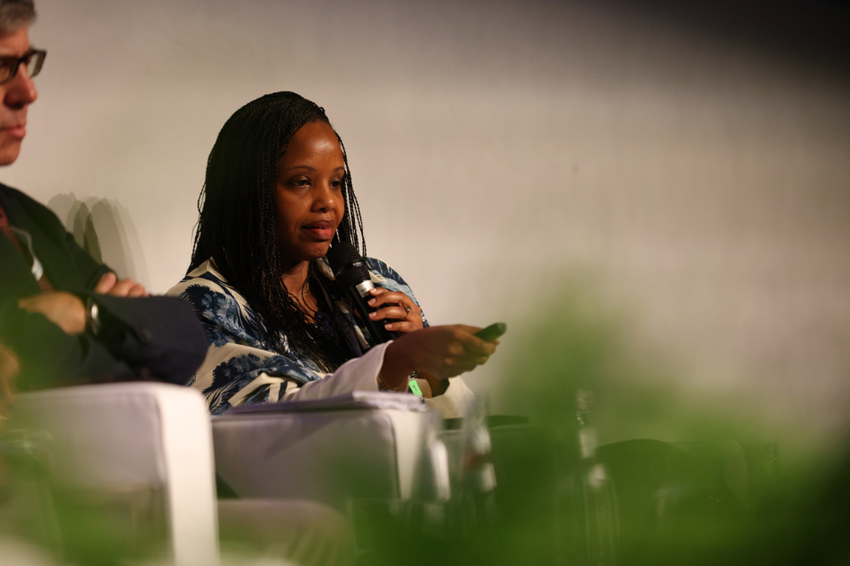
In spite of its potential, Africa is currently confronted with one of the world's greatest energy challenges: 600 million people have no access to electricity, accounting for 83% of the global energy deficit. <<To respond to this emergency, the AfDB and World Bank have launched Mission 300, with the aim of bringing energy to 300 million people by 2030.>>
This is only one of the projects that the continent is pursuing, not just to defend itself from climate impacts, but to take on a leading role in the sectors of energy, nature, innovation and the circular economy.
As Abiy Ahmed Ali, Prime Minister of Ethiopia and 2019 Nobel Peace Prize winner, stated at the second African Climate Summit in September 2025, <<we are not here to negotiate our survival. We are here to design the next global climate economy.>> In short, Africa is preparing itself, and the world needs to do the same.
Article written by Maria Carla Rota
This blog is an editorial project developed by Ecomondo and Materia Rinnovabile
PUBLICATION
27/11/2025
Other related news

06/07/2023
5 European Start-ups non to be missed
03/04/2025
5 under 30 who have revolutionized the circular economy

23/04/2025
7 young leaders under 30 in the green and circular economy
05/12/2024
7 trends in the Green Economy that will define 2025

15/12/2024
30/05/2023
29/04/2025
Precision agriculture: what advantages does it offer and how can it support North African countries?

10/05/2024

26/11/2025
Companies: how to communicate the transition in the greenlash era?
24/04/2025
Sodium batteries: the technology that could make the EU less dependent on critical materials
27/11/2024

17/09/2024
Blue Rolodex: Start-up & Influencer of the Blue Economy
30/05/2024
26/11/2024
COP29, climate negotiation failure avoided

28/11/2025
COP30, a fiasco to build the future upon