
Europe is once again grappling with its energy vulnerability. And this time, the risk is even more evident. The International Energy Agency has raised the alarm over the oil crisis, sparked by tensions in the Middle East and the blockade of the Strait of Hormuz. In its emergency guidelines to reduce consumption, aimed at governments, businesses and households, the Agency proposes measures that recall familiar scenarios: limiting the use of private cars, encouraging remote working and public transport, lowering speed limits, reducing air travel, and keeping heating and cooling temperatures in check.
The keyword is austerity. At the heart of the European debate, therefore, are once again the issues of energy security and the need to diversify sources. The goal is to build a mix of renewables capable of guaranteeing supply independence, system flexibility and affordable prices, while at the same time achieving a structural reduction in emissions.
Decarbonisation and energy security
Within this mix, bioenergy plays a strategic role. In 2023, it accounted for 54% of the EU’s total renewable energy, as highlighted in the Landscape Report 2025 by Bioenergy Europe, an international organisation representing over 40 associations, 150 companies, universities and research centres. One of its main strengths lies in its ability to reduce exposure to geopolitical shocks and supply disruptions: while the European Union relies on imports for 98% of its oil and natural gas needs, biomass is predominantly a domestic resource, with a reliance on foreign sources of just 5%. One of the main areas of use is heating, still heavily reliant on fossil fuels, which account for 73% of European demand, generating around 1.5 billion tonnes of CO₂ per year: a path incompatible with long-term climate goals. In 2023, renewable energy sources covered only a quarter of the demand for heating and cooling, but within this segment, biomass accounted for 81%. A key role is emerging in industry as well, particularly in energy-intensive sectors, where full
electrification is not always possible and it becomes necessary to replace fossil fuels with renewable gases.
- You may also be interested about Bioenergy and industrial ecosystems: models and research projects in Europe
Job opportunities and industrial capacity
In addition to its contribution to energy supply, bioenergy also has a significant economic impact. In 2019, the sector sustained around one million jobs, mainly in the supply of raw materials. Over time, a shift is expected towards activities with higher added value, such as the production of technology and equipment. This development mirrors the growth of the sector, increasingly capable of generating skilled employment and developing advanced industrial capabilities. The industry currently contributes around €40 billion to European GDP, a figure set to almost double by 2050, exceeding €70 billion. This confirms bioenergy’s role as a structural component of the EU economy.
Impacts on environmental sustainability
While these are the strategic opportunities, bioenergy remains one of the most controversial sectors of the energy transition, with several unresolved issues regarding environmental sustainability, climate impact and air quality. One of the main concerns is the domestic use of biomass. Wood- or pellet-burning fireplaces, stoves and boilers are a significant source of fine particulate matter (PM2.5) in Europe, with direct health implications, to the extent that the domestic sector is the primary source of emissions in over half of urban areas. In addition, there are problems related to fuel quality, with the possible presence of contaminants and heavy metals in fine particulate matter, especially in the case of pellets of various origins.
These issues require stricter controls, particularly in the countries of Central and Southern Europe. A further issue relates to carbon balance and the management of forest resources. The matter is more complex than it might appear. In theory, biomass is considered carbon neutral, as the CO₂ emitted during combustion corresponds to that absorbed during the growth phase. In practice, however, timing matters as much as volume. Combustion releases CO₂ immediately, while forest regeneration takes decades: during this interval, a so-called “carbon debt” is generated – a temporary climate debt that can have significant effects in the short term.
- You may also be interested about BECCS, bioenergy thtat removes CO2: how does it work and why is it strategic?
The forest management challenge
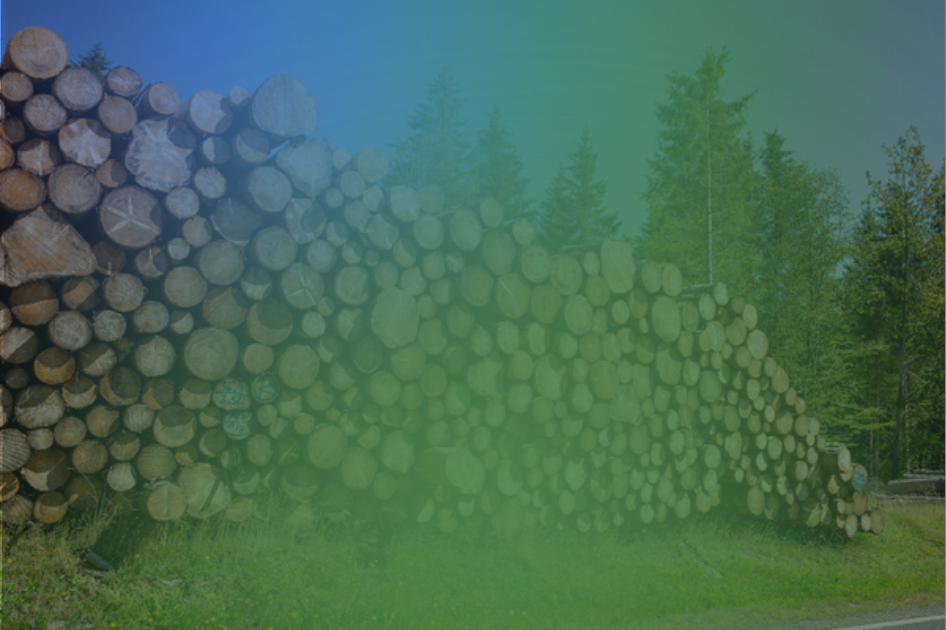
The choice of raw materials is therefore crucial. Forest residues, which are destined to decompose anyway, have a lower climate impact; on the contrary, the use of intact timber can significantly extend the break-even time. The sector emphasises that a large proportion of the biomass used already comes from residues and waste and that European legislation requires stringent sustainability and traceability criteria. However, the issue of forest management remains central; it must become increasingly integrated to preserve ecosystems’ capacity to absorb carbon and protect biodiversity. “The real paradigm shift is this: no longer choosing between conservation and use, but managing to conserve,” explained Riccardo Fraccaro, CEO of Carbon Planet.
Looking ahead to 2050, the prospects indicate that the sector’s expansion cannot rely primarily on forests but must increasingly stem from agricultural biomass and waste, with a view to a circular economy and more efficient use of resources. The challenge is therefore not to determine whether bioenergy should play a role in Europe’s energy transition but to define in what forms and under what rules it can contribute in a sustainable and scalable manner.
Article written by Emanuele Bompan
This blog is a joint project by Ecomondo and Renewable Matter
Credits
Photo by Mark Stebnicki
Photo by ADMC
PUBBLICAZIONE
09/04/2026
Altre news correlate

08/09/2022
Inquinamento da plastica in mare: cause, conseguenze e soluzioni

21/03/2024
Ma dai, è solo un mozzicone
24/07/2023
RAEE: una miniera di materie prime critiche
20/09/2023
La plastica: da problema a risorsa

30/05/2023
Acqua in Europa: come affrontare il cambiamento climatico
03/04/2025
5 under 30 che hanno rivoluzionato l'economia circolare
21/04/2023
La giornata mondiale della terra, vista dal mare
19/05/2023
Ecomondo Mexico ed economia circolare in America Latina

31/07/2023
Economia circolare in Cina. Ieri, oggi e domani
14/05/2023
Sulla strada della sostenibilità: elettrificare il trasporto merci

06/11/2023
Lifegate presenta Water Defenders Alliance, una grande alleanza per difendere le nostre acque
20/10/2023
Legno-arredo, la filiera che ha messo la sostenibilità al centro

07/06/2023
Le maree stanno cambiando

03/08/2023
La filiera del riciclo della carta: eccellenza italiana con margini di miglioramento

10/10/2023
Responsabilità estesa ed ecoinnovazione, la sfida del tessile sostenibile non può attendere
13/05/2023
Europa: arriva il nuovo piano industriale per l’era net-zero