
Europe has set an ambitious goal: achieving climate neutrality by 2050. This target, despite a reduction in greenhouse gas emissions of around 37% compared to 1990 levels (source: European Commission), is still a long way off. Bridging the gap requires a step change: not only reducing emissions, but also actively removing the carbon already present in the atmosphere. As the report “Scaling up carbon dioxide removals – Recommendations for navigating opportunities and risks in the EU” also points out, decarbonisation must go hand in hand with the development of technologies capable of generating negative emissions. Of these, BECCS (Bioenergy with Carbon Capture and Storage) is proving to be one of the most promising solutions.
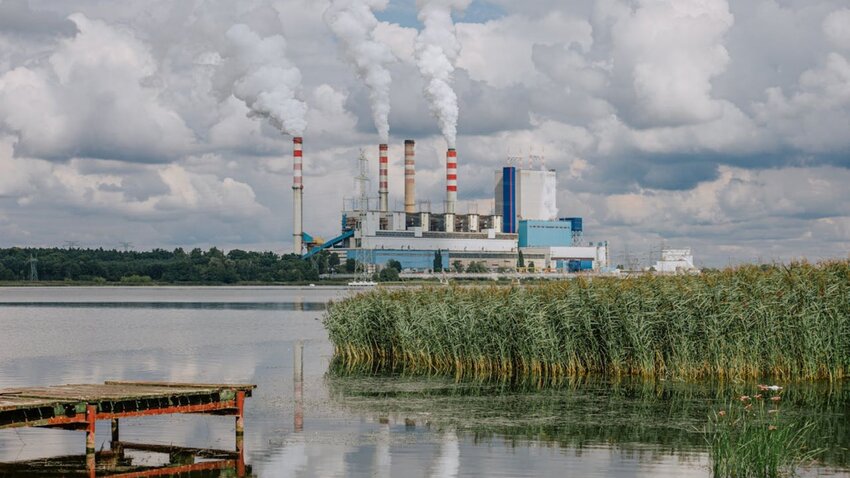
How does the BECCS technology work
BECCS is a technology which combines energy production from biomass with the capture and storage of the carbon generated during the process, turning bioenergy plants into active tools for removing CO2 from the atmosphere.
The process is divided into several stages, starting with the production and collection of biomass, which can come from agricultural waste, forestry residues, dedicated crops and industrial organic waste. Biomass is used in thermal power plants or combined heat and power (CHP) plants, generating electricity and/or heat. The exhaust gases produced during combustion contain carbon dioxide, the capture of which is achieved through various systems, often based on liquid solvents such as monoethanolamine (MEA), thus reducing direct emissions into the atmosphere.
The captured CO2 is then compressed and transported to geological storage sites, such as underground reservoirs or deep aquifers, where it can be safely stored for centuries.
- You may also be interested about: Bioenergy and industrial ecosystems: models and research projects in Europe
BECCS and DACCS: differences
Both BECCS and DACCS (Direct Air Capture with Carbon Storage) are carbon removal technologies with very different characteristics. The main difference concerns the energy balance: BECCS is part of a process that produces energy in the form of electricity or heat, while DACCS relies on external energy to capture CO2 from the air and does not generate energy itself. Moreover, in terms of costs and implementation, BECCS technology is more straightforward to apply, as it can utilise the retrofitting of existing industrial biomass plants, whereas DACCS requires dedicated infrastructure and involves higher costs.
Finally, the capture mechanism also differs. BECCS captures CO2 naturally absorbed by plants during photosynthesis, exploiting the biomass combustion phase. DACCS, on the other hand, captures CO2 from the air directly through chemical processes and ventilation systems, achieving completely active carbon removal.
The EU Commission regards these technologies as essential and complementary to natural carbon sinks, such as soil and forests, for achieving the net-zero emissions target by 2050. There are, nevertheless, significant concerns: several experts and NGOs fear that an excessive focus on CO2 removal could slow down efforts to reduce emissions. Furthermore, a challenging and ongoing debate centres on the sustainability of biomass. The availability of raw materials is not unlimited, and their management raises questions related to land use, the protection of biodiversity and competition with other sectors, particularly the food sector.
BECCS technology: uses and applications
BECCS technologies are still relatively new and require further testing, but there are already practical applications in Europe, as well as numerous projects at the pilot stage or in advanced development.
Perhaps the most notable example, proving that carbon removal can be integrated into existing energy systems, is that of Stockholm Exergi in Sweden, where a biomass power plant has been paired with a CO2 capture system financed by the European Union through the Innovation Fund. The project, now in an advanced stage of development, aims to capture up to 800,000 tonnes of carbon dioxide per year to be transported and stored in geological formations in the North Sea. It is one of the first European examples of BECCS on an industrial scale, set to become a benchmark for the emerging market in carbon removal credits and for urban decarbonisation strategies.
Another notable example is the Drax Power Station in the UK, one of Europe’s largest biomass power stations. Pilot plants for CO2 capture are already operational at this site, with the aim of eventually achieving an annual removal of up to 8 million tonnes. A converted coal-fired power station now running on biomass, Drax produces around 11% of the UK’s renewable energy and is currently the main site in Europe where BECCS technology is tested on a real-scale basis, integrating energy production with CO₂ capture and storage.
At the same time, a broader approach is taking shape in the Nordic countries, where BECCS is being incorporated into existing supply chains – from the timber industry to combined heat and power plants – and connected to local energy networks such as district heating. More than individual plants, this gives rise to distributed infrastructure capable of combining energy production, biomass management and CO2 storage. In this scenario, the challenge is not merely technological, but systemic: ensuring that the development of bioenergy and BECCS technologies occurs within sustainable limits, maximising climate benefits without placing new pressures on ecosystems.
Article written by Emanuele Bompan
This blog is a joint project by Ecomondo and Renewable Matter
Credits
Photo by Janusz Walczak
PUBLICATION
10/04/2026
Other related news

08/09/2022

21/03/2024
Come on, it's just a cigarette stub
24/07/2023
WEEE: a mine of critical raw materials
20/09/2023

30/05/2023

03/04/2025
5 under 30 who have revolutionized the circular economy

21/04/2023

19/05/2023
Ecomondo Mexico and the circular economy in Latin America

31/07/2023
Circular economy in China – past, present, future

14/05/2023
06/11/2023
20/10/2023

07/06/2023
Tides are changing

03/08/2023

10/10/2023

13/05/2023
A new EU industrial plan for the net-zero age