Biomethane is establishing itself as one of the key technologies for the European energy transition, as the REPowerEU plan aims to boost annual production to 35 billion cubic metres by 2030. In this context, Verdalia Bioenergy is gaining recognition as one of Europe’s leading players in the biomethane sector through an ambitious growth plan currently focused on Spain and Italy.
Founded in 2023 by Fernando Bergasa and Cristina Ávila backed by Goldman Sachs, the company has rapidly established a significant presence through strategic acquisitions and new development projects. Today, it employs around 150 professionals, operates 13 plants and has a development pipeline targeting 3 TWh of annual generation capacity, equivalent to the energy consumption of almost one million people.
With an investment plan exceeding one billion euros, Verdalia intends to accelerate the development, construction and operation of new plants, leveraging partnerships with EPC (Engineering, Procurement and Construction) contractors, long-term agreements for the supply of biomass and long-term contracts for the sale of renewable gas and bio-CO₂, as well as the sale of bio-fertiliser.
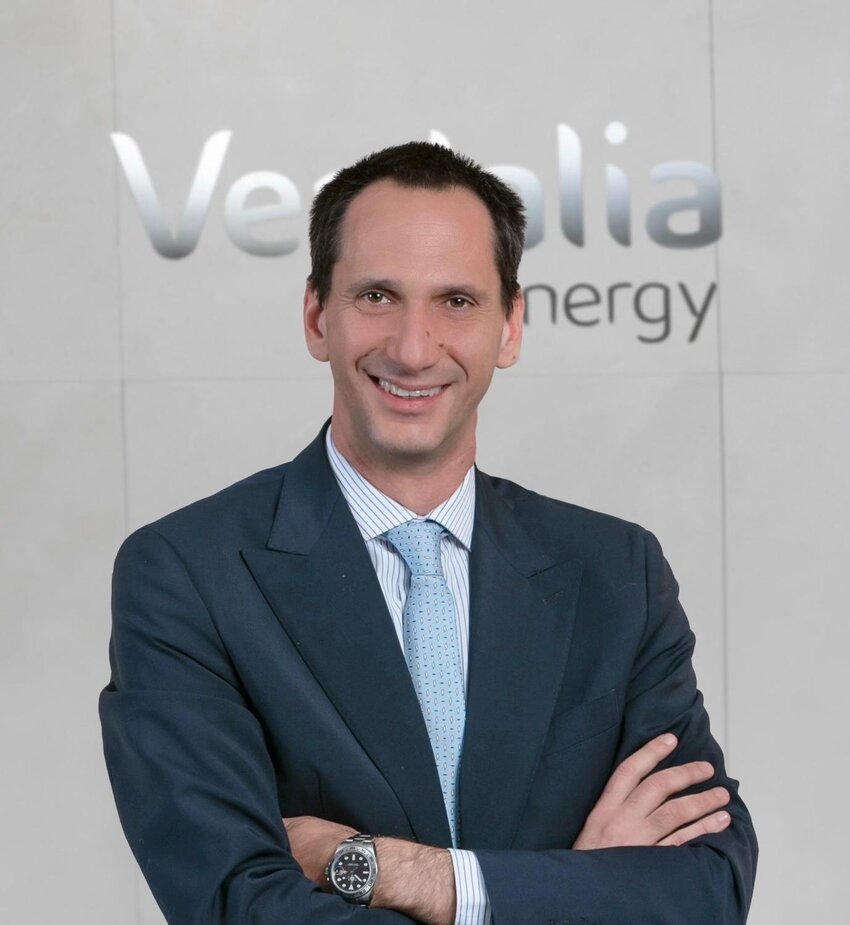
<<Our growth strategy in Europe centers on building a leading platform in the biomethane sector that combines industrial strength, positive environmental impact and the creation of shared value>> emphasises Matteo Grandi, Country Manager for Italy. <<We operate across the entire value chain transforming organic resources into renewable energy and high value-added products, contributing to the decarbonisation of the economy and the development of a truly circular model.>>
This development received a boost in October 2025 with a €671 million corporate loan from a syndicate of international banks and funds, the largest ever secured in Europe within the biomethane sector. The transaction was designed to ensure operational flexibility and to facilitate both the construction of new plants and potential strategic acquisitions over the next four years.
- You may also be interested in: The European bioenergy landscape: strategic potential and challenges
Expansion from Spain to Italy
Verdalia’s first major transaction dates back to March 2023, when the company acquired projects in Spain representing an estimated 150 GWh of biomethane capacity per year – the starting point for a pipeline that has grown steadily ever since. The company now has projects under development or construction across ten Spanish autonomous communities. After consolidating its operations in Spain, Verdalia began its expansion into Italy, with particular focus on the northern regions.
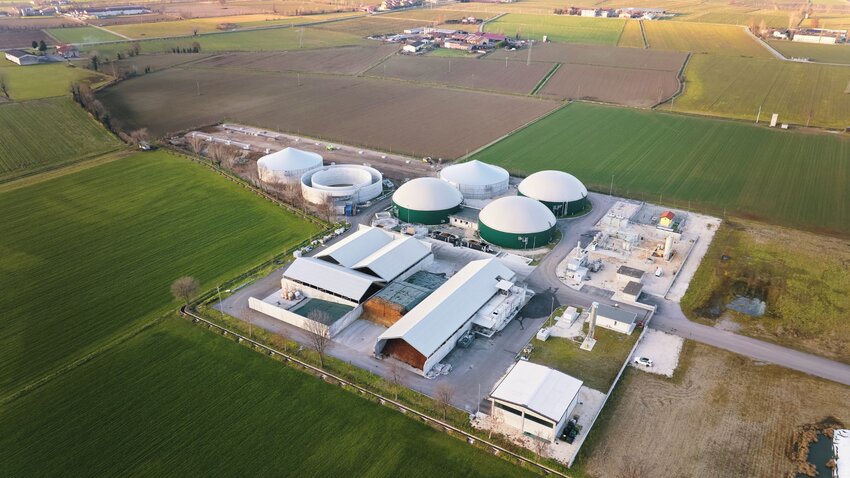
In July 2024, Verdalia acquired seven operating biomethane plants in the province of Brescia, with a combined production capacity of around 190 GWh per year. These plants, which process around 350,000 tonnes of agricultural and livestock-derived raw materials each year, are currently undergoing a major expansion programme due to be completed in December 2026, which will increase their production capacity from 300 to 500 Sm³/h.
Then, in November 2024, Verdalia acquired six new greenfield projects also in northern Italy. Four of these projects were completed and are now online, while the other two are currently in advanced stages of construction. With an estimated total capacity of 280 GWh per year, these plants will prevent the emission of over 87,000 tonnes of CO₂ into the atmosphere annually, contributing significantly to the energy transition and the decarbonisation of the region.
<<In Italy, we are successfully implementing a development plan that is transforming a pipeline of projects into an operational and continuously expanding industrial platform, confirming our ability to develop and bring strategic assets online within the planned time frames,>> continues Matteo Grandi. <<This initiative is backed by a significant programme of organic and inorganic growth, aimed at making a concrete contribution to achieving the Italy’s 2030 targets.>>
Among the most significant transactions of 2025 is the long-term off-take agreement signed with Edison covering the entire biomethane production from Verdalia’s seven plants in Brescia. The agreement covers approximately 14 million cubic metres of renewable gas per year, destined for the transport sector and produced from around 350,000 tonnes of livestock manure and agricultural by-products annually. In addition to purchasing the biomethane, Edison will supply the electricity and gas necessary for the plants’ operation, contributing to the integrated management of the energy supply chain. The agreement, running for up to ten years, marks a strategic milestone for both companies and underpins Verdalia’s growth plan, which aims to increase the production capacity of the Brescia plants by around 50% through new investment.
Not just biomethane: biofertilisers and biogenic CO₂
For Verdalia, producing biomethane is only part of the story: the company works to maximise the value of every stage of the process. The digestate from selected agricultural and livestock-based organic feedstocks is processed into a biofertiliser rich in stable organic matter, which improves soil structure, increases its water-holding capacity and promotes microbiological fertility. Controlled stabilisation processes leave the final product free from pathogens and impurities, making it suitable for agriculture, horticulture and renaturalisation projects: a practical example of the circular economy, in which organic waste is returned to the soil in the form of new fertility.
Biogenic CO₂ is also produced during anaerobic digestion, which can subsequently be separated from the methane and purified. Unlike fossil-derived carbon dioxide, this CO₂ forms part of the natural carbon cycle and can be used in sectors such as the food industry (for example, for food preservation or beverage production) and greenhouse agriculture, or as a component in e-fuel production and in methanation processes to further increase biomethane production. Here too, the approach centers on maximising resource use: every component of the process is recovered and reused, reducing overall emissions and increasing the efficiency of the supply chain.
- You may also be interested in: Bioenergy and industrial ecosystems: models and research projects in Europe
Digital innovation and shared value
To support the production process, Verdalia uses digital monitoring and control systems, advanced sensors and artificial intelligence tools to optimise biomass management and keep plants running efficiently and safely. The aim is to improve energy efficiency, enhance operational safety and guarantee high environmental standards through continuous investment in research, innovation and technological development.
Lastly, a key focus is on building a supply chain that generates economic, environmental and social benefits for the various stakeholders in the local areas where Verdalia operates. While farmers and livestock breeders transform waste and by-products into an economic resource through long-term agreements, with traceable collection systems and quality and biosafety protocols, businesses have access to new solutions for decarbonisation, and local areas benefit from the revitalisation of rural areas, job creation and investments designed to minimise environmental impacts and foster dialogue with communities.
A look to the future
Looking ahead, <<after a 2025 focused on bringing the Italian plants up to full capacity and starting construction on the assets acquired and developed in 2023 and 2024, this year will mark an acceleration on all fronts: from completing the Italy ramp-up to progress on the construction phase in Spain, with the first injection of biomethane into the grid expected in 2027,>> concludes Matteo Grandi. <<At the same time, we are continuing to pursue our growth strategy through the organic development of our portfolio and the exploration of acquisition opportunities.>>
In addition to the countries in which Verdalia is already present, the company is constantly analysing opportunities for development and expansion into new European markets: <<We are looking closely at the opportunities the market offers and carefully evaluating initiatives and project portfolios that could contribute to our sustainable long-term growth. Our approach combines ambition and discipline: we aim to capitalise on the best investment opportunities, while always maintaining high-quality standards and a rigorous allocation of capital to create lasting value for all our stakeholders.>>
See you at Ecomondo 2026
Visitors at Ecomondo 2026 will have the opportunity to learn more about Verdalia’s strategy at stand 210 – HALL B5: in this space, designed to offer an engaging and bespoke experience, visitors will be able to gain an in-depth insight into all the projects developed by the company.
Article written by Maria Carla Rota
This blog is a joint project by Ecomondo and Renewable Matter
PUBBLICAZIONE
30/07/2026
Altre news correlate

06/07/2023
5 Start-up circolari da non perdere

03/04/2025
5 under 30 che hanno rivoluzionato l'economia circolare

23/04/2025
7 giovani under 30, leader della green and circular economy
05/12/2024
7 trend nell'economia green che definiranno il 2025

15/12/2024
AI, big data e tecnologie predittive per la Blue Economy
30/05/2023
Acqua in Europa: come affrontare il cambiamento climatico

17/12/2025
Africa, frontiera della prossima economia verde
29/04/2025
Agricoltura di precisione: quali vantaggi offre e come può sostenere i paesi del Nordafrica?
10/05/2024
Alluvione in Emilia-Romagna, un anno dopo

26/11/2025
Aziende: come comunicare la transizione nell’era del greenlash?

24/04/2025
Batterie al sodio: la tecnologia che può rendere l'UE più indipendente dai materiali critici

29/01/2026
Benessere e felicità: quando la scienza incontra impresa, società e natura

23/06/2026
Bioeconomy in North Africa: Between Resource Abundance and Structural Constraints in Tunisia, Morocco, and Egypt
07/04/2026
Bioenergy and industrial ecosystems: models and research projects in Europe