
The world has entered a phase of “global water bankruptcy”: many water resources have lost, or are losing, the ability to return to their historical reference levels, let alone to increase water stocks. This is the key argument at the heart of the report entitled Global Water Bankruptcy: Living Beyond Our Hydrological Means in the Post-Crisis Era, issued in 2026 by the United Nations University Institute for Water, Environment and Health (UNU-INWEH).
The term refers to the overexploitation of hydrological limits: water abstractions and land-use changes that consistently exceed the capacity of ecosystems to recharge, regenerate and absorb water. Under these conditions, drought, pollution and biodiversity loss are no longer isolated incidents or isolated emergencies to be managed. Rather, they become permanent features of the new water systems.
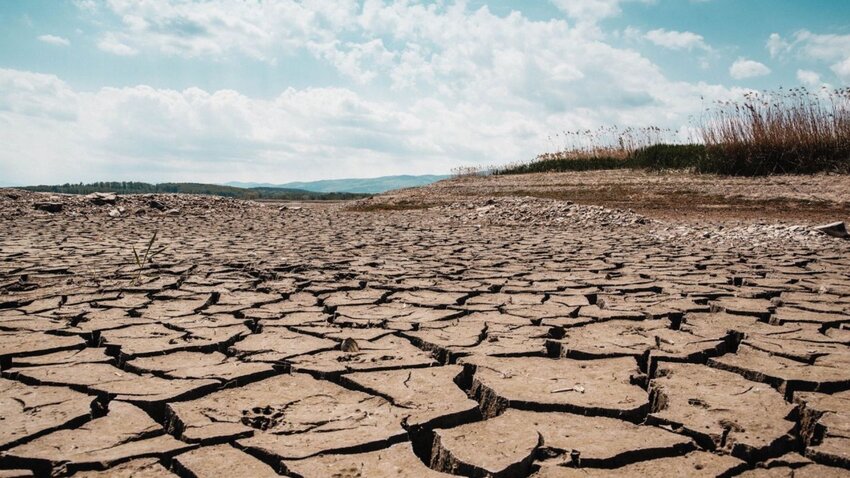
Water crisis: the scale of the problem
Over the last fifty years, around 410 million hectares of natural wetlands have disappeared – an area comparable to the size of the European Union. Around 70% of the world’s major aquifers are in structural decline: in many regions, water extraction has long exceeded natural recharge. In addition, more than 30% of global glacial mass has been lost in numerous mountain ranges since 1970.
In the coming decades, the role of glaciers as a seasonal reservoir for rivers, agriculture, cities and downstream energy systems will diminish. The picture painted by UNU-INWEH is one of a planet that, in many areas, is living beyond its hydrological means. It is not merely the physical availability of the resource that is at issue. What also matters is its distribution in space and time, its quality, the costs of treatment and transport, the resilience of infrastructure in the face of extreme weather events, and its allocation amongst competing uses. Within this complex web of factors, the importance of water for economic security is growing.
Water availability is decreasing
In the AQUASTAT 2025 Snapshot, the FAO considers this pressure to be part of a long-term trend. Annual per capita availability of renewable water has fallen by 7% globally over the last decade, with more pronounced declines in North Africa, West Asia and South Asia, areas already facing structural water scarcity. Agriculture continues to account for around 70–72% of global freshwater withdrawals. However, this historical demand is compounded by growing requirements for semiconductors, batteries, hydrogen, advanced chemicals and data centres, all of which require substantial quantities of water – often ultra-pure – and tend to be located in urban, industrial and coastal areas already under pressure.
Data centres highlight this dynamic. The growth of artificial intelligence, cloud computing and the digital economy is increasing the need for cooling, both direct and indirect, within IT infrastructure. When multiple facilities are located within the same catchment area, digital demand is added to that of domestic, agricultural, tourism and industrial sectors. In periods of drought, this increases tensions over water allocation.
The reliability of water sources, the quality required for production processes, the efficiency of distribution networks and access to reused water are playing an increasingly significant role in determining where investments are made and in ensuring the operational continuity of businesses.
- You may also be interested in: Industrial water reuse: a strategic opportunity in an era of scarcity
Europe is focusing on efficiency
It is in this context that the European Water Resilience Strategy, unveiled by the European Commission in June 2025, comes into play. The strategy sets a target of improving water efficiency across the Union by 10% by 2030, without imposing a binding obligation on the 27 Member States. The paper identifies semiconductors, electric batteries, hydrogen and data centres as key sectors of the twin transition that depend on a constant supply of high-quality water. Their clustering in areas already subject to water stress raises new sustainability issues: the industrial and energy transition may reduce certain emissions while at the same time increasing local water needs, demand for cooling and competition for high-quality water.
- You may also be interested in: The crucial battle for water is playing out in Brussels
The European answer follows a clear sequence: reducing leaks and waste; increasing efficiency in urban, agricultural and industrial water use; expanding the reuse of treated wastewater; protecting aquifers, rivers, wetlands and other ecosystems that regulate the water cycle; and only then considering new sources of supply. Digitalisation is part of this process. In May 2026, the Commission launched a public consultation, now closed, on a Digital Action Plan for the water sector, focused on smart meters, sensors, leak detection, satellite data and forecasting systems. These tools can help utilities and authorities anticipate anomalies, schedule maintenance, understand consumption patterns and demand peaks, and manage available water sources with greater precision.
Universal services and resource access
Just over a year after the European Strategy was adopted, the water services landscape in Europe is showing clear signs of strain. According to the report Europe’s Water in Figures 2026, published by EurEau, around 97% of European citizens are connected to the public drinking water network, 90% to wastewater collection systems and 89% to treatment plants. This high level of coverage coexists with incomplete economic and infrastructural resilience. EurEau estimates annual investment in networks and facilities at around €52.5 billion, but notes that expenditure is growing at a slower rate than inflation. Real investment capacity is declining, while the costs of treatment, energy, climate adaptation, water quality and digitalisation are rising.
If renewal rates fall short of required levels, water and sewerage networks accumulate a maintenance backlog. Leaks, breakdowns and service disruptions then reflect a gradual deterioration in the condition of the infrastructure. The European water sector employs over half a million full-time equivalent staff, but is struggling to attract new talent. In many countries, the workforce is older than the national average, and the sector’s average pay has fallen from 107% to 86% of the national average. For a sector that needs to integrate digital, engineering, environmental, regulatory and data management skills, this trend could become an operational constraint.
European households spend, on average, around 1% of their income on water services, a figure that has fallen compared with five years ago. Affordability remains essential, but prices and revenues rising at a slower rate than inflation are reducing the scope for maintenance and new investment.
The challenge will be to balance universal service provision, higher environmental and health standards, and infrastructure capable of withstanding an increasingly unpredictable water cycle.
Article written by Emanuele Bompan
This blog is a joint project by Ecomondo and Renewable Matter
Credits
Photo by Emilio Sánchez Hernández and Dominika P
PUBLICATION
09/09/2026
Other related news

06/07/2023
5 European Start-ups non to be missed
03/04/2025
5 under 30 who have revolutionized the circular economy

23/04/2025
7 young leaders under 30 in the green and circular economy
05/12/2024
7 trends in the Green Economy that will define 2025

15/12/2024
30/05/2023

17/12/2025
Africa, a frontier for the next Green Economy
29/04/2025
Precision agriculture: what advantages does it offer and how can it support North African countries?

10/05/2024

26/11/2025
Companies: how to communicate the transition in the greenlash era?
24/04/2025
Sodium batteries: the technology that could make the EU less dependent on critical materials

29/01/2026
Wellbeing and happiness: when science meets business, society and nature

23/06/2026
Bioeconomy in North Africa: Between Resource Abundance and Structural Constraints in Tunisia, Morocco, and Egypt
07/04/2026
Bioenergy and industrial ecosystems: models and research projects in Europe