
In terms of decarbonisation, public attention is focused on solar power, wind power and heat pumps, but bioenergy – already the European Union’s main renewable energy source – represents a strategic component of the energy mix. Among these, woody biomass is extensively used for domestic heating in various countries: in Italy, according to data compiled by AIEL (the Italian Association for Agroforestry Energy), different forms of wood (mainly firewood, pellets and wood chips) account for 65.7% of the renewable heat produced in the residential heating sector and are used by over a quarter of households.
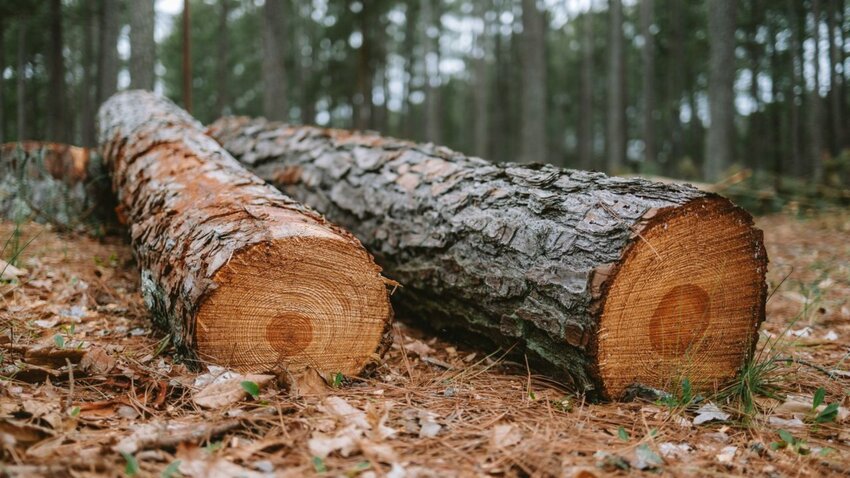
The benefits of woody biomass
Unlike other non-programmable renewable sources, such as solar and wind power, woody biomass is programmable, allowing for the continuous production of thermal energy, and can be stored and used as needed.
Alongside energy production, the development of a fully domestic wood-to-energy supply chain can have numerous positive benefits for local areas. From an economic and social perspective, this sector comprises over 14,000 businesses, generates a turnover in excess of 4 billion euros and employs around 72,000 people. From an environmental perspective, proper forest management helps maintain woodlands, reduces the risk of hydrogeological instability and wildfires, increases CO₂ storage (carbon sink), preserves biodiversity and limits the spread of plant diseases.
- You may also be interested in: Biofuels in the Netherlands and Belgium: the new frontier in sustainable fuel
Italy has plenty of woodland, but little usable biomass
According to the National Inventory of Forests and Forest Carbon Sinks (INFC), Italian forests have expanded in recent decades to cover more than 11 million hectares – a figure doubled in the last half-century and equivalent to 36.7% of the country’s total land area: one of the largest proportions of forest cover in Europe relative to total land area. Nevertheless, this wealth does not automatically translate into a supply of usable biomass, as Annalisa Paniz, Director-General of AIEL, explains. <<There are many reasons for this. First and foremost, Italian forests are poorly managed or even abandoned, especially in mountainous and inland areas, where the costs of utilisation are high and forestry infrastructure is often inadequate. In addition, ownership is extremely fragmented, making it more difficult to manage forestry operations and establish efficient supply chains.>>

As shown by the INFC – compiled by the Carabinieri and CREA (Council for Agricultural Research) – and also referred to in the National Forestry Strategy of the MASAF (Ministry of Agriculture, Food Sovereignty and Forests), only 15.3% of Italy’s forest area has a management plan, while the timber harvest rate (the percentage of wood grown during the year that is removed from the forest through felling) stands at 33.4%, compared with a European average of around 81% (State of Europe’s Forests 2025).
The result is that Italy remains dependent on imports. <<Over 80% of the timber processed by the domestic industry is imported, and a significant proportion of biomass – particularly pellets – also comes from other countries,>> continues Annalisa Paniz. <<We need to invest in the active and sustainable management of forests, avoiding indiscriminate increases in timber harvesting, and in the development of more robust and efficient domestic supply chains, thereby reducing dependence on imports, creating economic value in mountain areas and increasing the country’s energy self-sufficiency.>>
The guiding principle is that of the cascading use of wood, whereby the resource must first be allocated to uses that generate the greatest added value and allow carbon to be stored for as long as possible, such as construction, furniture or wood products. Only subsequently should by-products, processing waste and wood that has no other possible uses be utilised for energy production.
This approach is now well-established in European circular economy strategies and is explicitly provided for in the RED III Directive (EU 2023/2413), implemented in Italy by Legislative Decree 5/2026: by using the same resource multiple times, its value is maximised and waste is reduced. <<For businesses, this means a greater commitment in terms of certification, traceability and the quality of supply chains. It is a challenge, but also an opportunity: those who already operate according to sustainable forest management criteria and invest in quality and innovation will be able to derive greater value from their work.>>
The reason biomass continues to be a divisive issue
While the contribution of biomass to decarbonisation is widely recognised, its impact on air quality remains at the centre of the debate. Despite improvements recorded across Europe over the last twenty years, as highlighted by the European Environment Agency (Air quality status in Europe 2026), solid fuels used for domestic heating are still one of the main sources of particulate matter (PM10 and PM2.5), followed by transport and agricultural and industrial activities. In Italy, a critical area is the densely populated and industrialised Po Valley, whose specific meteorological and geographical conditions favour the accumulation of air pollutants beyond the levels set by the EU.
This also poses a challenge for public health, given that fine particulate matter is considered one of the most dangerous pollutants, directly linked to respiratory and cardiovascular diseases and preventable deaths. For example, in 2023 in the Milan area, PM2.5 accounted for a significant proportion of PM10, exceeding 50% (Arpa Lombardia), albeit in an overall context of improvement (see 2025 data).
<<The issue with air quality is less about biomass itself and more about the quality of combustion. Older, obsolete domestic appliances, which are often powered by uncertified fuels or used incorrectly, are responsible for the bulk of emissions in the sector,>> explains Paniz. <<By contrast, modern, high-efficiency stoves and boilers, fuelled by certified-quality biomass and installed correctly, have drastically reduced emissions compared with the past. This is why it is essential to continue modernising the existing stock of appliances, to promote the use of certified fuels and to invest in training for operators and users.>>
When it comes to CO₂, however, it is necessary to consider the carbon cycle. Wood-based biomass forms part of the biogenic cycle: the carbon released during combustion is the same carbon absorbed by trees as they grow. <<To maintain this balance, it is essential that the wood comes from sustainably managed forests, where the capacity for regrowth and carbon absorption is guaranteed over time.>>
Air quality and biomass use
According to AIEL, approximately 8.9 million domestic biomass generators are installed in Italy, but almost 80% still belong to the older technology classes. <<Over the last twenty years, the sector has, however, undergone an extraordinary evolution. Modern biomass stoves and boilers are the result of significant investment in research and innovation: they guarantee very high efficiency, electronically controlled combustion systems, automatic air regulation, greater user comfort and a drastic reduction in emissions compared with older-generation appliances; for the highest-performing technologies, emissions are close to zero.>> The quality of fuels has also improved significantly thanks to certification standards, such as ENplus® for pellets or Biomassplus® for firewood and wood chips, ensuring consistent characteristics and better environmental performance.
A challenge: promoting modern bioenergy
The scope for improvement is significant (see also The European biomass puzzle). <<To truly harness the potential of woody biomass, we need to adopt a supply-chain approach that connects forests, the timber industry, the energy sector and local communities.>> The priority is to invest in sustainable forest management, because without well-managed forests, neither environmental protection nor economic development is possible. <<We then need to strengthen forestry businesses, improve access roads and logistics, encourage the consolidation of forest ownership and invest in the training of qualified operators, as well as support technological innovation and accelerate the renewal of plant and equipment.>>
- You may also be interested in: Bioenergy in Poland: agriculture as the driving force of the energy transition
Another decisive factor is the stability of the regulatory framework: <<Companies need clear, consistent and long-term rules in order to plan investments and develop solid, competitive local supply chains.>>
Finally, greater cultural awareness is needed. <<Bioenergy is still too often portrayed through clichés or incomplete information,>> concludes Annalisa Paniz. <<In reality, it represents one of the few renewable sources capable of combining decarbonisation, active forest management, energy security and the development of mountainous and inland areas. This will be the challenge for the coming years: transforming Italy’s forest heritage into a strategic resource for the country, creating economic value, skilled employment and environmental benefits throughout the entire supply chain.>>
Article written by Edoardo Bompan
This blog is a joint project by Ecomondo and Renewable Matter
Credits
Photo by Mahoney Fotos
PUBBLICAZIONE
31/07/2026
Altre news correlate

06/07/2023
5 Start-up circolari da non perdere

03/04/2025
5 under 30 che hanno rivoluzionato l'economia circolare

23/04/2025
7 giovani under 30, leader della green and circular economy
05/12/2024
7 trend nell'economia green che definiranno il 2025

15/12/2024
AI, big data e tecnologie predittive per la Blue Economy
30/05/2023
Acqua in Europa: come affrontare il cambiamento climatico

17/12/2025
Africa, frontiera della prossima economia verde
29/04/2025
Agricoltura di precisione: quali vantaggi offre e come può sostenere i paesi del Nordafrica?

10/05/2024
Alluvione in Emilia-Romagna, un anno dopo

26/11/2025
Aziende: come comunicare la transizione nell’era del greenlash?

24/04/2025
Batterie al sodio: la tecnologia che può rendere l'UE più indipendente dai materiali critici

29/01/2026
Benessere e felicità: quando la scienza incontra impresa, società e natura

23/06/2026
Bioeconomy in North Africa: Between Resource Abundance and Structural Constraints in Tunisia, Morocco, and Egypt
07/04/2026
Bioenergy and industrial ecosystems: models and research projects in Europe