More than ten years ago, Matteo Ward decided to leave his secure position at a major international casualwear and streetwear company. He could no longer work in an industry he loved but whose consequences he could not accept, from the environmental impact of production to working conditions throughout supply chains and the volume of unsold and destroyed garments.
It was then he met Susanna Martucci, a family friend and founder of Alisea, a Vicenza-based company born in 1994 that specialises in transforming industrial waste into new materials and design objects.
This marks the beginning of a collaboration to push research on recovered graphite powder beyond the field of design, extending it into textiles and clothing. This resulted first in the patenting of g_pwdr® technology and then in the presentation, at Ecomondo 2026, of a capsule collection comprising g_tee, g_crew and g_hoodie: a T-shirt and two sweatshirts, all made from organic cotton. The colour? Grey, alongside a wide range of other shades, from blue to green, obtained by adding earths, minerals and plant-based preparations.
- You may also be interested in: Ecomondo beyond the Euro-Mediterranean borders: a 14% increase in international visitors
It all starts with a pencil: Perpetua
The starting point for this journey is Perpetua, a pencil made by Alisea in 2013 using recovered graphite. A simple object, but one that demonstrated how industrial waste could become a new raw material. <<I wondered whether Perpetua could teach me how to reinvent a T-shirt. If a material considered waste could be used to create something new, why not try the same thing with a garment?>> says Ward, who is also the founder of Wråd, a design and consultancy studio.
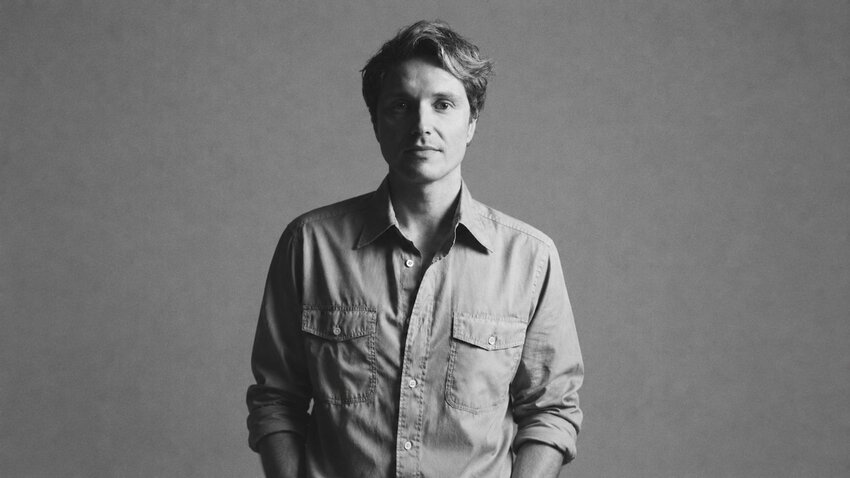
The first experiment, however, was far from successful. <<The T-shirt treated with recovered graphite wrote just like a pencil. It was unusable. We had to start again and work out how to turn that material into a textile treatment.>>. Finding a solution meant looking as far back as ancient Roman expertise. <<I discovered a long tradition of graphite dyeing in Monterosso Calabro, where a graphite deposit remained active until the 1950s. The women in the village remembered how it was done, and we also found nineteenth-century garments whose colour had remained unchanged over time. That knowledge showed us the way forward>>.
By bringing traditional craftsmanship together with industrial research, the team developed Graphi_Tee, the first graphite T-shirt that leaves no marks. It won the Red Dot: Best of the Best and was subsequently developed into a collection for Ferragamo. But the most important result was not the individual product. <<The pencil and the T-shirt are services, not just objects. They tell stories of recovery, research and knowledge that might otherwise be lost>>, Ward explains.
From waste to material, and from material to research
The graphite recovered by Alisea comes from the industrial processing of electrodes. During production, a fine powder is generated which, without an alternative route for its recovery and reuse, would otherwise be destined for disposal.
The company recovers it and uses it in applications across a range of sectors, from design and construction to more recent experiments in agriculture and cosmetics. <<Working with industrial organisations, even highly structured ones, means we engage with engineers and technicians who have in-depth knowledge of materials and processes. It’s an exchange that can lead to unexpected solutions>>, explains Martucci.

Initially aimed at reducing the use of dyes and water consumption, the research into the T-shirt also led to an investigation into treated fabrics' properties. Laboratory tests (which cannot automatically be applied to every type of fabric or translated into claims of health protection, as the company points out) have demonstrated UV protection with an UPF of 50+, as well as a reduction in bacterial load within 24 hours (with Staphylococcus aureus reduced by 99% in polyester and 98.75% in cotton), which remain unchanged even after repeated washes.
The University of Ferrara's Centre of Cosmetology has also assessed the treatment as non-irritating for people with sensitive skin.
The garments are made from organic cotton in Portugal, while the treatment is applied to the finished garment through a process known as garment dyeing: first it is made, then it is dyed. This allows us to produce to order, in the colours and quantities required, without being left with unsold coloured garments.
The treatment and dyeing are carried out in Italy using ZDHC-certified products, at 50 degrees rather than the 90 degrees of a conventional process. The three styles in the capsule collection are the ones most in demand by businesses, but the treatment can also be applied to other garments and fabrics.
Fashion as architecture for the body
The thinking goes beyond the sustainability of production processes. <<The skin is our largest organ, and fabric is what comes into direct contact with the body. Yet when we talk about fashion, we focus mainly on shape, colour and material. These are important aspects, but they cannot be the only ones>>. He proposes to think of clothes as a form of architecture for the body, capable of considering anatomy, dermatology, physiology and psychology. An approach he defines as fashion architecture, to distinguish it from a concept of fashion limited to fashion design.
<<A fabric intended for sport has different requirements from one we use for sleeping. Clothing for a child has to meet different needs from clothing for an adult. Why should one approach be suitable for every situation?>>. Fibres respond differently to treatments: cotton, silk, hemp and linen each require specific knowledge and processing techniques. <<We need to study them, understand how they behave and identify which properties we can enhance>>. This attention to design extends across the product's entire life cycle. <<It's not enough to say that a garment is made from recycled material. We need to ask whether it has been designed to last, whether people will actually use it, whether they will be able to repair it and what will happen when they no longer need it. Circularity cannot be applied retrospectively: it has to be considered from the very beginning>>.
- You may also be interested in: The green economy amid geopolitical crises and industrial challenges: eight global forces accelerating the transition
Communicating value and involving consumers
A key factor in the success of a circular project is the ability to communicate it. The first T-shirt treated with recovered graphite did not immediately find an audience. <<At first, we focused mainly on its environmental characteristics, explaining where the material came from and what process we had developed. But we couldn’t get across why someone would want that T-shirt>>, Ward recalls. <<We cannot ask people to buy something simply because it is the right thing to do. We have to explain why it is interesting, what it offers and why it is worth choosing. And we need to involve people in its use, care, repair and end-of-life management>>.
At the heart of this is also a different understanding of the value of objects, echoing a well-known consideration by architect Michele De Lucchi: <<What is ecology? The ability to extend the pleasure of using an object over time>>.
<<We must find ways to make people grow fond of objects, so that they want to keep them and use them for a long time>>, Matteo Ward explains.
<<Sustainability cannot be a permanent sacrifice. It must improve our relationship with what we use>>.
Article written by Maria Carla Rota
This blog is a joint project by Ecomondo and Renewable Matter
Credits
Photo by Alisea
PUBBLICAZIONE
13/11/2026
Altre news correlate

08/09/2022
Inquinamento da plastica in mare: cause, conseguenze e soluzioni

21/03/2024
Ma dai, è solo un mozzicone
24/07/2023
RAEE: una miniera di materie prime critiche
20/09/2023
La plastica: da problema a risorsa

30/05/2023
Acqua in Europa: come affrontare il cambiamento climatico

03/04/2025
5 under 30 che hanno rivoluzionato l'economia circolare

21/04/2023
La giornata mondiale della terra, vista dal mare

19/05/2023
Ecomondo Mexico ed economia circolare in America Latina

31/07/2023
Economia circolare in Cina. Ieri, oggi e domani

14/05/2023
Sulla strada della sostenibilità: elettrificare il trasporto merci
06/11/2023
Lifegate presenta Water Defenders Alliance, una grande alleanza per difendere le nostre acque

20/10/2023
Legno-arredo, la filiera che ha messo la sostenibilità al centro

07/06/2023
Le maree stanno cambiando

03/08/2023
La filiera del riciclo della carta: eccellenza italiana con margini di miglioramento
10/10/2023
Responsabilità estesa ed ecoinnovazione, la sfida del tessile sostenibile non può attendere

13/05/2023
Europa: arriva il nuovo piano industriale per l’era net-zero