In the near future, investments in water treatment, conservation and reuse systems are bound to increase, driven by stricter regulations – such as EU Directive 2024/3019 on wastewater – and by an ever-increasing water shortage: water demand will, in fact, rise as a result of industrial restructuring, whereas available resources will diminish due to climate change.
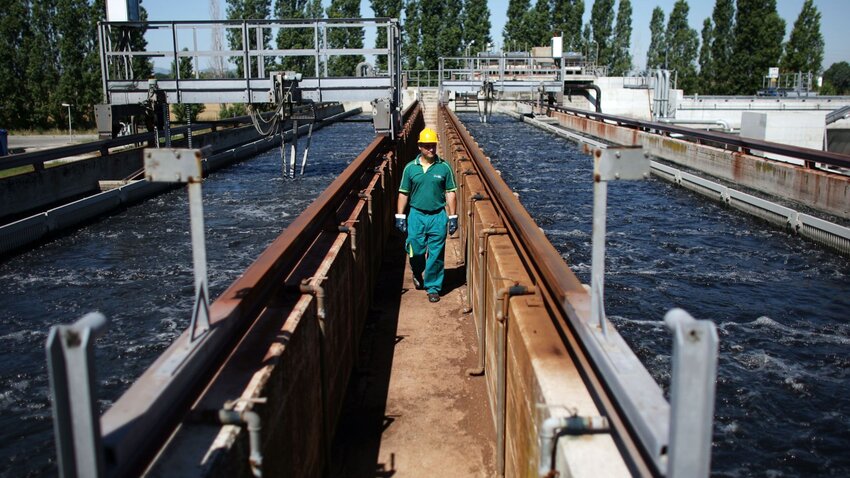
It was in this context that, in early 2026, the Hera Group, Italy's second-largest operator by volume of water distributed, purchased the Sostelia Group, a private Italian company specialising in industrial and domestic water treatment technologies. The Italian multi-utility, active in the environment, energy and water sectors and counting over 10,500 employees, has thereby strengthened its position in the strategic water and waste sectors, adding another building block to the growth trajectory that in recent years has brought companies such as Aliplast and ACR Reggiani into the group’s fold.
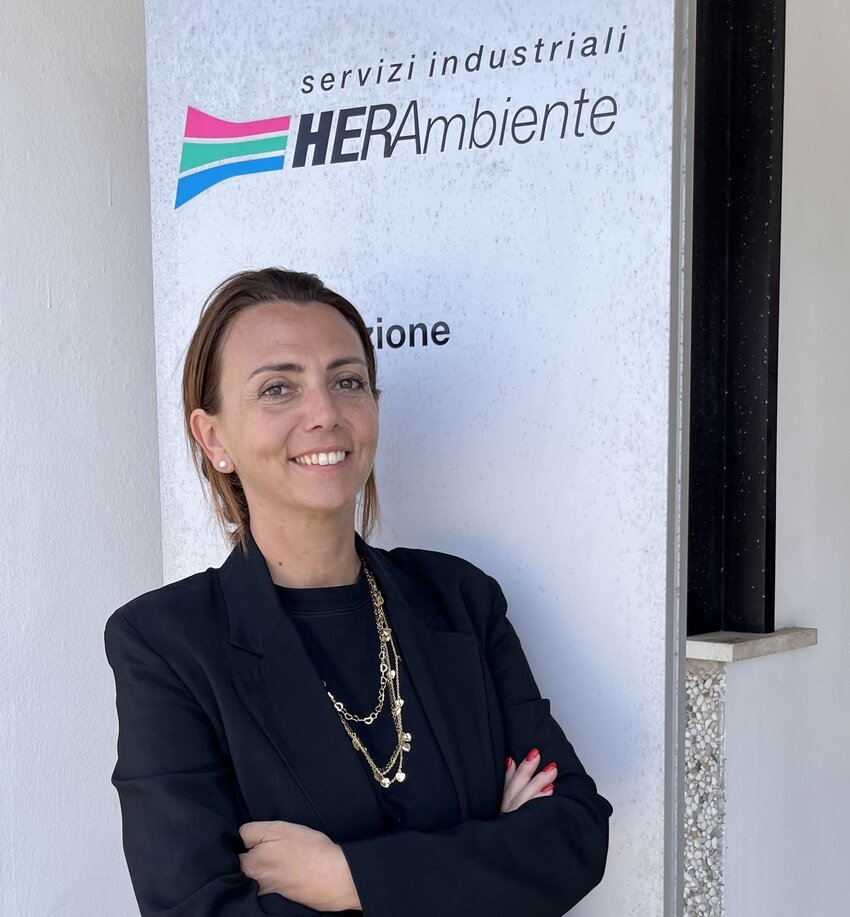
At the heart of the operation is a comprehensive system of synergies with Herambiente. <<By integrating Sostelia’s services, Herambiente is expanding its commercial offering, supplying customers in the wastewater treatment sector with revamping solutions, the design of new plants, and management and maintenance services for existing private plants,>> explains Federica Ravaioli, Managing Director of Herambiente Servizi Industriali. <<This ensures technical and operational continuity, greater reliability and lower operating costs. At the same time, Sostelia’s customer portfolio presents an opportunity to further integrate the service offering, thanks to the synergy with the waste business unit. In general, the combination of technical expertise, plant management and commercial capabilities will allow the Hera Group to expand its customer base, diversify its revenue streams and increase the resilience of its business in a sector that demands rapid response times, high service quality and continuous innovation.>>
Resilience, consistency, and quality of the water service
In a context of increasingly extreme weather and climate events, strengthening the resilience, reliability and quality of the drinking water supply service through the integrated management of water sources, conveyance, treatment and distribution is essential. To this end, over the five-year period 2025–2029, the Hera Group has allocated €1.8 billion to the integrated water cycle, out of a total investment of €5.5 billion. Among the areas of focus are the efficiency of sewage networks, stormwater management and the modernisation of wastewater treatment processes.
These initiatives also aim to enhance the environmental and energy sustainability of the water cycle. The multi-utility company will continue to promote the regeneration and circularity of water resources, for example, through the growing reuse of treated water, with initiatives both within the Group and across the region, particularly in the agricultural and industrial sectors.
The role of the circular economy in water treatment
Circularity is a pillar of water treatment, as Silvia Giovannini, Head of Asset Management at Hera’s Water Division, points out: <<From the reuse of wastewater to the recovery of sludge, we are actively involved in all these areas, across all the company’s business lines.>>
In 2025, the volume of wastewater suitable for reuse for irrigation purposes, according to the agreements in place, and that was reused within the Group’s facilities or by other companies, totalled 43 million cubic metres; this represented 11.8% of the total volume of treated wastewater, a figure unchanged from 2024. Of this, 33.7 million cubic metres were allocated for indirect use in agriculture and 5.6 million for industrial reuse, of which 3.6 million were used at the Group’s own facilities.
An example of the integration of water management, energy and resource recovery is the project currently being finalised at the Corticella wastewater treatment plant in Bologna. The plant utilises wastewater and renewable electricity to produce green hydrogen and oxygen. The hydrogen is then combined with the CO₂ contained in the biogas produced by the digestion of sewage sludge to produce biomethane.
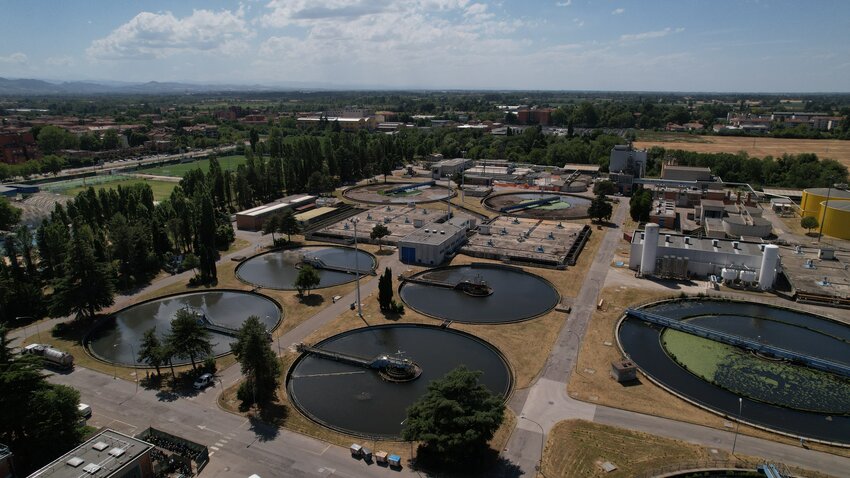
<<In addition to increasing the treatment plant’s potential for pollutant removal, power-to-gas technology allows excess renewable energy to be utilised by feeding biomethane into the city’s distribution network, which then acts as a long-term storage facility,>> Giovannini adds. Furthermore, in future, oxygen could be used to increase the capacity and effectiveness of the treatment process.
The acquisition of Sostelia rounds off this development, supplementing the experience gained in the direct management of domestic sewage treatment plants and the treatment of industrial waste liquids with integrated services and cutting-edge technologies for the treatment of industrial wastewater and sludge, for the recovery of water resources, and for addressing the new challenges posed by the recent EU directive introducing stricter requirements for the treatment of urban wastewater.
Looking ahead: infrastructure, data and artificial intelligence
Climate and regulatory changes require infrastructure planning to be strengthened through masterplans focused on system resilience and the protection of water resources.
- You may also be interested in: Egypt’s Water Future: From Nile Dependence to a New Era of Adaptation
The water sector is called upon to evolve its infrastructure development model in order to respond to the effects of climate change and new regulatory obligations, including those relating to emerging pollutants, energy neutrality and PFAS.
In this context, for Hera, digitalisation will be one of the key enablers of the sector’s transformation, while artificial intelligence could play an increasingly important role in predictive maintenance, operational optimisation and strategic decision-making.
As Giovannini further explains, the Hera Group’s business plan includes <<the continuation of water management initiatives, with the completion of the installation of smart meters to encourage more efficient and informed consumption, and measures to reduce water losses.>> Alongside these are predictive maintenance, already in place across 86% of the managed network; the districting of networks, extended to over 24,000 kilometres, equivalent to 69% of the managed network in 2025; and the refurbishment of the water supply network to reduce water loss, ensure service continuity and extend the useful life of the infrastructure. <<Furthermore, the Group is pursuing a number of initiatives to improve energy efficiency: reducing energy consumption at water supply and wastewater treatment plants, generating renewable energy, and recovering value from wastewater.>>
- You may also be interested in: The crucial battle for water is playing out in Brussels
Planned investments will increase the proportion of recoverable wastewater out of the total volume treated to 14.5% in 2029, compared with 11.9% in 2024. Over the same period, linear losses are expected to fall to 7.4 cubic metres per kilometre per day (from 8.4 m³/km/day in 2024), while the Group’s water consumption is set to decrease by 26.5% compared with 2017.
See you at Ecomondo 2026
The Hera Group will be attending Ecomondo 2026, at the Rimini Expo Centre from 3 to 6 November, at stand no. 500 in Hall C1: visitors will have the opportunity to explore all current projects and future development plans.
Article written by Maria Carla Rota
This blog is a joint project by Ecomondo and Renewable Matter
Credits
Photo by Hera Group
PUBBLICAZIONE
24/08/2026
Altre news correlate

06/07/2023
5 Start-up circolari da non perdere

03/04/2025
5 under 30 che hanno rivoluzionato l'economia circolare

23/04/2025
7 giovani under 30, leader della green and circular economy
05/12/2024
7 trend nell'economia green che definiranno il 2025

15/12/2024
AI, big data e tecnologie predittive per la Blue Economy
30/05/2023
Acqua in Europa: come affrontare il cambiamento climatico

17/12/2025
Africa, frontiera della prossima economia verde

29/04/2025
Agricoltura di precisione: quali vantaggi offre e come può sostenere i paesi del Nordafrica?

10/05/2024
Alluvione in Emilia-Romagna, un anno dopo

26/11/2025
Aziende: come comunicare la transizione nell’era del greenlash?

24/04/2025
Batterie al sodio: la tecnologia che può rendere l'UE più indipendente dai materiali critici

29/01/2026
Benessere e felicità: quando la scienza incontra impresa, società e natura

23/06/2026
Bioeconomy in North Africa: Between Resource Abundance and Structural Constraints in Tunisia, Morocco, and Egypt
07/04/2026
Bioenergy and industrial ecosystems: models and research projects in Europe